Top 10 Best Biotech Companies In Canada 2026

Table of Contents
Canadian biotechnology has moved past the pandemic-era spotlight and into a phase of sustained maturity. The companies that dominate the sector in 2026 are not the same ones that led it five years ago. What we see now is a mix of well-capitalized AI-driven antibody developers, precision oncology specialists, and a handful of clinical-stage firms with real regulatory milestones on the horizon.
To build this ranking, we weighed several factors: financial runway and cash position, the stage of each company's lead clinical programs, regulatory momentum including FDA designations and filing timelines, commercial validation through partnerships or acquisitions, and stock performance where public data was available. Geographic diversity mattered too, though British Columbia and Ontario continue to punch well above their weight. This list reflects where the sector stands heading into 2026, not where it was during the COVID boom.
Here are the ten biotech companies in Canada that we believe warrant the closest attention this year.
These Are The List Of The Top 10 Best Biotech Companies In Canada 2026:
1. AbCellera Biologics

AbCellera sits at the top of this list for a straightforward reason: it has the deepest financial resources of any pure-play biotech in the country. As of the second quarter of 2026, the Vancouver-based company reported more than $565 million in cash and marketable securities, with total available liquidity exceeding $675 million. That kind of balance sheet gives AbCellera options that most Canadian biotechs simply do not have.
The company's core business is AI-powered antibody discovery. Its platform was thrust into global prominence during the pandemic when it partnered with Eli Lilly and Company on the antibody therapy bamlanivimab. That experience translated into a durable partnership model. AbCellera has since signed deals with a range of major pharmaceutical companies, using its platform to identify therapeutic antibodies against challenging targets.
What separates AbCellera from peers is not just the technology but the business structure. The company generates revenue through partner payments and milestones rather than relying solely on equity financing. Heading into 2026, it remains the most financially secure biotech in Canada and a bellwether for the sector's health.
2. Xenon Pharmaceuticals
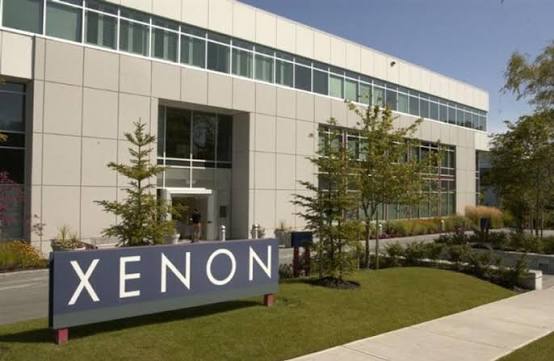
Xenon Pharmaceuticals has spent years building one of the most advanced neuroscience pipelines in the country, and 2026 is shaping up to be its defining year. The Burnaby, British Columbia-based company has a planned FDA filing on the calendar for this year, and its market capitalization has climbed past C$3 billion.
The lead candidate driving that valuation is XEN496, also known as ezogabine. It targets KCNQ2 encephalopathy, a rare and severe genetic epilepsy that typically presents in infancy. The drug works by opening potassium channels in the brain, an approach that differs from conventional anti-seizure medications. Clinical data so far has been encouraging enough to justify the regulatory push.
Xenon's focus on precision medicine in neuroscience is notable because the field is notoriously difficult. Many large pharmaceutical companies have retreated from central nervous system research due to high failure rates. Xenon has persisted, and its imminent regulatory milestone positions it as the most advanced clinical-stage biotech in Canada on a pure development timeline basis.
3. Aspect Biosystems
Aspect Biosystems represents a different kind of biotech bet: tissue engineering. The Vancouver-based company uses proprietary bioprinting technology to create cellular medicines for metabolic and endocrine diseases, including diabetes. It is not developing a traditional small molecule or antibody. Instead, it is printing living tissue that can be implanted to restore function.
The scale of government backing here is unusual. Aspect received $79 million CAD, roughly $57 million USD, from the Government of Canada toward a $280 million CAD project. That funding is earmarked for expanding clinical development and manufacturing capabilities. The project is expected to create 283 jobs while maintaining 117 existing positions, making Aspect a meaningful contributor to British Columbia's life sciences workforce.
Bioprinting has been a promising concept for years, but few companies have advanced it to the point of clinical manufacturing. Aspect's ability to secure federal investment at this scale suggests the technology has moved past the proof-of-concept stage. The company's platform holds potential beyond diabetes, with applications in other endocrine and metabolic conditions that involve cell replacement.
4. Eupraxia Pharmaceuticals

Eupraxia is the kind of story that reminds investors why small-cap biotech can be rewarding. The clinical-stage company, based in Victoria, British Columbia, delivered a year-on-year gain of 115.87 percent, with a market cap of C$599.66 million and a share price of C$9.52 as of late 2025.
The driver is clinical data. Eupraxia's proprietary DiffuSphere technology enables targeted, sustained release of drugs at the site of disease. Its lead candidate, EP-104GI, is being developed for eosinophilic esophagitis, a chronic inflammatory condition of the esophagus. In Phase 1b/2a trials, the treatment achieved near-complete normalization of esophageal tissue and roughly 76 percent clinical remission rates at 24 weeks. Those are striking numbers for a condition where current therapies have significant limitations.
The balance sheet supports the momentum. Eupraxia completed a US$63.2 million equity raise in February 2026, extending its cash runway into the first half of 2028. The company also has pipeline candidates in inflammatory and oncology indications, giving it multiple shots on goal beyond the lead program.
5. Fusion Pharmaceuticals
Fusion Pharmaceuticals earned its place on this list through an exit that validated an entire sub-sector of Canadian biotech. The Hamilton, Ontario-based company was acquired by AstraZeneca for approximately $2.4 billion USD, a deal that closed in 2024. That acquisition stands as one of the largest biotech exits in Canadian history.
Fusion's focus was targeted alpha therapy, or TAT, a method of cancer treatment that attaches radioactive isotopes to antibodies that seek out tumor cells. The company's lead candidate, FPI-1434, conjugated actinium-225 to antibodies targeting IGF-1R, an approach designed to treat solid tumors with greater precision than conventional radiation.
While Fusion is no longer an independent Canadian company, its legacy matters for the sector. The AstraZeneca acquisition demonstrated that Canadian biotech can produce assets worth billions of dollars to global pharmaceutical giants. It also funneled significant capital back into the Canadian ecosystem, funding the next generation of startups and reinforcing Hamilton's position as a life sciences hub.
6. Repare Therapeutics

Repare Therapeutics, based in Montreal, has built its reputation on synthetic lethality, a concept in oncology that identifies genetic vulnerabilities specific to cancer cells. The idea is to find pairs of genes where a cancer cell relies on one because the other is already mutated, then target the remaining functional gene to kill the cell while sparing healthy tissue.
The company's proprietary SNIPRx platform enables systematic identification of these vulnerabilities across the genome. That platform has produced multiple clinical-stage candidates, including lunresertib, also known as RP-6300, which is in trials for various solid tumors. Repare is publicly traded on the NASDAQ under the ticker RPTX, giving it access to deep US capital markets.
Montreal has become a genuine center for genomic medicine, and Repare is a big reason why. The company's approach is technically demanding, but the platform has shown enough promise to attract substantial institutional investment. For investors looking at Canadian biotech with an eye on oncology innovation, Repare remains a core holding.
7. Theratechnologies
Theratechnologies occupies an unusual position in Canadian biotech: it is one of the few companies in the country that has successfully transitioned from research and development to commercial operations. The Montreal-based firm is publicly traded on the Toronto Stock Exchange under the ticker TH.
The company's marketed product, EGRIFTA SV, treats HIV-associated lipodystrophy, a condition characterized by abnormal fat distribution in patients living with HIV. That commercial base provides recurring revenue, which is rare among Canadian biotechs and gives Theratechnologies a degree of stability that clinical-stage peers lack.
But Theratechnologies is not resting on its commercial product. The pipeline includes sudocetaxel zendusortide, formerly TH1902, an antibody-drug conjugate being developed for ovarian cancer. The company's ability to generate revenue from one product while advancing another into oncology represents a business model that more Canadian biotechs will likely need to adopt as financing becomes more selective.
8. BriaCell Therapeutics

BriaCell Therapeutics is attacking one of the most difficult problems in oncology: metastatic breast cancer in patients who have exhausted standard treatment options. The Toronto-based company's lead candidate, Bria-IMT, is an immunotherapy designed to activate the immune system against tumor cells.
The clinical data has been strong enough to attract regulatory attention. Bria-IMT demonstrated meaningful clinical benefit in heavily pre-treated patients during Phase 2 studies, and the pivotal Phase 3 study, known as BRIA-ABC, received FDA Fast Track Designation. That designation accelerates the review process and signals that the agency sees the unmet medical need as significant.
BriaCell has also expanded beyond its core immunotherapy program. The company has moved into AI-driven drug discovery and spun out small-molecule assets into a separate subsidiary. That diversification is a pragmatic hedge in a sector where single-asset companies are vulnerable to clinical setbacks. The FDA fast-track status alone justifies attention, but the broader strategy makes BriaCell more resilient than typical clinical-stage oncology names.
9. Bright Minds Biosciences

Bright Minds Biosciences has delivered the kind of stock performance that gets noticed. The Vancouver-based company posted a year-on-year gain of 187.57 percent, pushing its market cap to C$1.16 billion with a share price of C$115.66. Those numbers reflect significant investor conviction in the company's approach to neuropsychiatric drug development.
The company is developing next-generation serotonin agonists for conditions including epilepsy and neuropsychiatric disorders. Its lead candidate, BMB-101, is a selective 5-HT2C receptor agonist that has demonstrated efficacy in stopping seizures in epilepsy mouse models. The mechanism is notable because it targets specific serotonin receptors rather than broadly modulating the entire system.
The strategic bet here is that you can retain the therapeutic benefits of psychedelic compounds while minimizing their side effects through targeted receptor modulation. If that thesis holds in human trials, Bright Minds could offer a more palatable alternative to the psychedelic-assisted therapies that have generated headlines but face regulatory and cultural hurdles. The stock performance suggests the market is willing to pay up for that optionality.
10. Medicenna Therapeutics

Medicenna Therapeutics rounds out this list with a platform that tackles one of immunotherapy's central problems: how to activate the immune system against cancer without triggering excessive side effects. The Toronto-based company, publicly traded on the TSX under MDNA, is developing what it calls Superkines, engineered cytokines designed to modulate immune responses with greater precision.
The lead candidate, MDNA11, is a beta-only IL-2 superkine. Interleukin-2 is a cytokine that plays a critical role in immune activation, but native IL-2 has a flaw: it stimulates both cancer-killing T cells and regulatory T cells, which suppress the immune response. MDNA11 is engineered to selectively activate the cancer-killing T cells while minimizing the regulatory T cell stimulation that undermines treatment efficacy.
That selectivity is the core of Medicenna's value proposition. If MDNA11 can deliver the anti-tumor activity of IL-2 without the immunosuppressive counterbalance, it could improve outcomes across a range of cancer types. The company is still in clinical stages, and the risks are real, but the engineering approach addresses a genuine limitation in existing immunotherapy.
Related Posts




2 Comments
Join the discussion and share your thoughts