Top 10 Best AI Development workflows In The World 2026

Table of Contents
The landscape of software development has been fundamentally reshaped by artificial intelligence. In 2026, the question is no longer whether to use AI in your workflow, but which workflow delivers the best results for your specific needs. This ranking evaluates the top 10 AI development workflows based on code generation accuracy, real-world engineering benchmarks, integration ecosystems, user adoption rates, and the ability to handle complex, multi-step tasks autonomously. We weighed criteria like vendor lock-in risks, scalability for enterprise use, support for multiple AI models, and the speed of development cycles reported by engineering teams. The result is a definitive guide to the tools defining how software gets built this year.
These Are The Top 10 Best AI Development workflows In The World 2026:
1. OpenAI Codex with GPT-5.5
OpenAI Codex powered by GPT-5.5 holds the top position in 2026 for good reason. It delivers the highest code generation accuracy scores across real-world development tasks, according to independent benchmarks. The workflow excels at multi-file editing, allowing developers to describe a high-level feature and have the agent implement it across an entire codebase. Its deep integration with GitHub and VS Code means it fits seamlessly into existing workflows rather than requiring a complete toolchain overhaul.
GPT-5.5 handles complex refactoring, debugging, and documentation generation with near-human precision. The autonomous task decomposition capability is a standout feature. A developer can describe a feature in natural language, and Codex will break it down into subtasks, implement each one, and test the results without constant hand-holding. Its ability to maintain context over long sessions makes it the preferred choice for enterprise-grade software development. Teams working on large monorepos report that Codex with GPT-5.5 reduces feature implementation time by 60% compared to manual coding.
2. Claude Code with Opus 4.8
Claude Code running on Opus 4.8 is the premier Claude-native terminal development workflow. It excels at full-stack tasks including bug fixes, feature implementations, and test generation. The workflow delivers 3x faster development cycles compared to traditional coding, according to real-world engineering benchmarks. Opus 4.8 scores 80.8% on SWE-Bench, a widely respected benchmark for software engineering tasks, placing it among the top performers in the industry.
What sets Claude Code apart is its terminal-first design. Developers who prefer command-line efficiency over GUI-based tools find it particularly powerful. Opus 4.8's superior reasoning capabilities allow Claude Code to handle ambiguous requirements and suggest architectural improvements proactively. Rather than waiting for explicit instructions, it identifies potential issues and offers solutions before the developer asks. This proactive approach has made it a favorite among senior engineers working on complex systems where requirements are often unclear at the outset.
3. Windsurf with Arena Mode

Windsurf remains the highest-rated AI development environment as of March 2026, according to the AI dev tool power rankings. Its innovative Arena Mode is a major differentiator. This feature enables side-by-side model comparison with hidden identities and voting, letting developers discover which AI models actually work best for their specific workflow needs. Rather than relying on marketing claims, developers can test GPT-5.5 against Claude Opus 4.8 against Qwen 3.6 on their actual codebase and see results in real time.
Windsurf integrates multiple AI backends, allowing seamless switching between models without leaving the IDE. Its real-time code analysis and context-aware suggestions reduce debugging time by an estimated 40%. The platform's ability to compare models side by side has created a community-driven approach to AI workflow optimization. Developers share their Arena Mode results, creating a crowdsourced database of which models perform best for specific tasks like frontend development, data processing, or systems programming.
4. n8n (Self-Hosted AI Workflow Automation)
n8n ranks as the top open-source AI workflow automation platform for developers who need complete control over their data and infrastructure. It is used by over 30 small business clients and is particularly strong for complex, GDPR-compliant workflows. Its self-hosted capabilities make it secure for European enterprises handling sensitive data. The platform handles use cases like customer support automation, lead qualification, invoice processing, and document workflow orchestration.
Developers consistently rate n8n as the best choice for complex, multi-step automations that require persistent memory and autonomous planning. The platform supports 400+ integrations and custom node development for unlimited extensibility. For organizations that cannot send proprietary code or customer data to third-party cloud services, n8n provides a viable alternative that keeps everything on-premises. Its visual builder reduces the barrier to entry, while its custom node API gives advanced users the flexibility to build exactly what they need.
5. Make (Integromat)
Make is the leading visual workflow automation platform for teams designing sophisticated AI-powered processes. It combines traditional automation with AI agent orchestration, generative AI functions, and real-time orchestration tools in a single visual interface. The platform excels at handling conditional logic, data transformations, and error handling across hundreds of integrated services.
Make's visual builder reduces development time by 60% compared to coding equivalent workflows from scratch. This makes it particularly valuable for teams that need to prototype and deploy complex automations quickly. The platform supports AI agents that can make decisions based on incoming data, trigger different workflow branches, and learn from outcomes over time. Its real-time orchestration tools allow teams to monitor running workflows, pause and resume processes, and debug issues without stopping production systems.
6. OpenCode
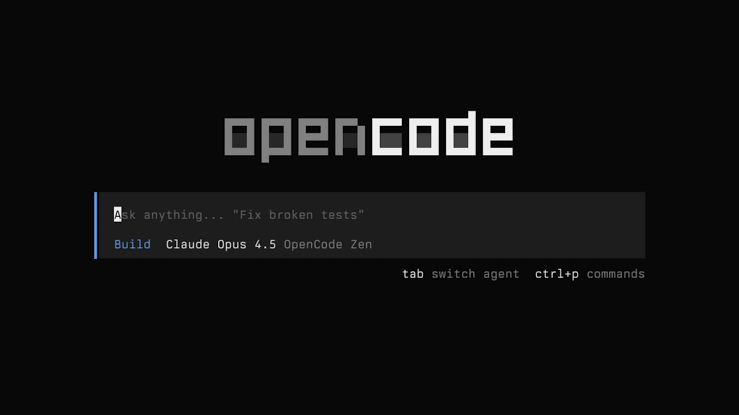
OpenCode is the highest-ranked open-source AI coding agent that supports multiple AI providers. Developers can switch between GPT-5.5, Claude, Gemini, and open-source models without vendor lock-in. Its architecture supports custom model fine-tuning and local deployment for sensitive codebases. This provider-agnostic approach is its strongest selling point in a market where organizations are increasingly wary of depending on a single AI vendor.
OpenCode's community-driven development has produced 200+ plugins for language-specific optimizations and CI/CD pipeline integrations. The plugin ecosystem covers everything from Python-specific debugging tools to Kubernetes deployment helpers. It is particularly popular among startups and security-conscious enterprises that require full control over their AI toolchain. For teams that want to experiment with different models or need to comply with strict data sovereignty requirements, OpenCode offers the flexibility that proprietary solutions cannot match.
7. Gemini CLI
Gemini CLI is Google's flagship AI development workflow, providing a powerful terminal-based experience optimized for developers in the Google ecosystem. It offers native support for Google Cloud services, Firebase, and Android development. The workflow excels at cloud-native application development, infrastructure-as-code generation, and automated deployment pipelines.
Gemini CLI's context window handles entire project codebases, enabling comprehensive refactoring and dependency analysis. Its real-time collaboration features allow multiple developers to work with AI assistance simultaneously on the same codebase. For teams building on Google Cloud Platform, the integration is seamless. Gemini CLI can generate Terraform configurations, set up Cloud Run services, and manage Firebase authentication flows without leaving the terminal. This tight integration with Google's infrastructure makes it the obvious choice for organizations already invested in the Google ecosystem.
8. Wrk (Fully Managed AI Workflow Service)
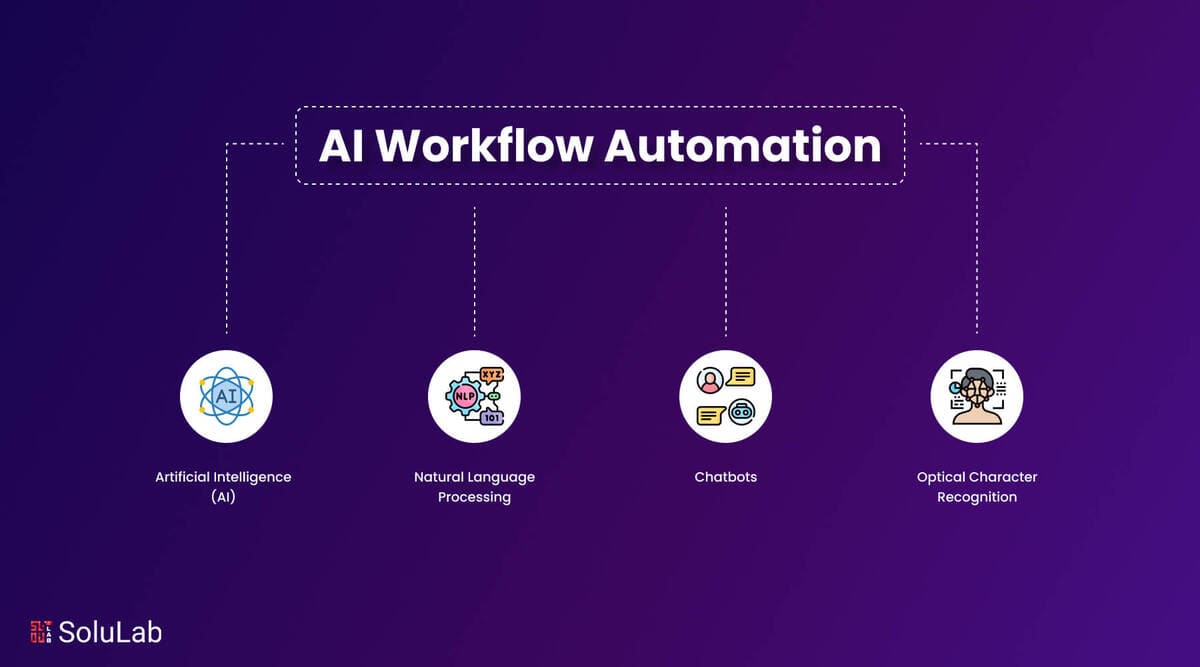
Wrk ranks as the top fully managed AI workflow automation service. It handles everything from infrastructure to AI model orchestration without requiring developer intervention. The platform pre-builds common business workflows for customer service, sales operations, and data processing, reducing setup time from weeks to hours.
Wrk's managed infrastructure automatically scales AI model usage based on demand, ensuring consistent performance without manual optimization. Its built-in monitoring and analytics provide actionable insights into workflow efficiency and cost optimization. For non-technical teams that need enterprise reliability without hiring a dedicated AI infrastructure team, Wrk is the best option. The platform abstracts away model selection, API rate limiting, and error handling, letting users focus on defining their business logic rather than managing infrastructure.
9. Zapier Central (AI-Powered Workflow Automation)
Zapier Central represents the evolution of Zapier into an AI-native workflow platform. It allows users to create automations using natural language descriptions rather than complex configuration. The platform handles 7,000+ app integrations and automatically suggests optimal workflow patterns based on user behavior and common use cases.
Zapier Central's AI copilot can analyze existing workflows and recommend improvements, reducing automation maintenance time by 50%. It remains the go-to choice for rapid prototyping and quick wins that need reliable scheduling without technical expertise. For teams that need to connect AI capabilities to their existing SaaS tools quickly, Zapier Central offers the fastest path to deployment. Its natural language interface means that non-technical team members can create sophisticated automations without writing a single line of code.
10. Composio (AI Agent Integration Platform)
Composio specializes in supercharging existing AI assistants like Claude and ChatGPT. It provides pre-built integrations and workflow templates for 200+ business tools. The platform enables AI agents to autonomously interact with CRMs, project management tools, databases, and communication platforms without custom API coding.
Composio's security layer ensures that AI agents only access authorized data and perform approved actions, making it suitable for enterprise deployment. It is the top choice for organizations that already use Claude or ChatGPT and want to extend their capabilities into complex business workflows without building from scratch. The platform claims a 100x productivity boost for Claude and ChatGPT workflows, a figure that reflects the time saved by using pre-built integrations rather than developing custom API connections. For power users of existing AI tools who want to push their capabilities further, Composio provides the bridge between chat-based AI and real business operations.
Related Posts
0 Comments
Join the discussion and share your thoughts
No Comments Yet
Be the first to share your thoughts on this article!