Top 10 Oldest Philosophers in the World 2026: Their Revolutionary Ideas Explained

Table of Contents
The human quest for understanding the universe, our existence, and the principles governing society has been a continuous endeavor for millennia. Philosophy stands as the bedrock of this inquiry, offering frameworks that have shaped civilizations and intellectual traditions across the globe. Our publication consistently examines the foundational thinkers whose insights continue to resonate, providing context for modern thought. This analysis presents the Top 10 oldest Philosophers in the World 2026, recognizing their pioneering contributions and the enduring relevance of their ideas.
Establishing the Philosophical Canon: Our Methodology
Our ranking of these eminent philosophers is based on a rigorous assessment of their historical precedence, the originality of their ideas, and their lasting influence on subsequent philosophical, scientific, and cultural developments. We prioritize those figures whose work represents a significant departure from purely mythological explanations, initiating a more systematic and rational approach to understanding the world. The primary criterion for inclusion in this list, in line with the topic, is their estimated period of activity, placing emphasis on those who flourished earliest in recorded history.
We draw upon established historical accounts and philosophical scholarship to determine their approximate chronological placement and the core tenets of their thought. Sources such as The Collector, History.com, UoPeople.edu, Research.com, and National Geographic Education provide foundational biographical and conceptual details for this assessment. We consider their role in establishing distinct schools of thought, their impact on the development of logic, ethics, metaphysics, and political theory, and the extent to which their concepts laid groundwork for future scientific inquiry. This evaluation focuses on their enduring intellectual heritage, examining how their original ideas transformed contemporary understanding and continue to inform modern discourse.
The Top 10 oldest Philosophers In the World 2026:
1. Thales of Miletus
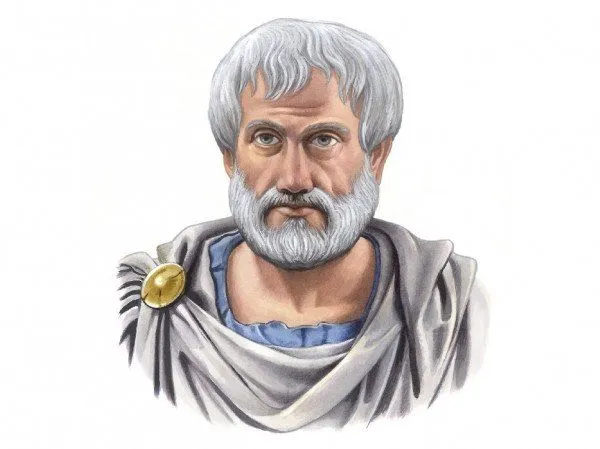
Flourishing from approximately 624 to 546 BCE, Thales of Miletus is widely recognized as the first philosopher in the Greek tradition and a pivotal figure in the transition from myth to reason. Hailing from the ancient Greek city of Miletus in Ionia, he initiated a new mode of inquiry by seeking natural explanations for the world's phenomena, rather than attributing them solely to divine intervention. This fundamental shift marks a significant turning point in intellectual history, laying the groundwork for scientific and philosophical thought.
Thales famously proposed that water was the fundamental substance, or arche, of the universe. He believed that water was the origin of all things, essential for life, and capable of transforming into various states, thus accounting for the diversity of the physical world. This hypothesis, though later superseded, represented a groundbreaking attempt to explain reality through a single, underlying material principle. His approach emphasized observation and rational deduction to comprehend the cosmos, moving away from purely mythological narratives that had previously dominated explanations of nature.
Beyond his cosmological theories, Thales is credited with early contributions to mathematics and astronomy. He is said to have predicted a solar eclipse, demonstrating an understanding of celestial mechanics, and to have measured the height of the pyramids using their shadows. His legacy lies not merely in his specific conclusions, but in his pioneering methodology-the systematic application of reason and empirical observation to understand the natural world. This intellectual innovation established the Milesian School of philosophy and profoundly influenced subsequent pre-Socratic thinkers, cementing his position as the earliest known Western philosopher, as noted by The Collector.
2. Anaximander
A student of Thales and a prominent member of the Milesian School, Anaximander lived from approximately 610 to 546 BCE. He expanded upon his teacher's foundational ideas, yet also introduced radical departures that further propelled philosophical inquiry. Anaximander is celebrated for his sophisticated cosmological model and his early attempts at a theory of biological development, demonstrating a remarkable intellectual leap for his time.
Anaximander challenged Thales's notion that water was the primary substance, arguing instead for a more abstract and indeterminate principle he called the "apeiron," or "the boundless." This apeiron was conceived as an infinite, eternal, and undifferentiated source from which all things arise and to which they return. He posited that the apeiron was not any specific element like water, but rather a primordial, limitless substance capable of generating the opposing qualities (hot and cold, wet and dry) that constitute the observable world. This concept introduced a level of abstraction previously unseen in philosophical thought, suggesting a reality beyond direct sensory experience.
Furthermore, Anaximander is credited with proposing an early theory of evolution. He suggested that life originated in water and that more complex forms, including humans, developed from simpler aquatic creatures. He theorized that humans, being helpless at birth, must have evolved from a creature that could fend for itself early on. His work also included the creation of an early world map and a celestial globe, reflecting his comprehensive interest in the physical cosmos. Anaximander's profound contributions lie in his move toward a more abstract and systematic explanation of the universe, further solidifying the Milesian School's role in shifting thought from myth to rational inquiry, as detailed by The Collector.
3. Pythagoras
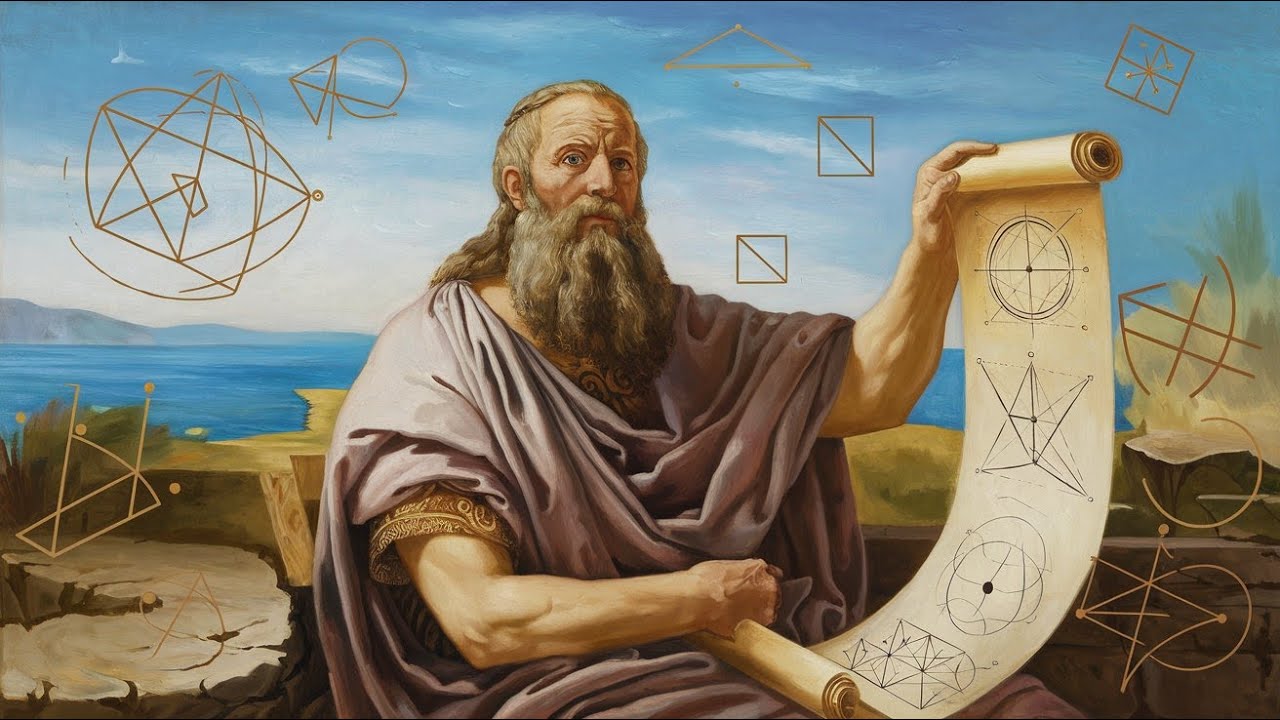
Flourishing from approximately 570 to 495 BCE, Pythagoras of Samos is widely recognized for his profound influence on both mathematics and philosophy. While famously associated with the Pythagorean theorem, his contributions extended far beyond geometry, encompassing a comprehensive worldview that linked the natural world with numerical order and spiritual harmony. He founded a unique religious and philosophical community that profoundly impacted Western thought.
Pythagoras believed that the natural world, which he termed "cosmos"-meaning an ordered, intelligible system-was fundamentally governed by numbers and mathematical relationships. He posited that numbers were not merely abstract entities but the underlying essence of reality, dictating everything from musical harmony to the movements of celestial bodies. This conviction led him to explore the mathematical ratios inherent in music, discovering that consonant intervals could be expressed as simple numerical fractions. This insight suggested a deep mathematical structure to the universe, inspiring later thinkers like Plato.
The Pythagorean school, a secretive brotherhood, focused on philosophy and mathematics as paths to personal salvation and purification. They adhered to a strict ethical code, including vegetarianism and a belief in the transmigration of souls. Pythagoras himself explored the balance between animals and humans in the universe, advocating for a holistic understanding of existence. His emphasis on numerical order and the rational structure of the cosmos laid foundational beliefs for the development of both science and abstract philosophy, influencing subsequent scientific methodology and metaphysical thought for centuries, as noted by History.com and National Geographic Education.
4. Confucius
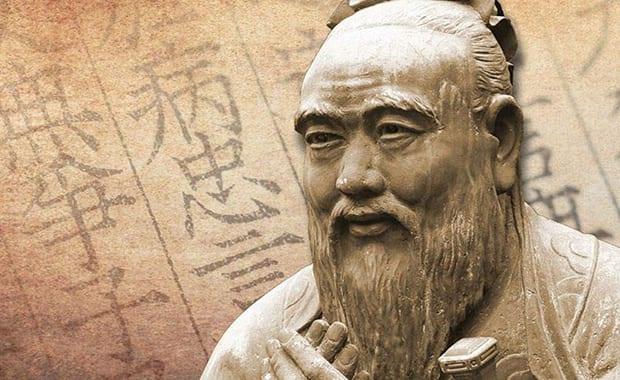
Born in 551 BCE and living until 479 BCE, Confucius stands as one of the most influential figures in Eastern thought, whose philosophy has shaped Chinese culture and society for over two millennia. His teachings, primarily compiled in "The Analects," provide a comprehensive framework for ethical conduct, social harmony, and effective governance. Confucius's ideas formed the basis of Confucianism, a belief system centered on personal and public morality.
Central to Confucian philosophy are the concepts of ren (humaneness or benevolence), li (ritual propriety or proper conduct), and yi (righteousness or moral disposition). Confucius emphasized the cultivation of moral character through self-improvement, education, and adherence to social roles. He believed that a harmonious society was built upon ethical relationships, particularly the "Five Relationships": ruler and subject, father and son, husband and wife, elder and younger brother, and friends. Each relationship carried specific duties and responsibilities, promoting order and stability.
His most famous ethical principle is captured by the Golden Rule: "What you do not wish for yourself, do not do to others." This ethos underpins his vision for a just and stable society. Confucius also stressed the importance of filial piety, reverence for elders and ancestors, as a cornerstone of family and societal cohesion. His ideas on moral governance, advocating that leaders should cultivate virtue to inspire their subjects, profoundly influenced Chinese imperial bureaucracy through the civil service examination system, which tested candidates on Confucian classics for over 2,000 years. Confucius's enduring legacy is his comprehensive system for ethical living and social order, as highlighted by Invaluable.com and UoPeople.edu.
5. Heraclitus
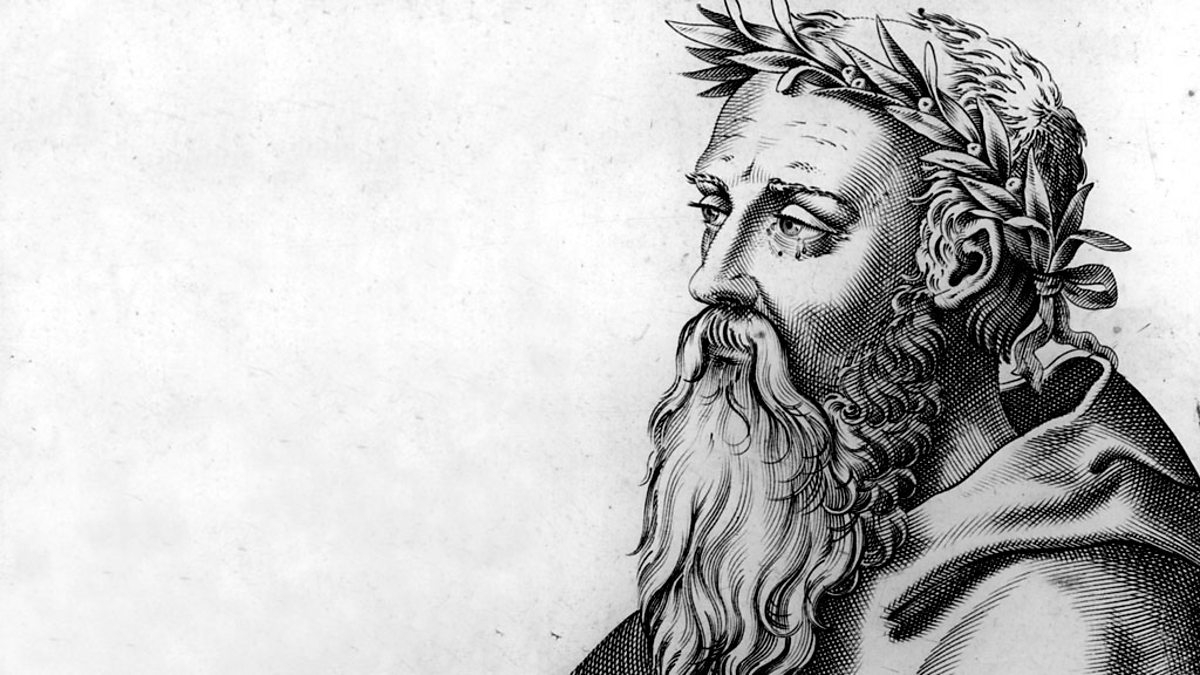
Living from approximately 540 to 480 BCE, Heraclitus of Ephesus was a pre-Socratic Greek philosopher renowned for his doctrine of constant change and the unity of opposites. His enigmatic and often paradoxical statements earned him the nickname "the Obscure." Heraclitus profoundly influenced later philosophical thought, particularly in metaphysics and epistemology, by challenging the notion of a static reality.
Heraclitus famously declared, "No man ever steps in the same river twice, for it's not the same river and he's not the same man." This statement encapsulates his core belief that change is the only constant in the universe. He viewed reality as a perpetual flux, an ever-flowing process rather than a fixed state. For Heraclitus, fire served as the primary symbol of this constant transformation, representing the dynamic and ever-shifting nature of existence. He saw fire as the fundamental element underlying all changes, burning and transforming everything into something else.
Another crucial aspect of his philosophy was the concept of the unity of opposites. Heraclitus argued that opposing forces-such as hot and cold, day and night, good and evil-are not contradictory but essential for cosmic harmony. He believed that tension and conflict between these opposites maintain the balance and order of the universe. This idea suggested that discord is inherent to reality and necessary for its existence. His emphasis on the dynamic, dialectical nature of reality profoundly influenced figures like Plato, the Stoics, and later German idealists, cementing his place as a pivotal figure in ancient Greek thought, according to History.com.
6. Lao-Tzu
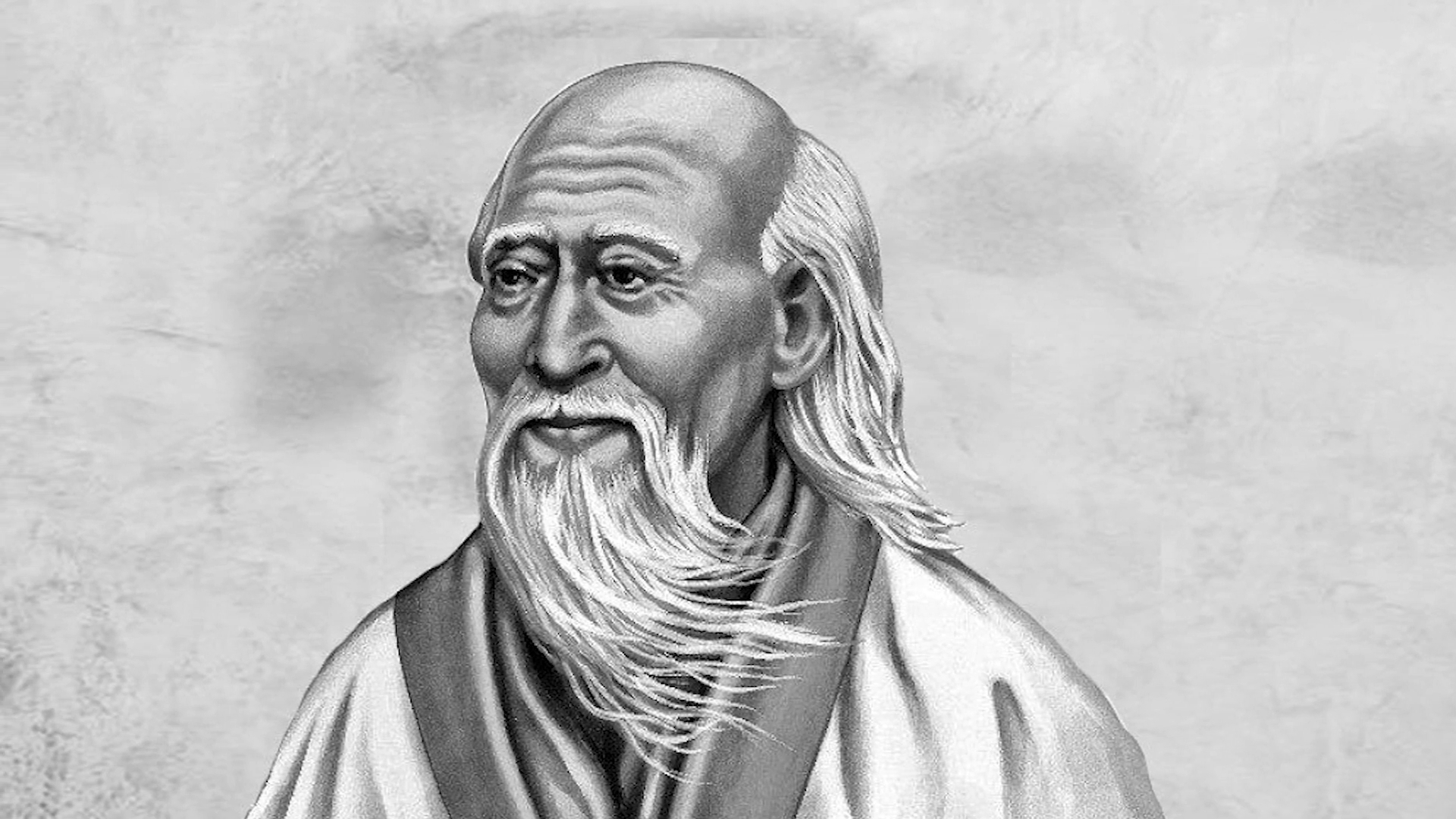
Flourishing around 500 BCE, Lao-Tzu is the revered figure credited with authoring the "Tao Te Ching" and establishing Taoism, one of China's most profound philosophical and spiritual traditions. While historical details about his life are sparse and often debated, his teachings have exerted an immense influence on Chinese thought, culture, and spirituality, emphasizing harmony with nature and a distinctive approach to governance and personal conduct.
Lao-Tzu's philosophy centers on the concept of the "Tao," often translated as "the Way." The Tao is an ineffable, eternal, and universal force that underlies all existence, guiding the natural order of the cosmos. He advocated for living in accordance with the Tao through a principle called wu wei, which means "non-action" or "effortless action." This does not imply idleness, but rather acting in harmony with the natural flow of things, without force or artificial intervention. By embracing spontaneity and simplicity, individuals can achieve inner peace and live a balanced life.
His philosophy introduced the concept of yin and yang, representing how seemingly opposing forces-like light and dark, male and female, active and passive-are interconnected, interdependent, and work together to create harmony in the world. Lao-Tzu believed in spiritual immortality, suggesting that by aligning with the Tao, the soul could become one with the universe after death, guided by chi (or qi), the vital life force. His teachings profoundly influenced not only individual spiritual practice but also political thought, advocating for minimal government intervention and a return to simpler, more natural ways of living. Lao-Tzu's emphasis on balance, humility, and the natural order continues to inspire contemplation and ethical living, as noted by UoPeople.edu.
7. Anaxagoras
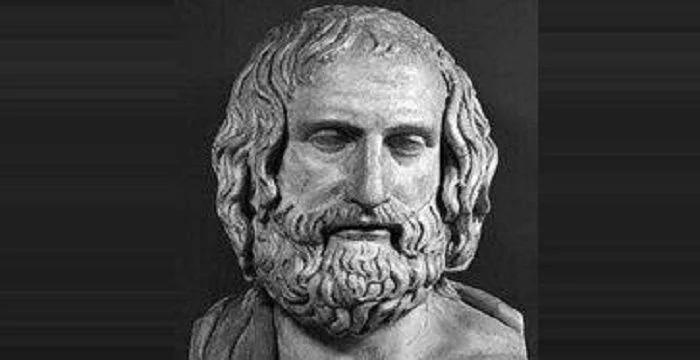
Living from approximately 500 to 428 BCE, Anaxagoras was a pre-Socratic Greek philosopher from Clazomenae who brought philosophy to Athens, profoundly influencing figures like Socrates, Euripides, and Pericles. He introduced groundbreaking concepts regarding the nature of matter and the organizing principle of the cosmos, challenging earlier Milesian and Eleatic views.
Anaxagoras famously proposed that "the seed of everything is in everything else." He believed that in the physical world, all substances are mixtures containing portions of all other substances, and nothing is pure on its own. For example, a piece of bread contains "seeds" of hair, flesh, and bone, which are then nourished and grow when consumed. This theory of "homoeomery" sought to explain how different substances could arise from a seemingly undifferentiated primordial mixture, suggesting an infinite divisibility of matter.
His most significant contribution, however, was the introduction of "Nous" (Mind) as the cosmic force that initiated motion and brought order to the chaotic mixture of primordial "seeds." Anaxagoras contended that Nous was an infinite, self-ruled, and intelligent principle responsible for arranging the universe into the ordered cosmos we observe. Unlike previous philosophers who sought a material primary element, Anaxagoras posited an intelligent, non-material principle as the ultimate cause of cosmic organization. This concept was a crucial step towards later teleological explanations of the universe. His ideas, though revolutionary, challenged contemporary religious beliefs, leading to accusations of impiety and eventual exile from Athens, underscoring the intellectual ferment of his era, as highlighted by Athens Insiders and IEP.utm.edu.
8. Sun Tzu

Flourishing during China's tumultuous Warring States period (475-221 BC), Sun Tzu is a legendary military strategist and philosopher whose enduring masterpiece, "The Art of War," remains one of the most influential treatises on strategy in history. While details of his life are shrouded in historical uncertainty, the principles attributed to him have transcended military application, finding relevance in business, politics, and everyday life.
Sun Tzu's philosophy extends far beyond mere battlefield tactics; it is a comprehensive system for understanding conflict, human nature, and the path to victory through intelligence and minimal confrontation. He emphasized the importance of knowing oneself and one's enemy, famously stating, "If you know the enemy and know yourself, you need not fear the result of a hundred battles." His teachings prioritize strategic planning, deception, and psychological warfare over brute force. He advocated for winning without fighting, stressing that the supreme art of war is to subdue the enemy without battle.
Key tenets of his philosophy include the importance of flexibility and adaptability, the careful assessment of terrain and timing, and the judicious use of resources. Sun Tzu believed in finding opportunity amid chaos and understanding the subtle dynamics of power. His work dissects the intricacies of leadership, discipline, and the morale of troops. These timeless principles, though originally conceived for military commanders, have become foundational in various fields, influencing government planning, corporate strategy, and even sports psychology worldwide. Sun Tzu's strategic wisdom continues to offer profound insights into navigating complex competitive environments, as detailed by Research.com.
9. Socrates
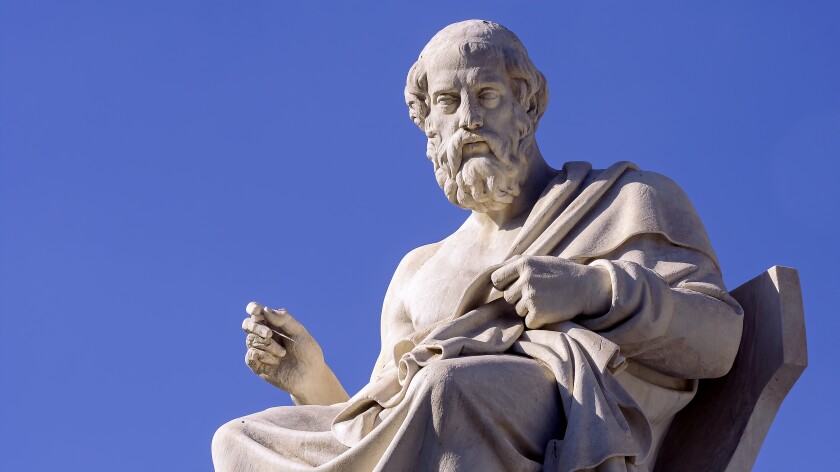
Living from approximately 470 to 399 BCE, Socrates is widely regarded as the founder of Western philosophy, despite leaving no written works of his own. His profound influence stems from his revolutionary method of inquiry and his unwavering commitment to ethical self-examination. What we know of Socrates comes almost entirely from the accounts of his students, most notably Plato's dialogues and Xenophon's writings, which paint a vivid picture of his intellectual pursuits.
Socrates pioneered what is now known as the Socratic method, a distinctive form of cooperative argumentative dialogue. This method involves asking a series of probing questions to stimulate critical thinking, expose underlying assumptions, and guide individuals toward deeper self-knowledge and moral clarity. He believed that true wisdom lay in recognizing one's own ignorance, famously asserting, "The unexamined life is not worth living." His philosophical inquiry primarily focused on ethics, virtue, and the pursuit of truth, challenging the conventional values and moral relativism prevalent in Athenian society.
Socrates consistently prioritized moral integrity and the well-being of the soul above material wealth or social status. He engaged citizens in public discourse, questioning their beliefs about justice, piety, and courage, often leading to discomfort among the Athenian elite. His trial and subsequent condemnation to death by hemlock in 399 BCE, on charges of "corrupting the youth" and impiety, became an enduring symbol of philosophical steadfastness and martyrdom. This event profoundly influenced subsequent thinkers, solidifying his image as a defender of truth against societal pressures and establishing him as a pivotal figure in the ethical tradition of thought, as outlined by UoPeople.edu and Invaluable.com.
10. Democritus

Born around 460 BCE, Democritus of Abdera was an influential pre-Socratic Greek philosopher who developed the groundbreaking atomic theory, a concept that laid the foundation for much of modern science. As a student of Leucippus, Democritus refined and expanded the idea that all matter is composed of indivisible particles, offering a purely mechanistic explanation for the universe, devoid of supernatural intervention.
Democritus espoused the theory that the entire cosmos consists of two fundamental elements: atoms and void. He posited that atoms are eternal, indestructible, physically indivisible, and move randomly in empty space. The variety of phenomena in the world, he argued, arises from the different shapes, sizes, arrangements, and positions of these atoms. All sensory qualities, such as color, taste, and sound, were considered by Democritus to be mere conventions or subjective perceptions, while the objective reality consisted solely of atoms and the void.
His philosophy contended that everything that exists is ultimately atoms and void, and all else is opinion. This radical idea divorced supernatural causes from physical phenomena, asserting that natural processes are governed by mechanical necessity rather than divine will. Democritus's atomism provided a coherent materialist worldview that profoundly influenced later scientific thought. It laid crucial groundwork for the scientific method and directly foreshadowed modern atomic theory, notably influencing John Dalton's atomic model in 1805. His emphasis on material particles and an empty space for their movement offered a powerful alternative to earlier philosophical explanations, making him a foundational figure in both philosophy and the history of science, as noted by Research.com and Catalyst.winchestercollege.org.
We are unable to include their latest pictures as our current formatting capabilities do not support direct image uploads within the text content.
The philosophical inquiries of these ten eminent thinkers have collectively charted the course of human understanding across millennia. From Thales's pioneering search for a fundamental substance to Democritus's revolutionary atomic theory, their ideas represent humanity's earliest systematic attempts to comprehend existence, morality, knowledge, and social organization. These oldest Philosophers in the World 2026 continue to offer profound insights into the nature of reality and the human condition.
Related Posts

Top 10 Richest Chefs in USA 2026: How They Built Culinary Empires
In recent years, the world of celebrity chefs has developed into a multi-billion dollar industry that combines culinary expertise with media savvy, entrepreneurialism, and the development of distinctive brands. In the year 2026, a number of the wealthiest chefs in the United States have not only established themselves as influential figures in the kitchen, but […] More

Top 10 Best Skaters in the World 2026: The Ultimate Showdown Awaits
As we move through 2026, a few skaters stand out for their extraordinary skills, creativity, and contributions to the sport. Here’s a look at the top 10 skaters in the world right now, each pushing the boundaries of skateboarding in their own unique way. Skateboarding has evolved into a highly dynamic sport, showcasing remarkable talent […] More

Top 10 Highest Paid Female Footballers In The World 2026: Salaries That Shocked the Industry
Top 10 Highest Paid Female Footballers In The World 2026 1. Sam Kerr One of the most notable players in women’s football is Sam Kerr, who hails from Australia and operates as a striker. Kerr has emerged as a significant personality in the sport as a result of her remarkable speed, her extraordinary ability to […] More

The Largest Oil Refineries In The World 2026: Essential Insights for Energy Stakeholders
As of the year 2026, the following is a list of the top ten largest refineries in the world, which are known for their enormous processing capacities and strategic significance. Refineries play an important part in the global energy sector because they convert crude oil into valuable products such as gasoline, diesel, and other petrochemicals. […] More
4 Comments
Join the discussion and share your thoughts