Top 10 Oldest Board Games Still Played In The World 2026: Why These Games Endure

Table of Contents
Board games have outlasted empires, survived technological revolutions, and continue to gather people around tables in 2026. While smartphones and virtual reality compete for attention, these ancient pastimes persist because they tap into something fundamental about human nature - the desire for strategic challenge, social connection, and tangible play. The oldest board games weren't just entertainment. They served as religious rituals, military training tools, and philosophical teaching devices.
Archaeological discoveries continue to reshape our understanding of these games. A backgammon board unearthed in Iran dates back 5,000 years. Senet boards found in Egyptian tombs reveal intricate religious symbolism. The Royal Game of Ur was reconstructed from clay tablets written in cuneiform. These aren't museum curiosities - people actively play reconstructed versions today, connecting directly with experiences that ancient Egyptians, Mesopotamians, and Romans once shared.
Selection Framework
Our analysis prioritized games with verified archaeological evidence and documented continuous play or successful modern reconstruction. We focused on confirmed dating from peer-reviewed archaeological sources, cultural significance across multiple civilizations, and current availability for play in 2026. Games that exist only as fragmentary boards without reconstructable rules were excluded. The ranking reflects age based on earliest confirmed evidence, not estimated origins.
The Top 10 Oldest Board Games Still Played In The World 2026:
1. Senet
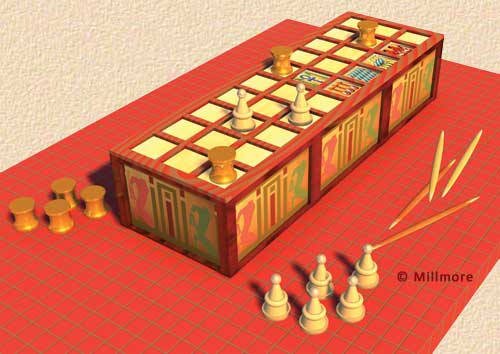
Senet emerged approximately 5,100 years ago during Egypt's First Dynasty around 3100 BCE, making it the oldest board game with substantial archaeological documentation. Tutankhamun's tomb contained multiple senet boards, including an ornate ivory set still preserved today. Queen Nefertari's tomb paintings show her playing senet, and the game appears throughout Egyptian art from the Old Kingdom through the Ptolemaic period.
The game board consisted of 30 squares arranged in three rows of ten. Players moved pieces according to throw sticks or knucklebones, racing to remove all their pieces from the board first. But senet transcended mere entertainment. The game board represented the journey through the afterlife's challenges, with specific squares symbolizing deities and obstacles the deceased would face. The Book of the Dead references senet, and temple inscriptions show gods themselves playing the game.
Social class determined the board's quality but not the game's appeal. Wealthy Egyptians commissioned elaborate gameboards from precious materials - ebony inlaid with ivory, squares marked with gold. Common people carved grids directly into stone surfaces or scratched them in sand. This universal accessibility across economic classes demonstrates senet's cultural penetration. Modern reconstructions based on archaeological research allow players to experience this 5,000-year-old game using rules scholars have pieced together from visual evidence and limited textual references.
2. The Royal Game of Ur
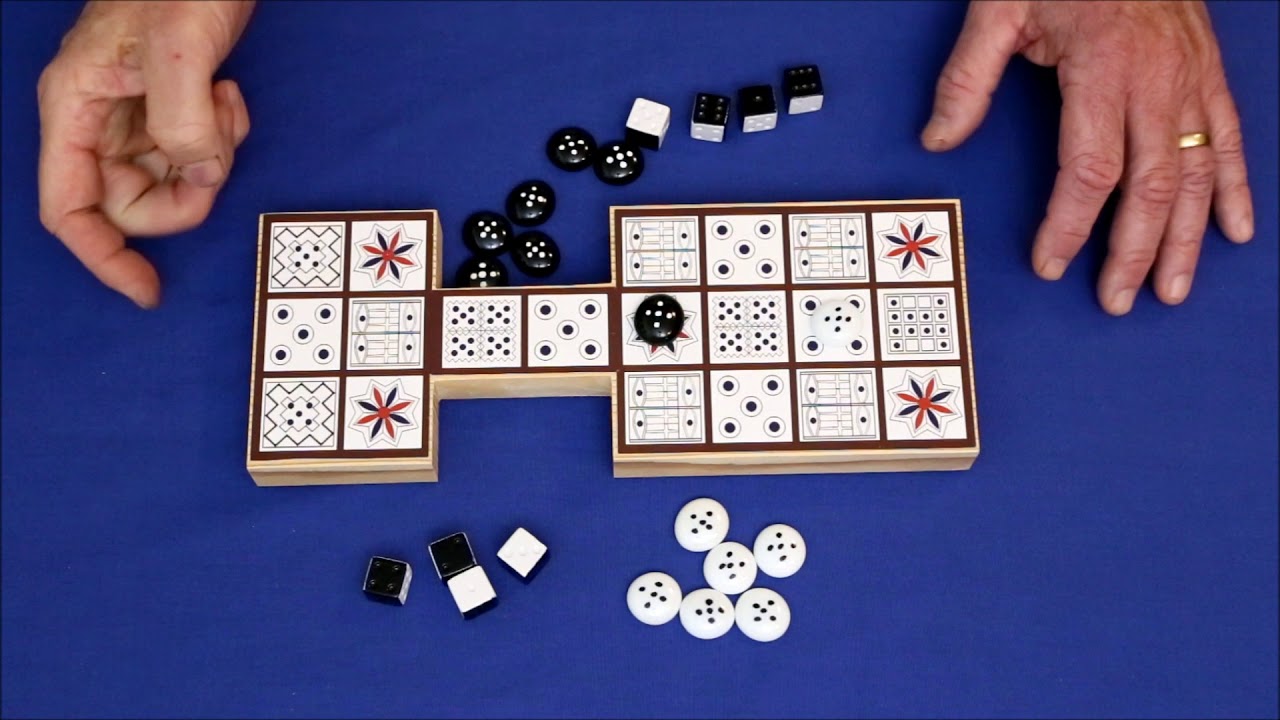
Dating back approximately 4,600 years to around 2600-2400 BCE in Ancient Mesopotamia, the Royal Game of Ur represents one of humanity's earliest complex strategic board games. British archaeologist Sir Charles Leonard Woolley discovered two spectacular gameboards in 1920 while excavating the Royal Tombs of Ur in modern-day southern Iraq. These boards featured intricate shell and lapis lazuli inlays set in bitumen, displaying remarkable craftsmanship that indicated their owners' elite status.
What makes this game particularly significant is that scholars successfully reconstructed the complete rules. In 1982, British Museum curator Irving Finkel translated a Babylonian clay tablet dating to 177 BCE that contained detailed gameplay instructions. This breakthrough meant the Royal Game of Ur could be played authentically, not just theorized about. The game involved two players racing pieces along a figure-8 shaped track, using tetrahedral dice to determine movement. Strategic squares offered protection or extra turns, creating tactical depth that kept players engaged.
The game spread throughout the ancient Near East, with boards found in locations spanning from the Mediterranean to India. Archaeological evidence shows continuous play for nearly 3,000 years. Modern reconstructions sell online, and game cafes occasionally host tournaments. The combination of luck and strategy creates dynamic gameplay that feels fresh despite its ancient origins.
3. Backgammon
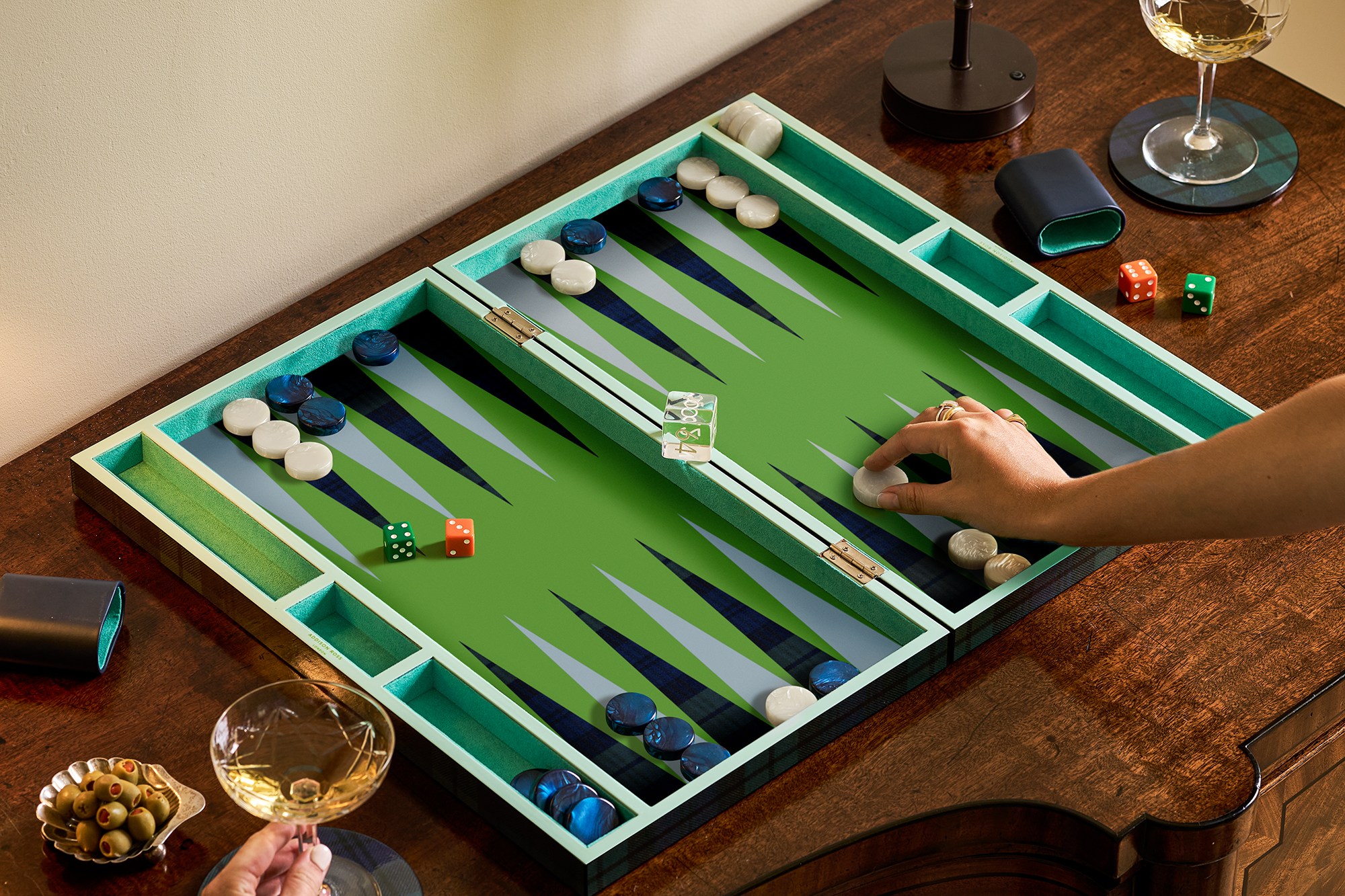
Backgammon's 5,000-year lineage makes it one of the oldest games with direct descendants still played worldwide. The 2004 archaeological discovery in Shahr-e Sukhteh, Iran, changed the game's historical timeline. Researchers found a complete gameboard made of ebony with sixty markers crafted from turquoise and agate, plus dice, all dated to approximately 3000 BCE. This Iranian board predates previously known examples by centuries.
The game evolved through multiple cultural iterations - Tabula in Rome, Nard in Persia, Shuwan-liu in China - each civilization adapting core mechanics while maintaining the essential race-and-block structure. Backgammon's enduring appeal stems from its perfect balance between chance and skill. Dice introduce uncertainty, but expert players consistently outperform novices through superior strategy, particularly in doubling cube decisions and endgame technique.
Modern backgammon maintains surprising popularity. Recent surveys indicate 8% of respondents play the game regularly, a remarkable retention rate for a 5,000-year-old pastime. Online platforms host thousands of daily matches, and serious tournaments offer substantial prize pools. The World Backgammon Federation oversees international competition, and neural network AI has recently achieved superhuman-level play, generating new strategic insights that top players study. The game's mathematical complexity continues to attract academic research in probability theory and game theory.
4. Go
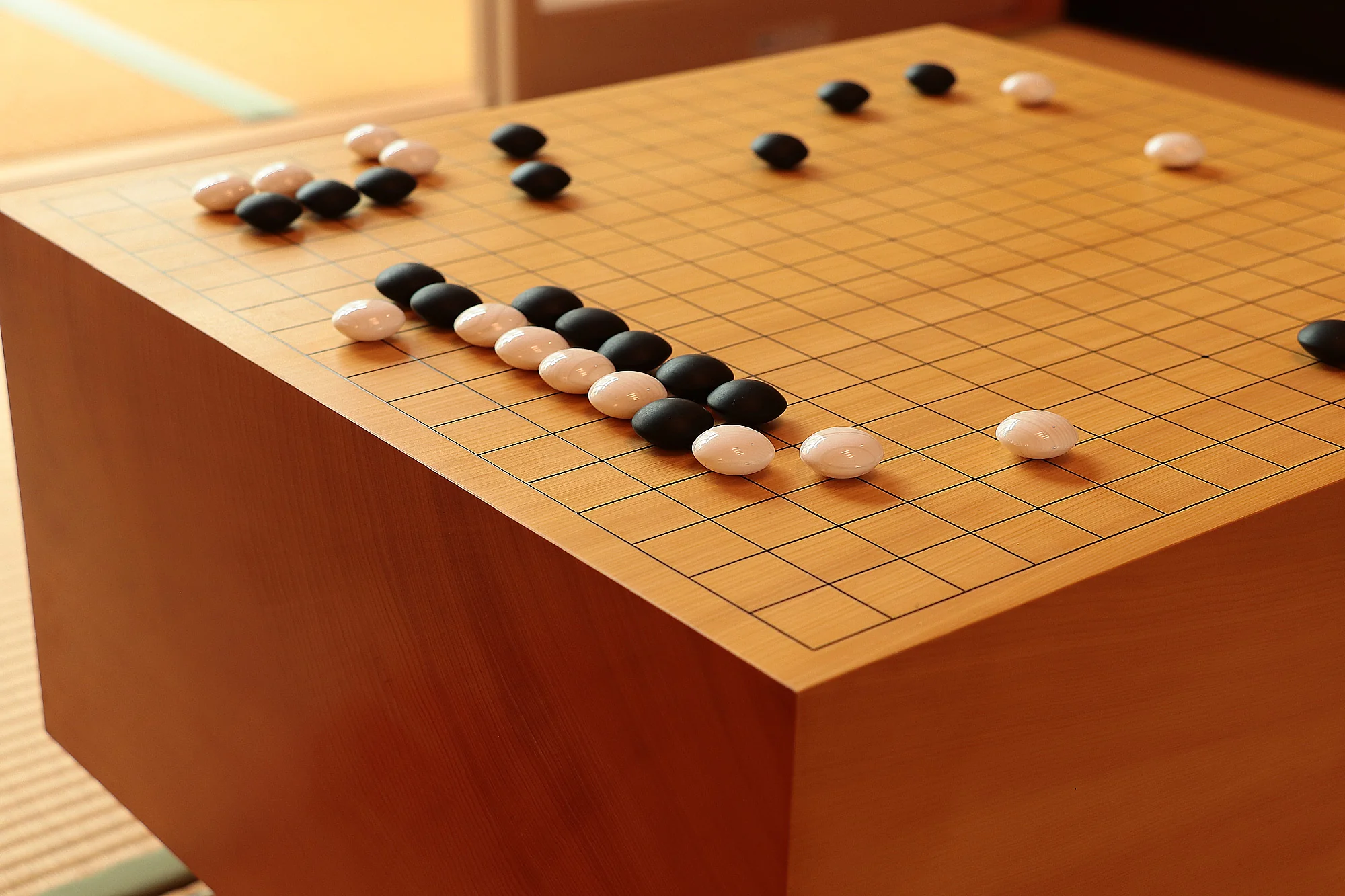
Go originated in China 3,000-4,000 years ago, with traditional accounts attributing its creation to Emperor Yao between 2356-2255 BCE. Legend claims Yao designed the game to teach his son Danzhu discipline, concentration, and balance - qualities the prince apparently lacked. Whether historically accurate or not, this origin story reflects go's longstanding association with intellectual cultivation and moral development in East Asian culture.
The game's rules are deceptively simple. Two players place black and white stones on a 19-by-19 grid, attempting to surround territory and capture opponent stones. Yet this simplicity produces staggering complexity. Go's branching factor vastly exceeds chess, making it computationally intractable for traditional algorithms. This complexity gave go a mystique as the ultimate test of human intuition and strategic thinking.
Japan embraced go during the medieval period, establishing professional schools that awarded intellectual prestige to top players. The four great houses - Honinbo, Hayashi, Inoue, and Yasui - competed for shogunate patronage, creating a rigorous competitive tradition that continues today. Modern go received an unexpected popularity boost from the manga and anime series "Hikaru no Go," which sparked renewed interest among younger generations. Google DeepMind's AlphaGo defeating world champion Lee Sedol in 2016 brought go into global mainstream consciousness. Professional players now study AI-generated moves that revolutionized opening theory and middle-game fighting techniques.
5. Nine Men's Morris
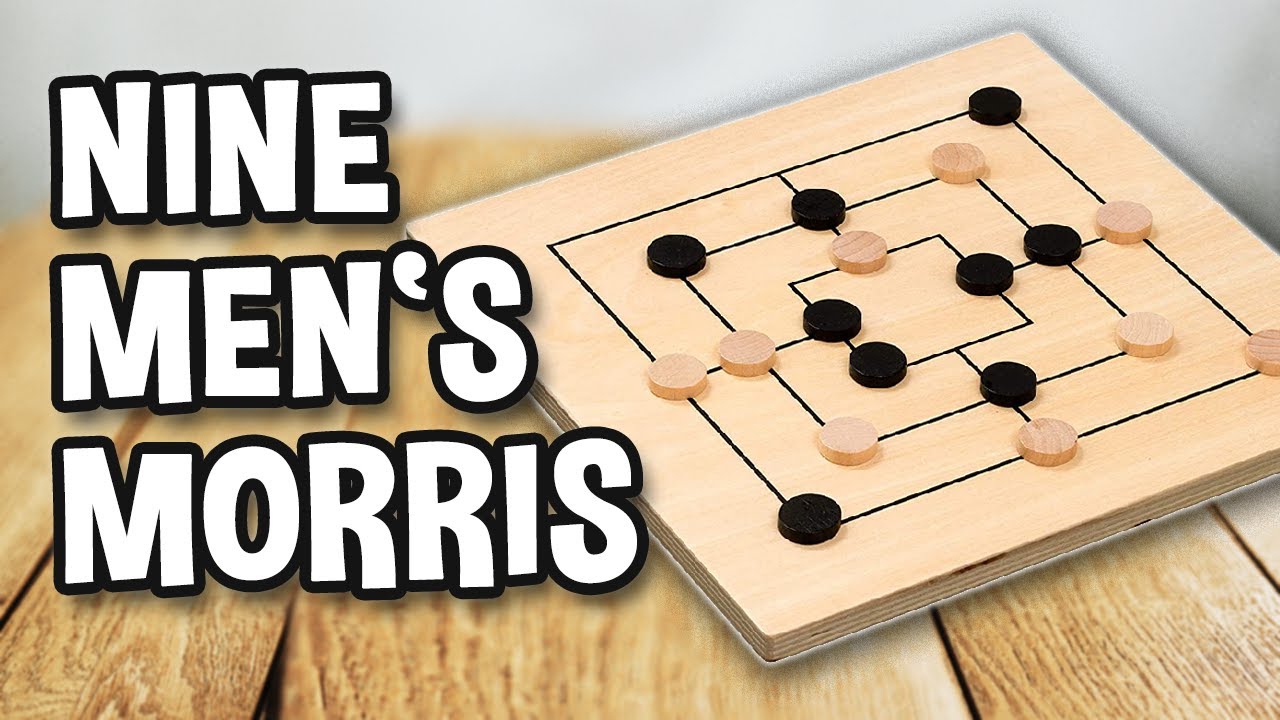
Archaeological evidence places Nine Men's Morris at approximately 3,460 years old, with game boards carved into Egyptian structures dating to around 1440 BCE. But the game's true geographic spread is remarkable - boards have been found carved into Roman buildings, Viking settlements, medieval European castles, and ancient Chinese sites. This widespread distribution suggests either independent invention or very early cultural transmission.
The game's mechanics are straightforward. Two players take turns placing nine pieces each on a board consisting of three concentric squares connected by lines. Once all pieces are placed, players slide pieces along lines, attempting to form "mills" - three pieces in a row. Forming a mill allows capturing an opponent's piece. Victory comes from reducing the opponent to two pieces or blocking all legal moves. This combination of placement phase and movement phase creates distinct strategic challenges.
Medieval Europe particularly embraced Nine Men's Morris. Boards carved into church pews and cloister seats indicate monks played during leisure hours. The game appears in literature, including Shakespeare's "A Midsummer Night's Dream," where Titania mentions abandoned morris boards overgrown with grass. Modern variants include Three Men's Morris, Six Men's Morris, and Twelve Men's Morris, each offering different strategic depths. The game maintains steady popularity in pub games culture and remains a common sight in traditional game collections.
6. Ludus Latrunculorum
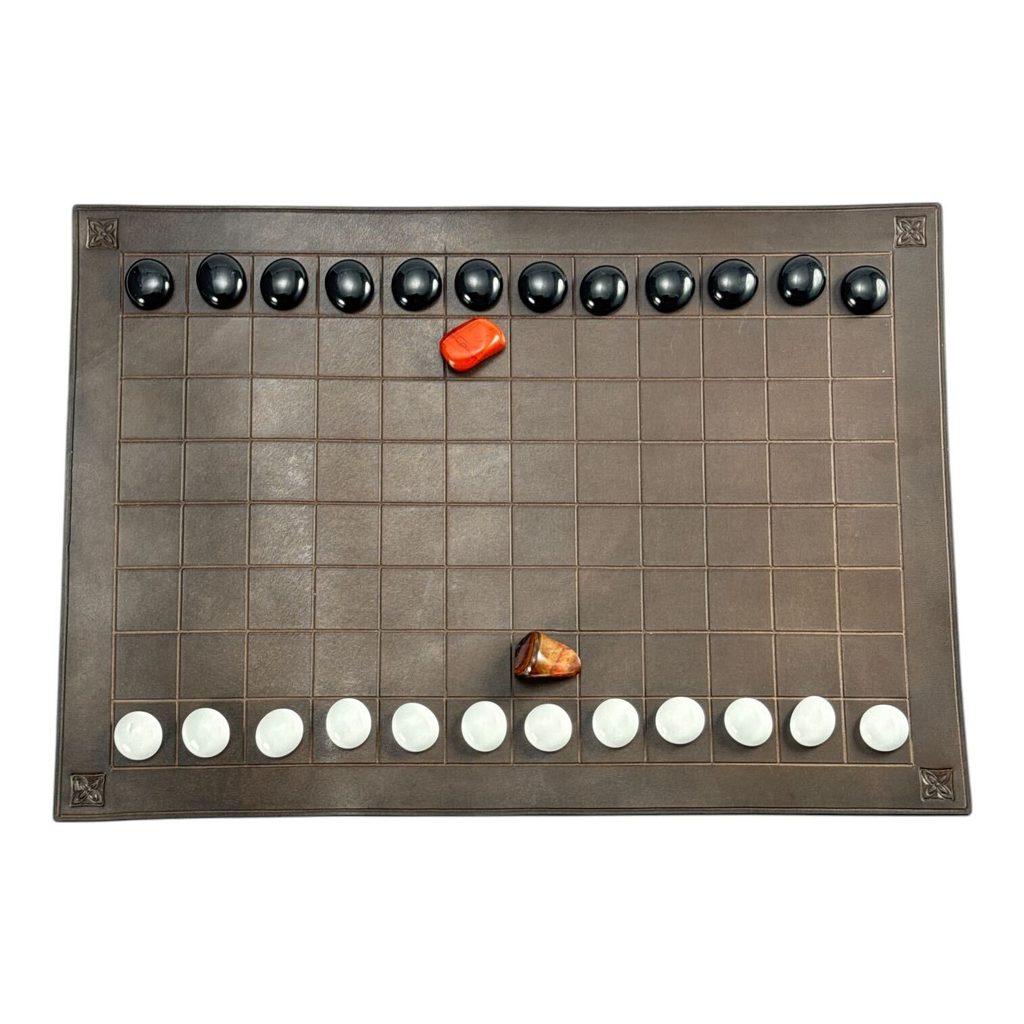
Ludus Latrunculorum, the "Game of Mercenaries" or "Game of Soldiers," dominated Roman recreational culture for approximately 700 years from roughly 300 BCE through 400 CE. This two-player strategy game tested military tactical thinking on boards ranging from modest 8-by-8 grids to massive 17-by-18 square battlefields. The game's association with military strategy made it particularly popular among Roman officers and soldiers stationed throughout the empire.
Evidence suggests Ludus Latrunculorum descended from the ancient Greek game Petteia. Aristotle referenced Petteia in his writings, comparing "a man without a city-state" to "an isolated piece in Petteia," vulnerable to capture. This philosophical reference indicates the game carried intellectual weight in classical civilization. Roman poets and writers mentioned ludus latrunculorum frequently, treating skill at the game as a mark of strategic thinking ability.
The game involved capturing opponent pieces through custodian capture - trapping an enemy piece between two friendly pieces. Players maneuvered pieces orthogonally across the grid, seeking to outflank and surround opponent forces while protecting their own formations. Archaeological finds across former Roman territories have uncovered gameboards, but complete rule reconstruction remains elusive. Scholars debate specific movement rules and winning conditions based on fragmentary literary references and board markings.
7. Tafl
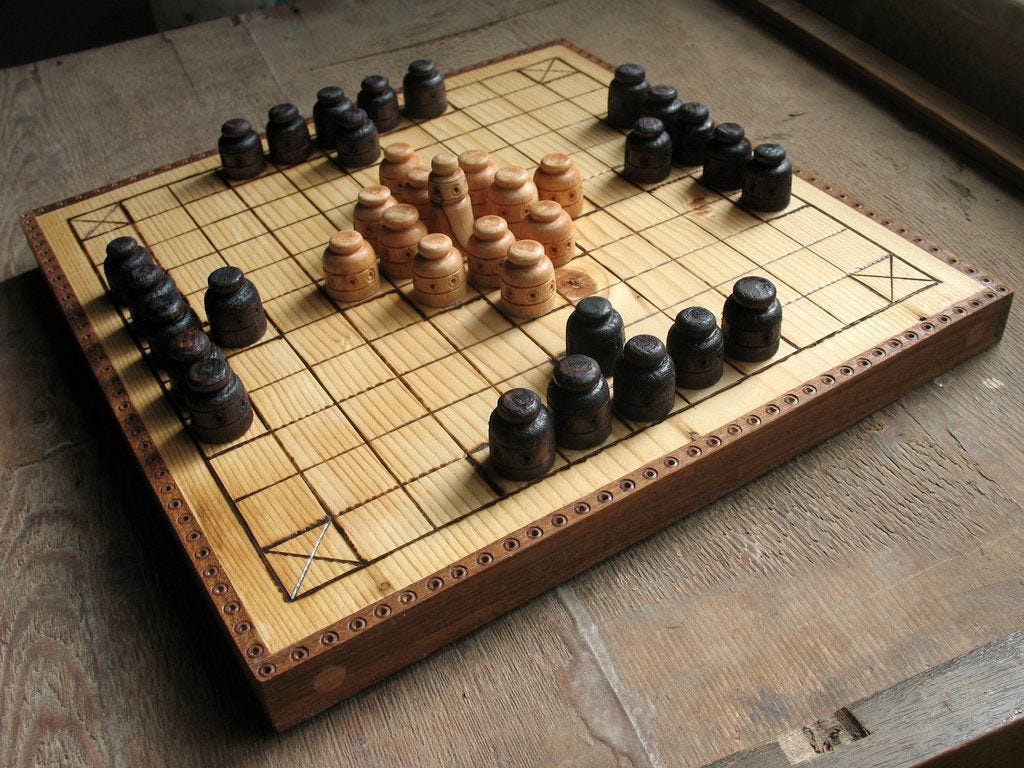
Tafl emerged as a distinctly Northern European game variant during the Viking Age, flourishing from approximately 400-1000 CE for roughly 600 years. The game evolved from Roman Ludus Latrunculorum after contact between Germanic tribes and the Roman Empire, but Viking culture adapted it into something uniquely their own. Unlike its Roman ancestor, tafl featured asymmetric gameplay - one player defended a king piece while the attacker attempted capture.
Multiple tafl variants existed across Scandinavia and the British Isles. Hnefatafl used an 11-by-11 board with a king in the center surrounded by defenders, while attacking pieces started from the board's edges. Tablut, documented in Lapland, used a 9-by-9 board. Brandubh, the Irish variant, featured a 7-by-7 grid. These variants shared core mechanics but differed in board size, piece count, and specific capture rules, suggesting regional adaptation and experimentation.
Viking traders and raiders spread tafl throughout their sphere of influence. Archaeological finds include tafl boards and pieces from Iceland, Greenland, Scotland, Ireland, and even Viking settlements in North America. The game's popularity declined sharply after 1000 CE as chess spread northward from southern Europe. Chess offered similar strategic depth with standardized rules that facilitated long-distance competition and discussion. By 1400, tafl had largely vanished from active play, though modern reconstructions have revived interest among historical gaming enthusiasts.
8. Chess
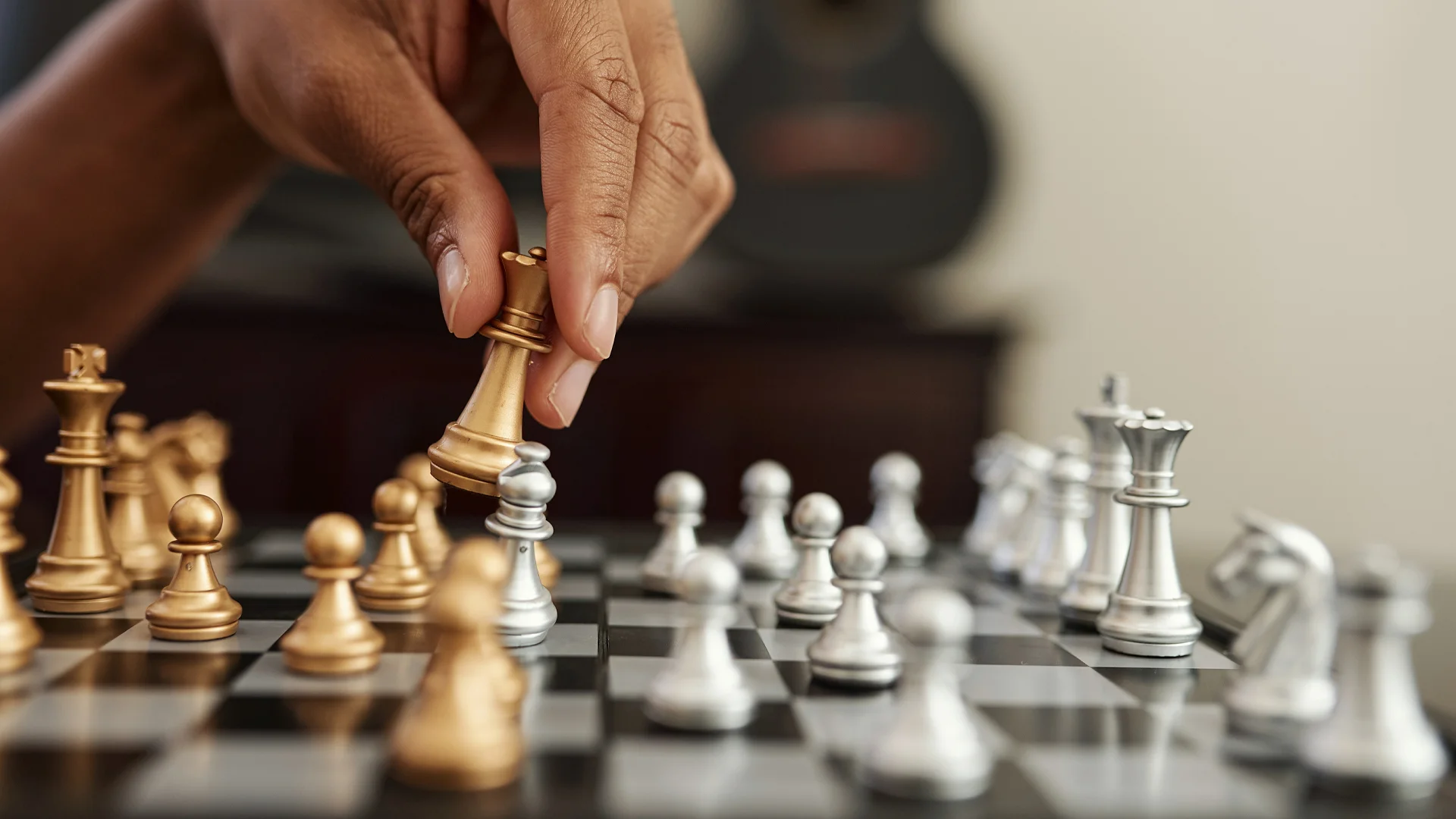
Chess emerged approximately 1,426 years ago around 600 CE, likely evolving from the Indian game Chaturanga. The Sanskrit name means "four divisions" - infantry, cavalry, elephantry, and chariotry - reflecting ancient Indian military structure. These pieces became modern pawns, knights, bishops, and rooks as the game spread westward through Persia and into the Islamic world, eventually reaching medieval Europe where it assumed its current form.
Modern chess stands as the third most-played board game globally, with 24% of surveyed individuals reporting they played within the past year. This remarkable retention rate for a 1,400-year-old game stems from chess's unique combination of perfect information, zero randomness, and near-infinite strategic depth. Unlike dice games or card games, chess rewards pure skill and preparation, making it the definitive competitive strategy game.
The establishment of FIDE (Fédération Internationale des Échecs) in 1924 standardized international competition and created the Elo rating system, which revolutionized skill measurement in competitive games. Computer chess development drove artificial intelligence research for decades. IBM's Deep Blue defeating world champion Garry Kasparov in 1997 marked a watershed moment in AI history. Modern chess engines like Stockfish and neural network-based systems now play at superhuman levels, transforming how top players prepare and analyze games. Online platforms host millions of daily games, and streaming platforms feature grandmaster commentary attracting tens of thousands of viewers. The 2020 Netflix series "The Queen's Gambit" sparked renewed mainstream interest, with chess set sales increasing dramatically.
9. Snakes and Ladders
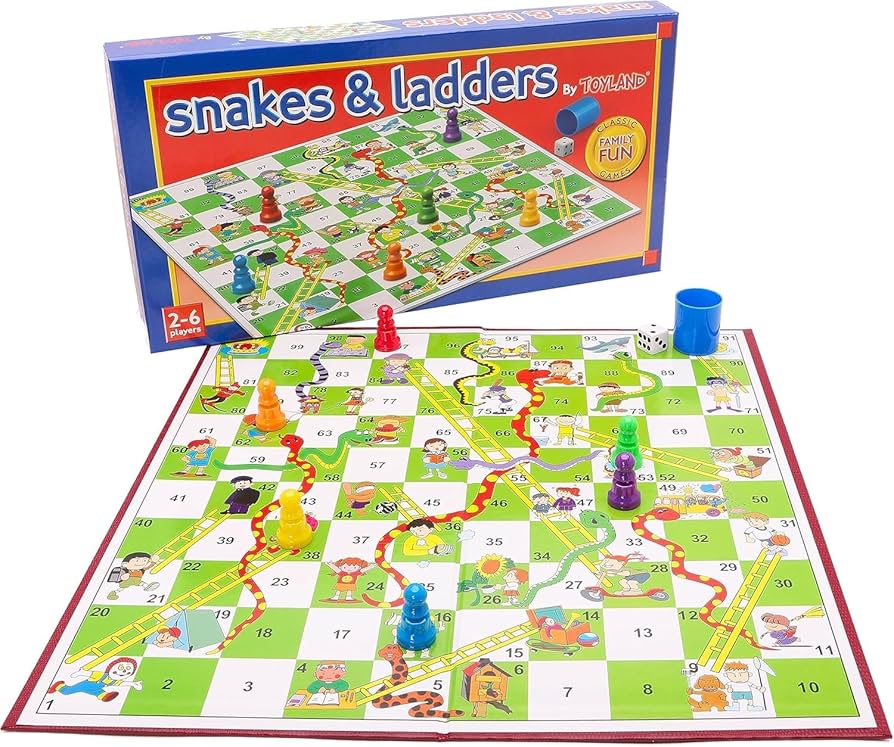
Snakes and Ladders represents a family of ancient Indian games rather than a single unified design. The original Indian version, Gyan Chauper, embodied Hindu philosophy about karma and the soul's journey toward enlightenment. Ladders represented virtues - faith, reliability, generosity - that elevate the soul, while snakes symbolized vices - lust, anger, theft - that cause spiritual descent. Players rolled dice and moved through a moral landscape where good actions led upward and bad actions sent them down.
Related games in this family include Ludo (derived from Pachisi) and Parcheesi, each maintaining the race-around-a-track structure while varying specific mechanics. Pachisi used cloth boards with cross-shaped tracks and cowrie shells instead of dice. Mughal Emperor Akbar famously created a courtyard-sized Pachisi board at Fatehpur Sikri where court ladies dressed in colored costumes served as game pieces.
British colonials discovered these games in 19th century India and adapted them for Victorian audiences. The 1943 Milton Bradley version stripped away religious symbolism, creating a purely secular children's game. Modern Snakes and Ladders maintains popularity as a first board game for young children because it requires no reading ability or strategic thinking - just counting and following simple rules. The game's pure chance element means even very young children can win against adults, making it appealing for family play despite offering no strategic depth.
10. Checkers
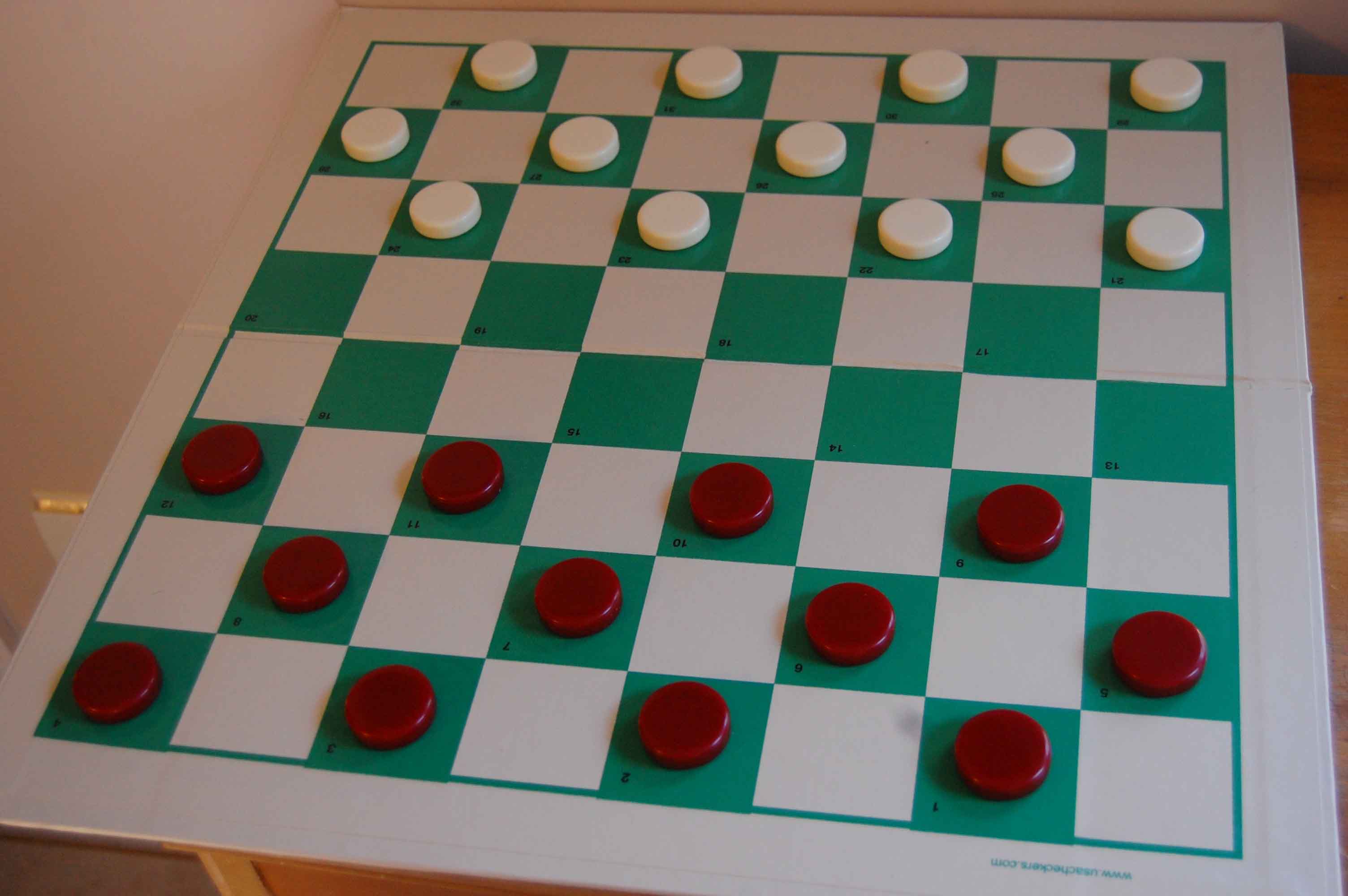
Checkers claims ancient roots potentially dating to around 3000 BCE, with checkers-like games discovered in ancient Mesopotamian archaeological sites. However, the modern standardized version evolved through medieval European variants, particularly the French game Jeu de Dames and the English Draughts. This evolutionary history makes precise dating difficult - the core jumping-capture mechanic appears ancient, but contemporary rules crystallized much later.
Despite millennia of development, checkers maintains exceptional modern popularity. Survey data shows 25% of respondents played checkers within the past year, making it the second most-played board game globally after only monopoly-style games. This remarkable retention stems from checkers' optimal balance of simplicity and depth. Rules fit on a single page and beginners grasp them within minutes, yet mastery requires years of study.
Checkers faced an unexpected challenge in 2007 when computer scientists at the University of Alberta announced they had "solved" the game. Using 18 years of computation time, they proved that perfect play from both sides results in a draw. This theoretical solution might have diminished competitive interest, but practical human play remains far from perfect. World championship matches still produce decisive results, and the tactical complexity in middle-game positions maintains the game's challenge. Online checkers communities discuss opening theory, endgame databases analyze positions with seven or fewer pieces, and mobile apps introduce new players daily. The game's accessibility ensures it will remain in active play for generations.
Related Posts

Top 10 Richest Chefs in USA 2026: How They Built Culinary Empires
In recent years, the world of celebrity chefs has developed into a multi-billion dollar industry that combines culinary expertise with media savvy, entrepreneurialism, and the development of distinctive brands. In the year 2026, a number of the wealthiest chefs in the United States have not only established themselves as influential figures in the kitchen, but […] More

Top 10 Best Skaters in the World 2026: The Ultimate Showdown Awaits
As we move through 2026, a few skaters stand out for their extraordinary skills, creativity, and contributions to the sport. Here’s a look at the top 10 skaters in the world right now, each pushing the boundaries of skateboarding in their own unique way. Skateboarding has evolved into a highly dynamic sport, showcasing remarkable talent […] More

Top 10 Highest Paid Female Footballers In The World 2026: Salaries That Shocked the Industry
Top 10 Highest Paid Female Footballers In The World 2026 1. Sam Kerr One of the most notable players in women’s football is Sam Kerr, who hails from Australia and operates as a striker. Kerr has emerged as a significant personality in the sport as a result of her remarkable speed, her extraordinary ability to […] More

The Largest Oil Refineries In The World 2026: Essential Insights for Energy Stakeholders
As of the year 2026, the following is a list of the top ten largest refineries in the world, which are known for their enormous processing capacities and strategic significance. Refineries play an important part in the global energy sector because they convert crude oil into valuable products such as gasoline, diesel, and other petrochemicals. […] More
1 Comment
Join the discussion and share your thoughts