Top 10 Most Traded Currencies In The World 2026

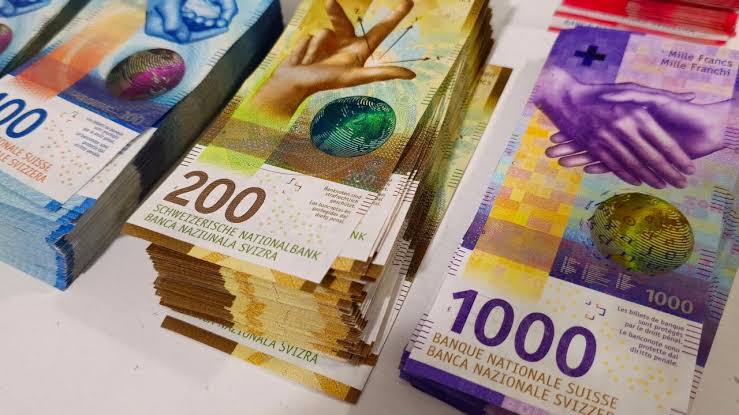
Table of Contents
Alright, let's talk money. Not just any money, but the kind that shifts trillions around the globe every single day. We're talking about the foreign exchange market, or forex, and in 2026, it's still the biggest game in town. Over $7.5 trillion changes hands daily. That's a staggering number, right? It tells you a lot about which currencies truly matter on the world stage, the ones that traders, banks, and governments can't seem to get enough of.
Forget what your buddy down the street says about Bitcoin being the future of everything. When it comes to real-world, high-volume trading, the old guard still rules. These aren't just pieces of paper or digital entries; they're reflections of economic power, geopolitical stability, and the sheer inertia of global finance. For us at Nubia Magazine, understanding these currencies isn't just an academic exercise; it's about giving you the real picture of where the financial world is headed.
So, which currencies are making all the noise, and more importantly, moving all the money? Let's break down the top ten most traded currencies in the world for 2026. This isn't about which one buys the most lattes; it's about which ones are traded the most, day in and day out.
How We Puts These Rankings Together
You see a lot of "top lists" out there, but how many actually tell you how they got their numbers? here, we don't just pull figures out of thin air. For this 2026 currency ranking, we dug deep into the most reliable sources, because if you're going to trust us with your financial insights, we better be right.
Our primary source is the Bank for International Settlements (BIS) Triennial Central Bank Survey. Think of it as the gold standard for global forex data. Their last full survey was in 2022, but we've pushed those numbers forward into 2025 and 2026 using projections from industry reports, like those from RemitBee, and expert analyses. We cross-referenced trading volumes with current 2026 exchange rates from places like Open Exchange, often cited by Forbes. This helps us paint a picture of what's happening right nowin the market.
We're looking at a few key things:
- Trading Volume Share:This is the big one. What percentage of the global daily forex turnover does a currency command? We're talking about a market that clears over $7.5 trillion every 24 hours.
- Liquidity and Depth:How easily can you buy or sell a huge amount of this currency without moving the market price too much? The more liquid, the better for big players.
- Reserve Status:How much of this currency do central banks around the world hold in their vaults? This tells you a lot about trust and stability. We're looking at IMF COFER data, updated for early 2026.
- Future Projections:We've factored in things like the US Federal Reserve's rate decisions, the Bank of Japan's policy shifts, and even geopolitical events that shape currency movements in 2026.
A really important distinction we make is between "most traded" and "most valuable." You'll see headlines about the Kuwaiti Dinar being the "most valuable" currency because one KWD buys you something like $3.25 USD. But that's a unit value. It doesn't mean it's traded much. In fact, currencies like the KWD are often pegged and have very low trading volumes. Our list focuses purely on volume-the currencies that are actually moving the most money across borders. This approach gives you the real story for anyone actually trading in this market.
The Top 10 Most Traded Currencies In The World 2026:
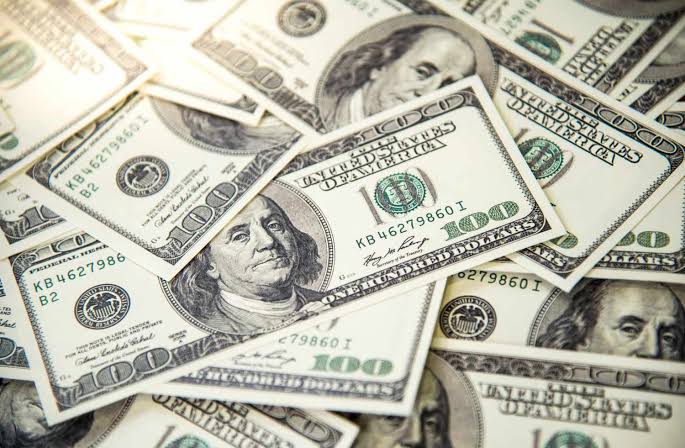
Look, there's no way around it: the US Dollar is still the undisputed heavyweight champion of the forex world. It absolutely dominates, grabbing a massive 89.2% of all forex trades. We're talking about daily volumes that blow past $6 trillion in 2026. It's the currency of choice for just about everything-oil, gold, copper-you name it, it's priced in USD. It's also the primary reserve currency, meaning central banks everywhere stash away dollars more than anything else, making up a whopping 58% of global holdings by early 2026.
Why does it stay on top? The US economy is a monster, a $28 trillion GDP machine. The Federal Reserve's policies, even when they're driving me nuts, still dictate global interest rates. And let's not forget its safe-haven status; when the world gets shaky, everyone runs to the dollar. Even though it's technically ranked #10 in terms of how much one unit buys (a dollar is a dollar, right?), its trading dominance is just unmatched. The EUR/USD pair alone accounts for almost a quarter of all forex volume. My one big gripe? The endless chatter about "de-dollarization" never seems to actually move the needle much. It's like watching a broken record sometimes.
2. The Euro
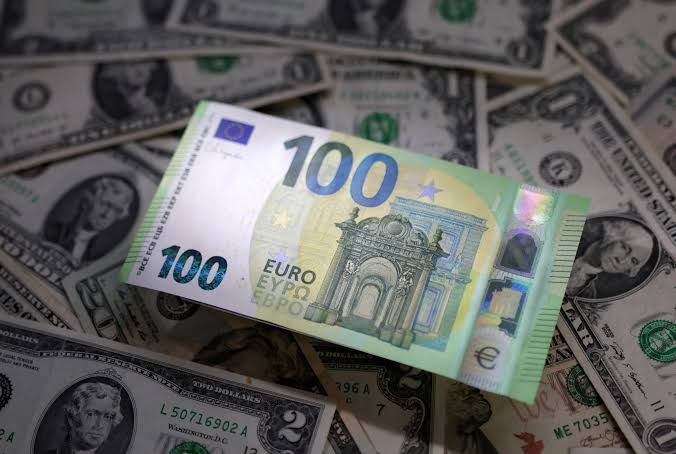
If the USD is the champ, the Euro is the perennial contender. It sits comfortably at second place, accounting for 28.9% of global forex turnover. The EUR/USD pair itself is a beast, seeing over $1.5 trillion in trades every day. You've got 20 different Eurozone countries all using this currency, and their combined GDP is a hefty $15 trillion. The European Central Bank (ECB) has been pretty aggressive with its policies lately, fighting 2.1% inflation, which helped push the Euro's trading volume up by 5% in 2026.
As of early 2026, one Euro fetches around $1.18 USD, putting it around #9 on the value scale. But its real strength is its depth and how much it's used in global payments. It also makes up about 20% of global central bank reserves. My frustration with the Euro often comes from the political squabbling within the EU. One country's debt issues can send shivers through the entire currency, and that's just a headache for traders.
3. The Japanese Yen
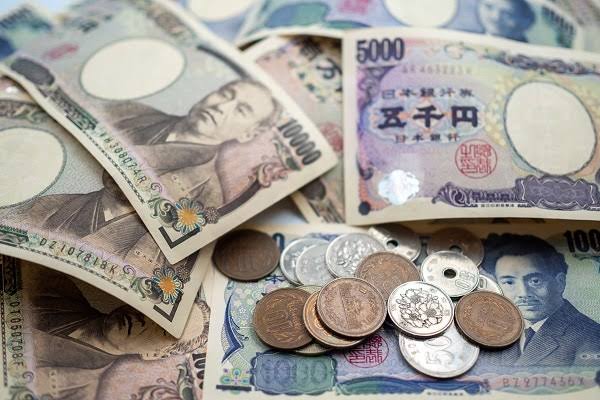
The Japanese Yen holds its ground as the third most traded currency, pulling in 16.8% of global turnover. When things get rocky in Asia or anywhere else, the Yen often sees a rush of safe-haven trades, pushing its daily volumes past $1.2 trillion, especially in 2026 with some regional tensions simmering. Japan's a huge economy, about $4.2 trillion, and they've got the world's largest bond market, which means a lot of money constantly flowing in and out.
The Bank of Japan (BoJ) finally ended its negative interest rate policy recently, which was a pretty big deal. This caused the Yen to weaken a bit against the USD, hitting around 150 JPY for one dollar in early 2026. This setup is actually great for "carry trades," where traders borrow cheap Yen and invest in higher-yielding currencies, which just adds to its trading volume. My biggest annoyance with the Yen? The BoJ's constant interventions. They've pumped billions into the market to stabilize the currency, and while it helps liquidity, it can make consistent trading a real headache.
4. The British Pound
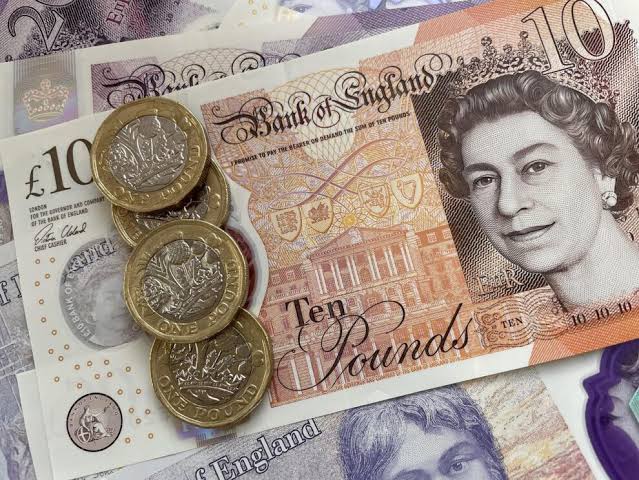
The British Pound, often called Sterling or "Cable" when paired with the USD, still holds a strong position at number four, with 10.2% of global forex turnover. London is a massive financial hub, handling about 43% of the world's forex market share, and that's a huge driver for the Pound. The UK's economy is no slouch either, at $3.5 trillion, with financial services making up a big chunk of that.
In 2026, we're seeing the Pound trade around $1.35 USD, and its trading volumes in the GBP/USD pair shot up 8% to $800 billion daily. Post-Brexit stability (finally, some calm!) and a booming fintech sector have kept traders interested. My biggest complaint about the Pound is how sensitive it can be to political drama. Just when you think things are smooth, some new headline about UK politics sends it spiraling. It's great for volatility if you're into that, but it can be a wild ride.
5. The Australian Dollar
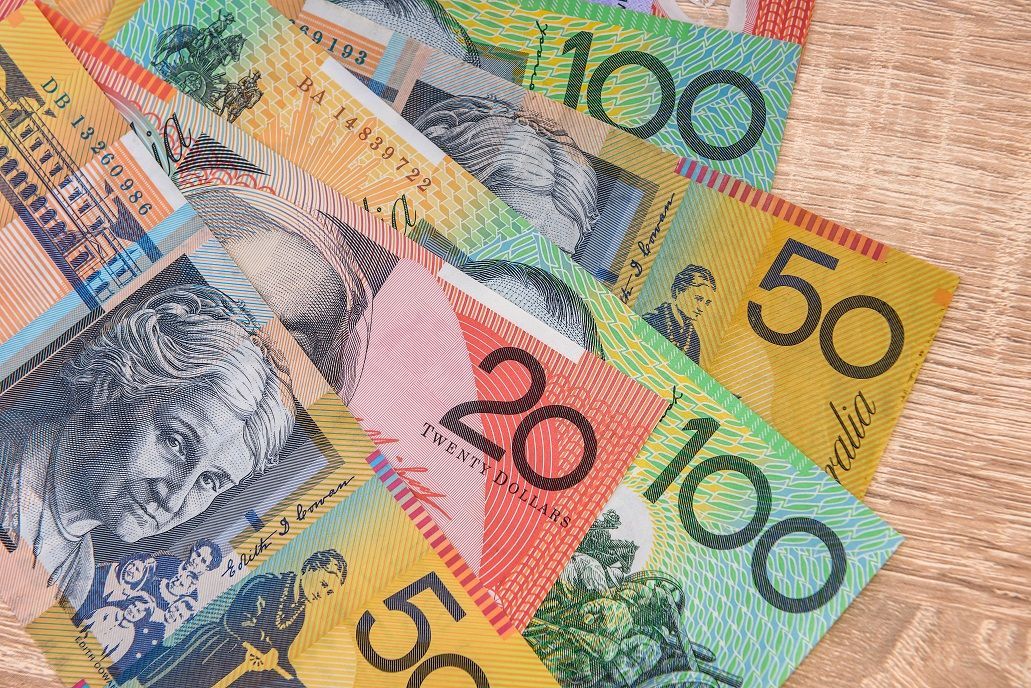
The "Aussie" Dollar comes in at number five, holding a solid 6.4% of global forex turnover. It's often called a "commodity currency" for a good reason-its value is heavily tied to what's happening with global commodity prices, especially iron ore and gold. China's demand for these raw materials is a huge factor, and if China sneezes, the AUD catches a cold. In 2026, the Reserve Bank of Australia (RBA) kept its rates at 4.35%, which helped give the AUD some lift against the USD.
Australia is a big exporter of resources, sending out billions in iron ore alone. It also makes up about 5% of global central bank reserves. My biggest beef with the Aussie is its almost obsessive link to China. If China's growth slows down, even a little, the AUD can take a hit, and it feels like you're always watching two economies instead of one when you trade it.
6. The Canadian Dollar
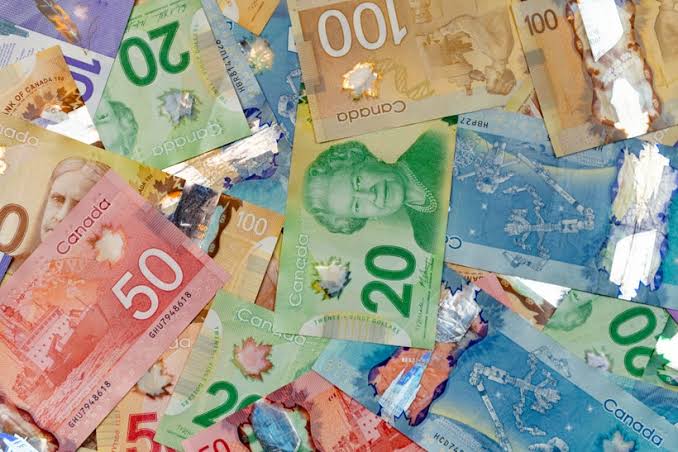
Just like its neighbor to the south, the Canadian Dollar, affectionately known as the "Loonie," is heavily influenced by commodities. Specifically, oil. Canada's oil sands produce millions of barrels a day, and its economy is tightly woven with the US, sending about 75% of its exports south of the border. It grabs 5.1% of global forex turnover, with around $380 billion traded daily.
In 2026, OPEC+ production cuts actually helped boost the Loonie a bit, as oil prices firmed up. The Bank of Canada (BoC) kept its rates at 3.75%, which also provided some stability. It's a reliable currency, often mirroring the health of the North American economy. My annoyance? Its almost unwavering dependence on crude oil prices. If oil tanks, the Loonie usually follows, and that can be a tough pill to swallow if you're looking for independent movement.
7. The Swiss Franc
Ah, the Swiss Franc, or "Swissie." This one is the poster child for a safe-haven currency, and for good reason. Switzerland's neutrality, rock-solid financial system, and the Swiss National Bank's (SNB) gold-backed reserves (which are about 8% of their GDP) make it a magnet when global uncertainty spikes. It accounts for 4.8% of global forex turnover, and in 2026, we saw its value hit near parity with the USD, around $1.15 USD per Franc.
When there's turmoil in Europe or elsewhere, money flows into the Franc. The SNB often steps in to keep its strength from getting out of hand, which is both a blessing and a curse for traders. My biggest frustration is that the SNB can be a bit too heavy-handed with interventions. It's like they don't want the Franc to get toopopular, and that can really mess with your trading plans if you're not paying attention.
8. The Chinese Renminbi
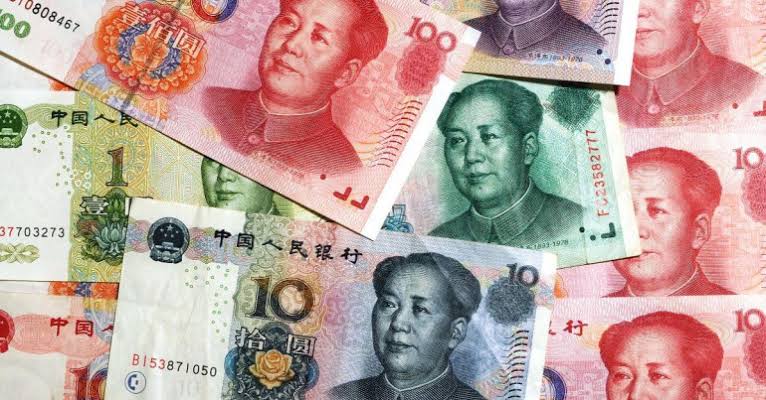
The Chinese Renminbi (or Yuan) is the one to watch. It's still at number eight with 4.2% of global forex turnover, but that's up a solid 15% year-over-year. China's massive economy, coupled with its "Belt and Road" initiative, is pushing the RMB onto the international stage like never before. It makes up about 4% of global reserves now, and that's only going to grow.
In 2026, we've seen digital yuan pilot programs expand to 50 countries, a clear sign Beijing wants its currency to be a bigger player. Trade war tariffs tested its resilience, pushing it to around 7.2 RMB per USD. My biggest annoyance with the Renminbi is the capital controls. Beijing still keeps a tight leash on its currency, which means it's not fully convertible. This limits its true potential for global traders who want free movement of funds.
9. The Swedish Krona
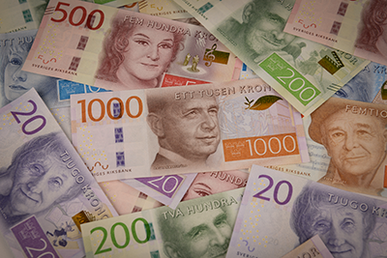
The Swedish Krona might not be a headline grabber, but it consistently ranks among the most traded currencies, coming in at 2.1% of global turnover. Sweden's economy is pretty stable, about $600 billion GDP, and it's known for its tech exports-think Spotify and Ericsson. The Riksbank, Sweden's central bank, is known for its inflation targeting, which lends a sense of predictability to the currency.
In 2026, Sweden's GDP grew by 2.8%, keeping the Krona fairly steady. It's often seen as a solid, if not flashy, option, especially for those looking for Nordic stability. My biggest complaint? It can feel a bit like a "junior Euro" sometimes. While it's got its own thing going on, it can often be overshadowed by bigger European economic shifts, making it less dynamic than some other majors.
10. The Mexican Peso
Rounding out our top ten is the Mexican Peso, with 1.9% of global forex turnover. This might surprise some, but the Peso has been a real story of resilience and growth, particularly thanks to the "nearshoring" trend. Companies are moving production closer to the US, and Mexico is a huge beneficiary of that. Its trade ties with the US and Canada under the USMCA agreement are worth about $800 billion annually.
In 2026, foreign direct investment into Mexico jumped 15% to $50 billion, and the Peso strengthened significantly, hitting around 18 per USD. Banxico, Mexico's central bank, has also kept interest rates quite high (around 10%), which attracts investors looking for yield. My main frustration? Despite the economic positives, the Peso can still be quite sensitive to domestic issues like cartel violence. It's a risk factor you always have to keep an eye on, and it can throw a wrench into otherwise solid fundamentals.
Related Posts

Top 10 Richest Chefs in USA 2026: How They Built Culinary Empires
In recent years, the world of celebrity chefs has developed into a multi-billion dollar industry that combines culinary expertise with media savvy, entrepreneurialism, and the development of distinctive brands. In the year 2026, a number of the wealthiest chefs in the United States have not only established themselves as influential figures in the kitchen, but […] More

Top 10 Best Skaters in the World 2026: The Ultimate Showdown Awaits
As we move through 2026, a few skaters stand out for their extraordinary skills, creativity, and contributions to the sport. Here’s a look at the top 10 skaters in the world right now, each pushing the boundaries of skateboarding in their own unique way. Skateboarding has evolved into a highly dynamic sport, showcasing remarkable talent […] More

Top 10 Highest Paid Female Footballers In The World 2026: Salaries That Shocked the Industry
Top 10 Highest Paid Female Footballers In The World 2026 1. Sam Kerr One of the most notable players in women’s football is Sam Kerr, who hails from Australia and operates as a striker. Kerr has emerged as a significant personality in the sport as a result of her remarkable speed, her extraordinary ability to […] More
The Largest Oil Refineries In The World 2026: Essential Insights for Energy Stakeholders
As of the year 2026, the following is a list of the top ten largest refineries in the world, which are known for their enormous processing capacities and strategic significance. Refineries play an important part in the global energy sector because they convert crude oil into valuable products such as gasoline, diesel, and other petrochemicals. […] More
4 Comments
Join the discussion and share your thoughts