Top 10 Most Powerful Rockets 2026: What's Launching Us Further

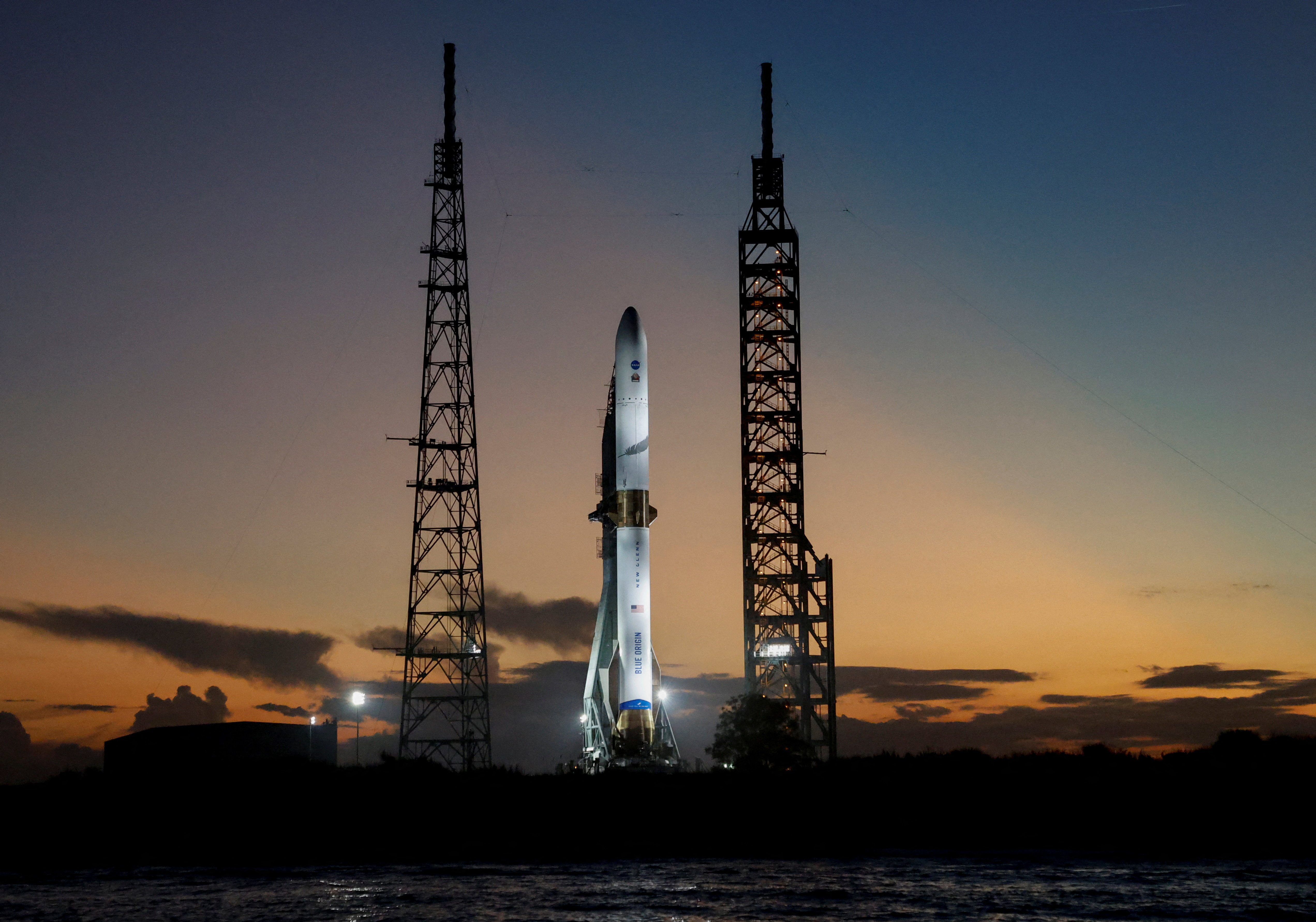
Table of Contents
The field of space exploration continues to advance rapidly, with various nations and private entities developing launch vehicles of increasing capability. As of 2026, the global aerospace industry is focusing on super heavy-lift rockets designed to transport substantial payloads, including crewed missions, deep-space probes, and large satellite constellations. These advancements are reshaping our access to space, enabling more ambitious scientific research and commercial endeavors. Our analysis identifies the Top 10 Most Powerful Rockets In The World 2026, examining their thrust capabilities, payload capacities, and strategic roles in the evolving space landscape. The data reflects both operational systems and those nearing deployment, highlighting the engineering prowess driving humanity's reach beyond Earth.
How We Evaluated These
Our assessment of the most powerful rockets for 2026 considered several key metrics. We prioritized raw thrust at liftoff, measured in megaNewtons (MN) or pounds-force (lbf), as a primary indicator of power. Payload capacity to Low Earth Orbit (LEO) was another critical factor, reflecting a rocket's ability to deliver mass to space. We also weighed operational status, including successful launches, developmental progress toward stated capabilities, and the strategic importance of each vehicle to its respective space program or commercial operator. This comprehensive approach allowed us to identify the leading launch systems poised to define the next era of spaceflight.
The Top 10 Most Powerful Rockets In The World 2026:
1. Starship Block 4
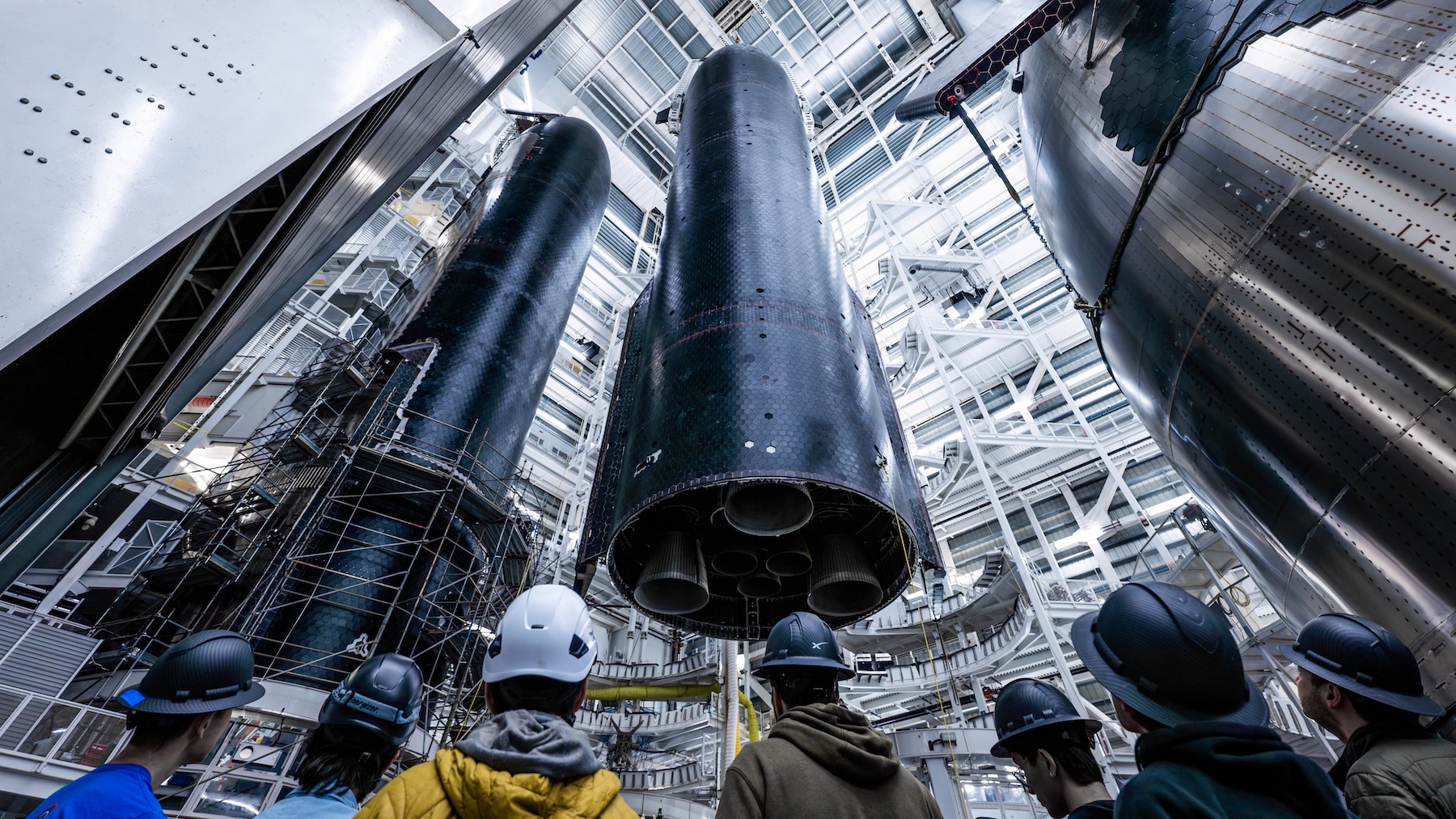
SpaceX's Starship Block 4 represents a significant leap in launch vehicle design, projected to achieve full operational status in 2026 and beyond. This fully reusable super heavy-lift system is engineered to deliver an unprecedented 200 metric tons (t) to Low Earth Orbit (LEO). Its immense power derives from 33 Raptor engines integrated into the Super Heavy booster, collectively generating 98.1 MN (22,100,000 lbf) of thrust. This configuration is specifically designed for ambitious objectives, including the colonization of Mars, where its payload capacity and reusability are paramount.
The Starship Block 4 architecture supports orbital refueling, a critical innovation that allows for the transport of over 100 t directly to the Martian surface. This capability significantly reduces the logistical challenges and costs associated with deep-space missions. Development milestones for this iteration include a series of rigorous test flights anticipated throughout 2026, which are intended to validate its systems and operational procedures. Starship is a central component of NASA's Artemis program, where it is designated as the Human Landing System for future crewed lunar landings, underscoring its pivotal role in national space objectives.
2. Starship Block 3
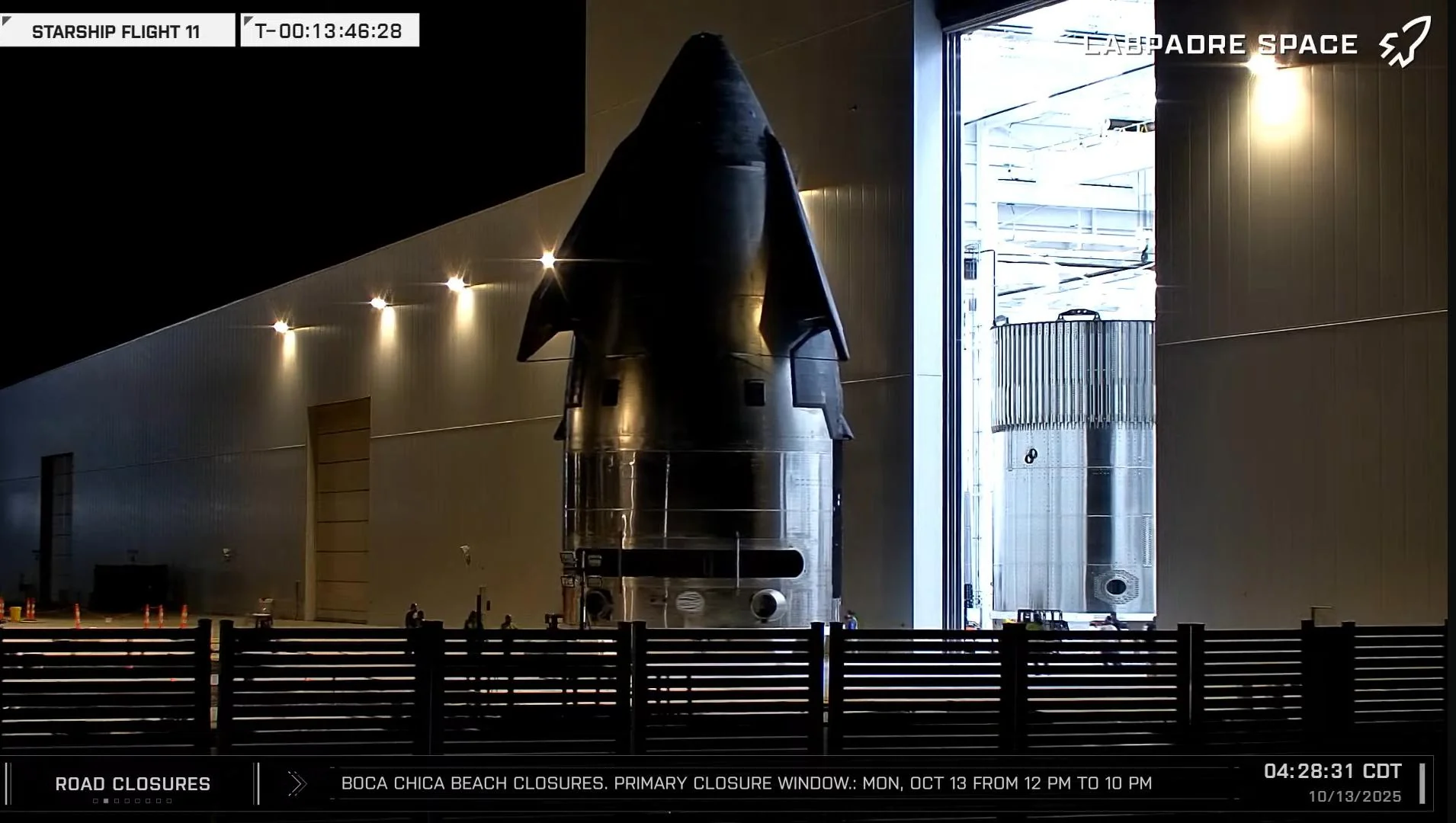
Preceding the Block 4 variant, SpaceX's Starship Block 3 marks an important evolutionary step in the Starship program, with planned operational status in 2026. This version focuses on enhancing the baseline design, primarily through the integration of upgraded Raptor 3 engines. These engines offer improved reliability and increased thrust, contributing to the vehicle's stated capacity of 100 t to LEO. The Block 3 iteration is also instrumental in refining the full reusability concept, particularly with the booster's precise catch mechanism using mechanical arms at the launch tower. This method aims to dramatically reduce launch costs and turnaround times.
The operational deployment of Starship Block 3 by 2026 is expected to support several critical missions. It will play a substantial role in the continued expansion of SpaceX's Starlink satellite constellation, enabling the rapid deployment of thousands of internet-providing satellites. Furthermore, this version is slated to fulfill initial contracts for NASA's Artemis Human Landing System, providing crucial cargo delivery and uncrewed test capabilities in preparation for future lunar expeditions. The iterative development approach with Block 3 allows for real-world testing and refinement of technologies essential for the more advanced Block 4.
3. Yenisei
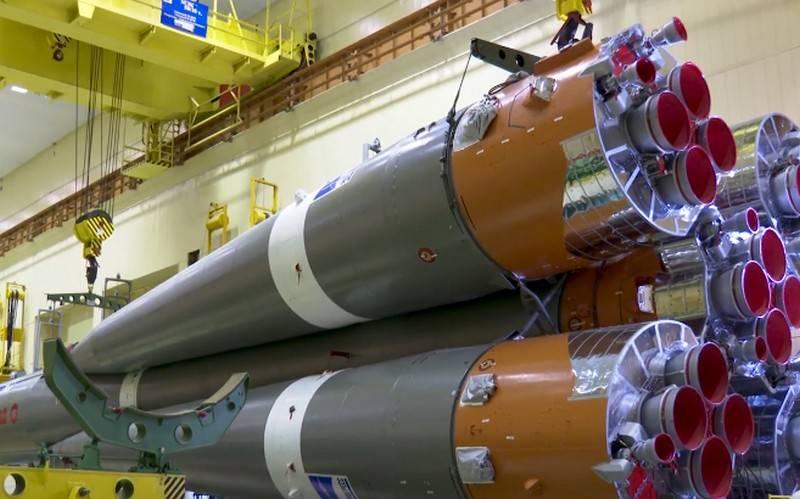
Russia's Progress Rocket Space Centre is developing Yenisei, a super heavy-lift launch vehicle designed to restore Russia's independent heavy-lift capabilities. This rocket is specified to generate 43.5 MN (9,800,000 lbf) of thrust and is projected to deliver a 103 t payload to LEO. Yenisei's design is heavily influenced by the heritage of the retired Energia lineage, incorporating a robust RD-171M first stage engine cluster. This design choice leverages proven technology while integrating modern advancements.
A key feature of the Yenisei program is the incorporation of methane-fueled upper stages. This innovation is intended to enhance efficiency, particularly for deep-space probes and interplanetary missions, offering a cleaner and potentially more cost-effective propellant option. Planned integration with new cosmodromes across Russia aims to facilitate heavy geostationary orbit (GEO) satellite deployments by the late 2020s. Yenisei is a cornerstone of Russia's long-term lunar and deep-space exploration plans, signifying a renewed commitment to autonomous heavy-lift access to space.
4. SLS Block 2
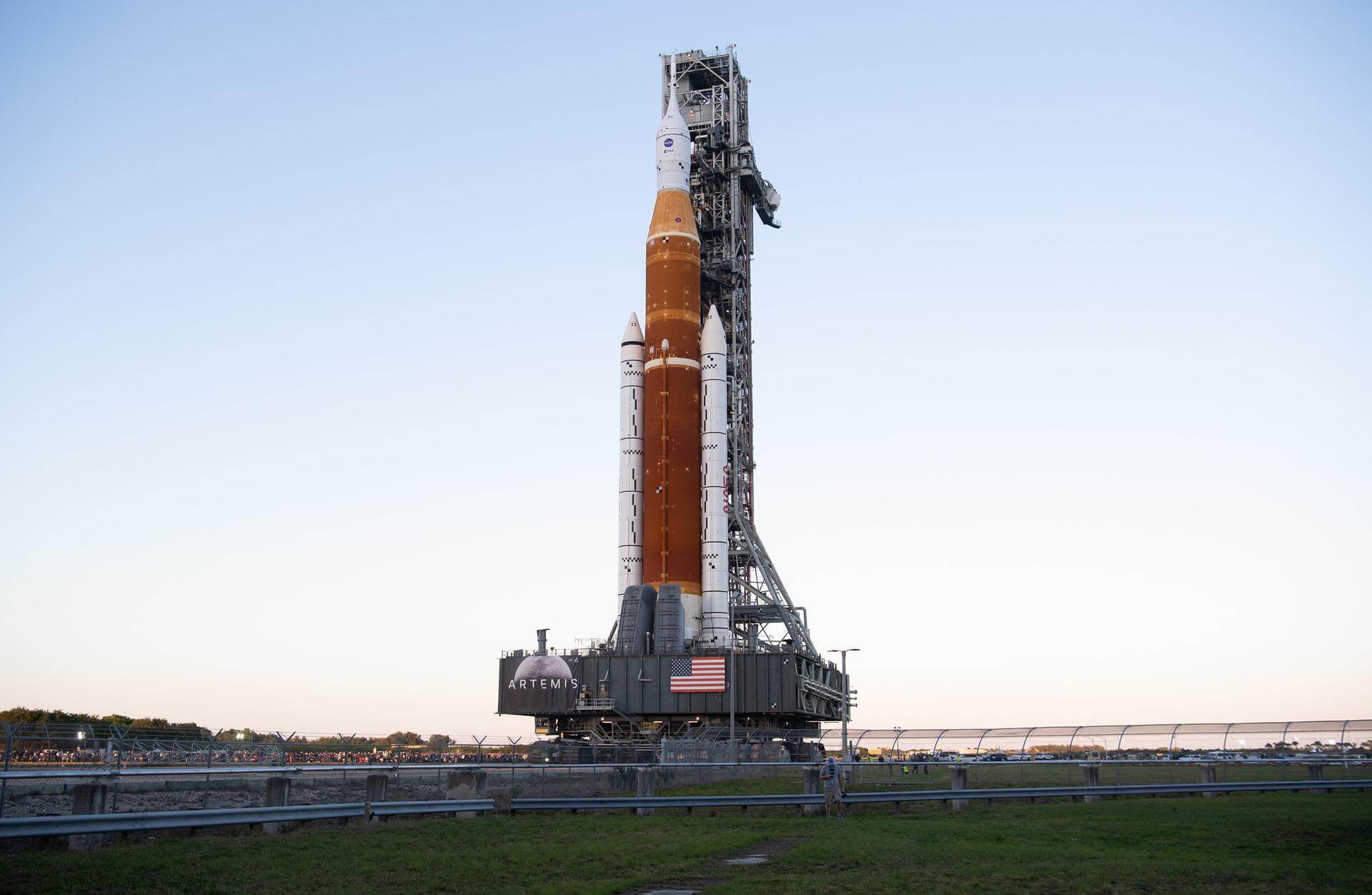
NASA's Space Launch System (SLS) Block 2 is positioned as a cornerstone of the United States' deep-space exploration strategy, with operational status anticipated from 2026 onward. This iteration of the SLS core stage is powered by four RS-25 engines, augmented by two upgraded solid rocket boosters designed for higher propellant loads. This configuration provides 39.1 MN (8,800,000 lbf) of thrust, enabling it to deliver a substantial 130 t payload to LEO.
The SLS Block 2 is the primary launch vehicle for the Artemis program, specifically designed to propel the Orion spacecraft and its crew on lunar missions. A significant milestone occurred in April 2026 with the successful launch of Artemis 2, demonstrating crewed deep-space capability and an initial payload of 95 t, which will scale up in subsequent missions. Beyond lunar objectives, SLS Block 2 is engineered to support the deployment of Mars transit vehicles, ensuring the United States maintains independent access and capability in the heavy-lift sector for future interplanetary endeavors. Its design emphasizes reliability and safety for human spaceflight.
5. Saturn V
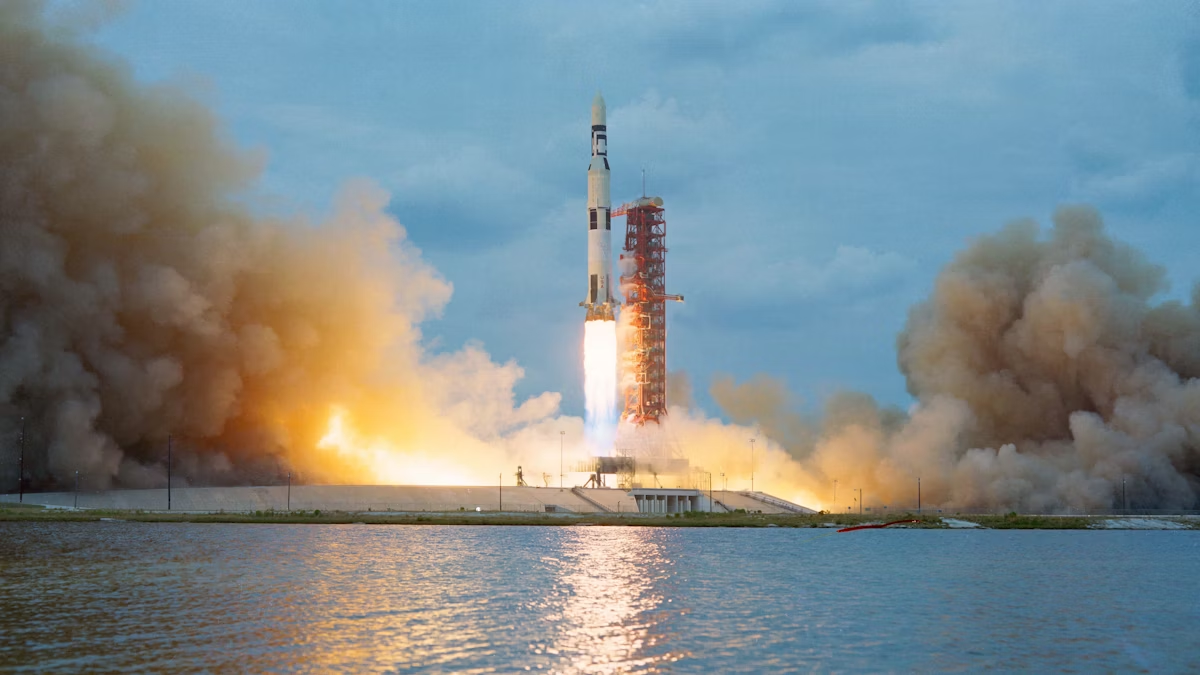
The Saturn V remains an iconic testament to human engineering and space exploration, having been developed by NASA in the 1960s and retired in 1973. This historical super heavy-lift launch vehicle was powered by five F-1 engines on its first stage, generating an impressive 34.5 MN (7,750,000 lbf) of thrust at liftoff. Its primary mission was to facilitate the Apollo lunar landings, successfully delivering 48 t to trans-lunar injection (TLI) and a maximum of 140 t to LEO during its operational lifetime.
The Saturn V established an enduring benchmark for reliability in heavy-lift launch systems, achieving 12 successes out of 13 launches. These missions included all crewed lunar landings and the deployment of the Skylab space station. Its historical performance and design principles continue to influence modern rocket development, serving as a foundational reference for current heavy-lift vehicles like the SLS. The sheer power and success of the Saturn V cemented its legacy as one of the most powerful and historically significant rockets ever flown, setting records for payload mass that stood for decades.
6. New Glenn 9x4
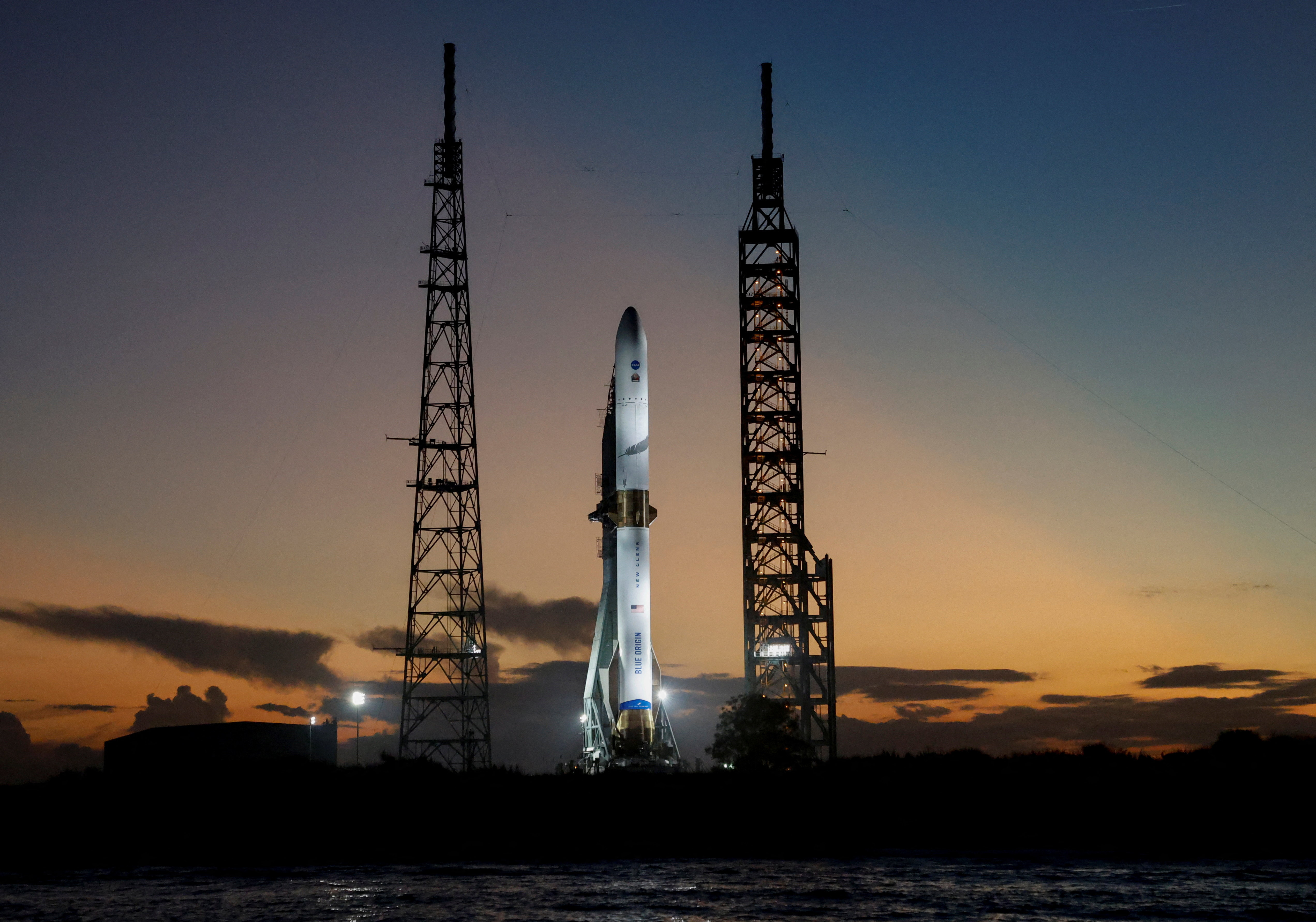
Blue Origin's New Glenn is an emerging heavy-lift launch vehicle designed to compete in the demanding commercial and national security space markets. The 9x4 configuration refers to its first stage, which is powered by nine BE-4 engines, generating a combined thrust of 25.621 MN (5,760,000 lbf). This design aims to deliver a substantial 70 t payload to LEO, positioning it as a versatile option for various mission profiles. New Glenn's development has focused on achieving partial reusability by 2026, with a clear roadmap toward full booster recovery, which is essential for reducing launch costs and increasing flight cadence.
The rocket is strategically targeting heavy national security payloads for entities such as the U.S. Space Force, providing a robust domestic launch option. Furthermore, New Glenn is expected to be a key player in the deployment of large satellite megaconstellations, addressing the growing demand for global broadband and Earth observation services. Its capabilities also extend to lunar cargo missions, supporting future robotic and human exploration initiatives. Blue Origin's commitment to reusability and high-performance engines positions New Glenn as a formidable contender in the future of heavy-lift space transport.
7. Falcon Heavy
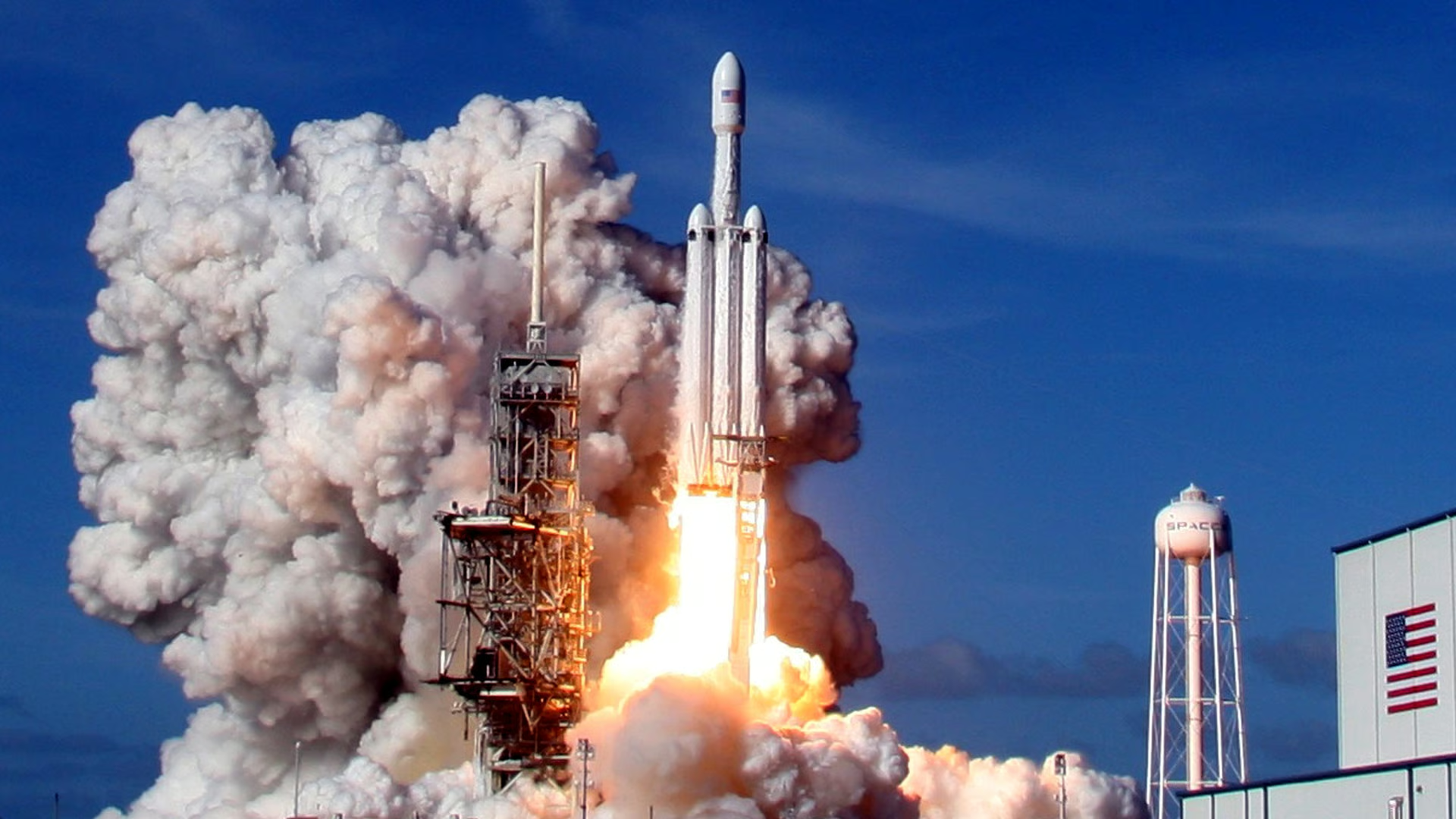
SpaceX's Falcon Heavy stands as one of the most powerful operational rockets in the world, having achieved its inaugural flight in 2018 and maintaining an active launch manifest. This heavy-lift vehicle is characterized by its unique design, which essentially triples the core of a Falcon 9 rocket, featuring 27 Merlin engines across its three boosters. At liftoff, the Falcon Heavy generates an impressive 22.8 MN (5,120,000 lbf) of thrust, enabling it to carry a 64 t payload to LEO.
The Falcon Heavy has a proven track record, successfully completing missions for the U.S. Department of Defense and NASA, including the launch of the Psyche asteroid probe in 2023. A defining feature of its operations in 2026 is the consistent recovery of all three boosters, which allows SpaceX to achieve one of the lowest costs per kilogram for payload delivery, estimated at $1,500/kg. This economic efficiency makes it highly attractive for missions requiring significant mass to orbit, particularly those heading to geostationary transfer orbit (GTO) or beyond, where the capabilities of a single-core rocket are insufficient.
8. Ariane 6+ (Heavy Config)
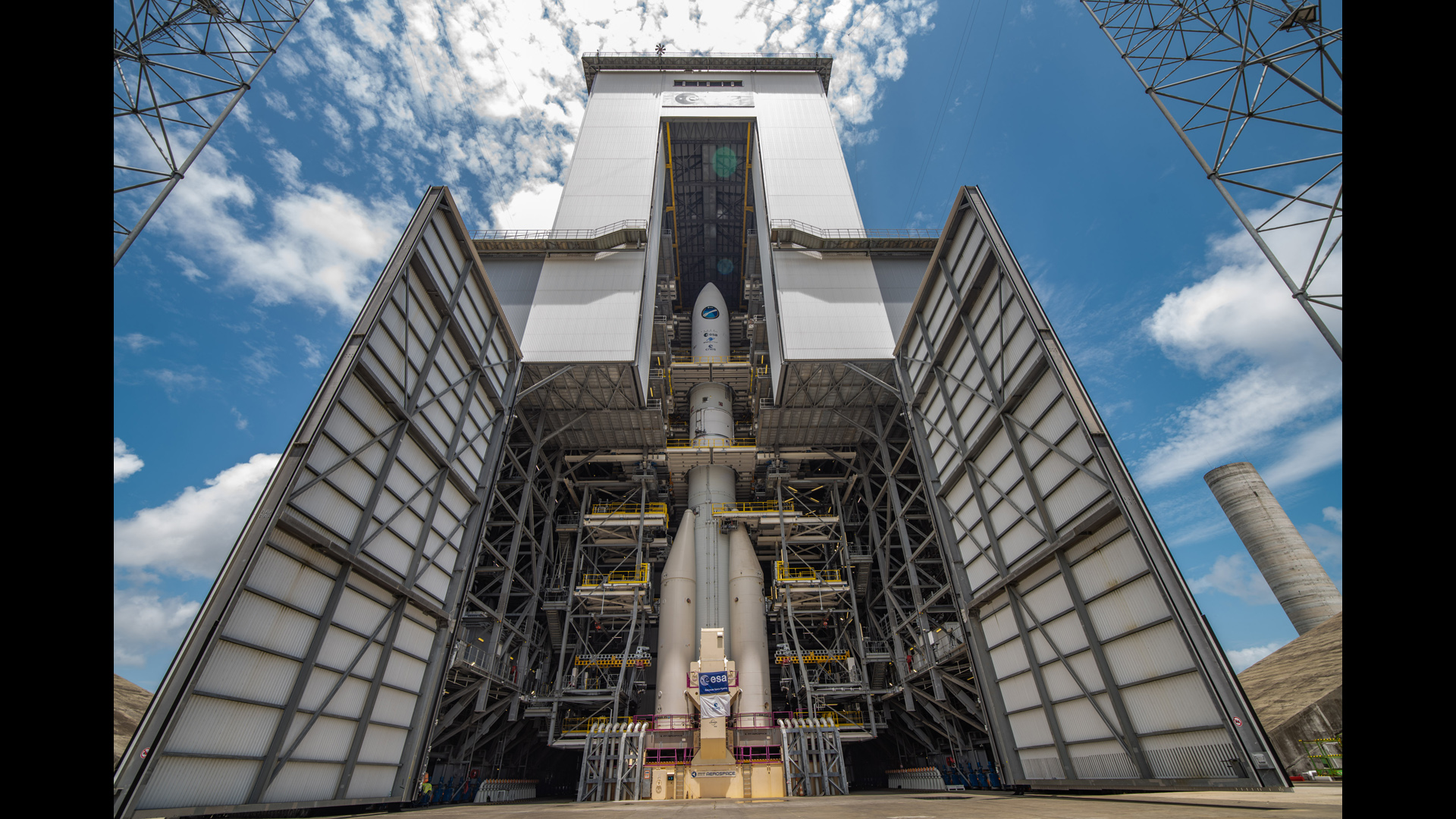
Europe's Ariane 6, specifically its heavy configuration, represents the continent's independent access to space following the retirement of the Ariane 5. This variant utilizes a core stage with a Vulcain 2.1 engine, augmented by two P120 solid rocket boosters, generating a core thrust of 17.1 MN. It is designed to deliver a substantial 21 t payload to GTO, catering to Europe's commercial and institutional satellite launch needs. The Ariane 6+ became operational in 2025, with multiple successful launches occurring in 2026.
These launches have notably included the deployment of Galileo navigation satellites, reinforcing Europe's autonomous global positioning capabilities. The European Space Agency (ESA) and its partners are actively conducting studies into potential reusability features for future iterations of Ariane 6, aiming to further enhance its competitiveness in the global launch market. The rocket primarily focuses on deploying heavy geostationary telecommunications satellites, a critical sector for global connectivity and broadcasting services. Ariane 6 ensures Europe's strategic autonomy in space transportation for a wide array of missions.
9. Long March 9
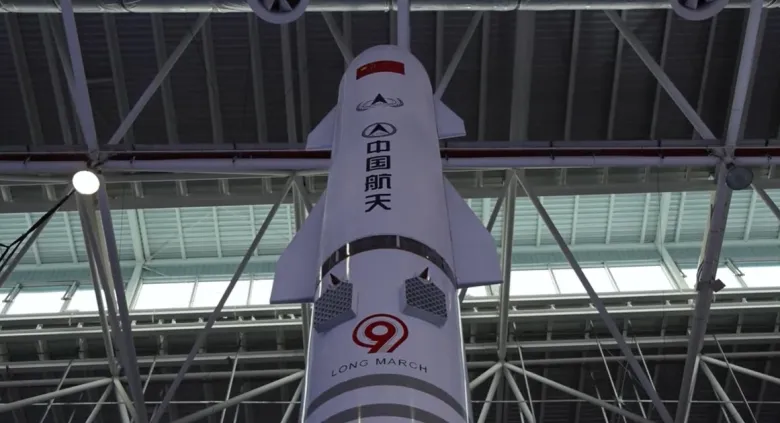
China's Long March 9 (LM-9) is an ambitious super heavy-lift launch vehicle currently under development, representing a significant component of the China National Space Administration (CNSA)'s long-term space exploration goals. This rocket is projected to feature over 30 YF-130K engines, aiming for an astounding 60 MN of planned thrust. Its design target is to deliver a 150 t payload to LEO, positioning it among the most powerful rockets ever conceived. The LM-9 is central to China's plans for establishing a permanent lunar base and executing Mars sample return missions, with a projected timeline for these objectives extending into the 2030s.
Ground tests for key components of the Long March 9 were completed by 2026, building upon the successes and lessons learned from the Long March 5 series. The rocket's capabilities are considered strategic for the continued expansion of the Tiangong space station and future exploration of lunar south pole resources, which are believed to be rich in water ice. The development of LM-9 underscores China's commitment to advancing its capabilities in deep-space exploration and establishing a leading role in future space endeavors, ensuring its autonomy in heavy-lift launch services.
10. H3 Heavy
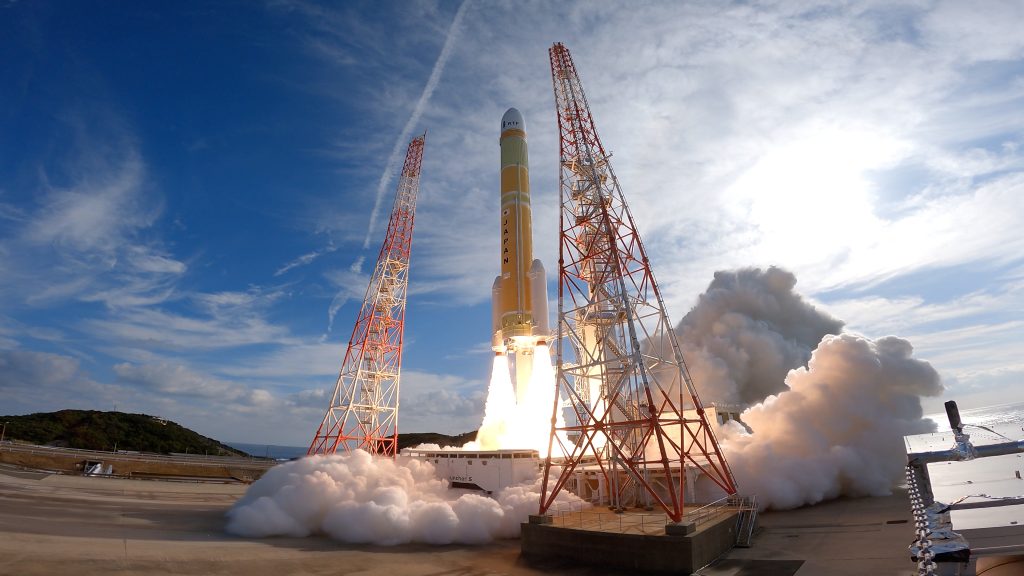
Japan Aerospace Exploration Agency's (JAXA) H3 Heavy is a new generation launch vehicle designed to succeed the H-IIB rocket, enhancing Japan's capabilities for heavy-lift missions. The H3 Heavy configuration incorporates two side boosters, clustering with its LE-9 engines to generate an uprated thrust of 14.7 MN. This robust design allows it to deliver a 22 t payload to GTO, making it a capable contender in the Asian heavy-lift market. The H3 Heavy achieved operational status in 2026 with its debut launch.
The inaugural launch of the H3 Heavy in 2026 successfully deployed HTV-X cargo, demonstrating its capacity for International Space Station (ISS) resupply missions, continuing a legacy of reliable logistics support. JAXA emphasizes precision and cost-effectiveness with the H3 program, targeting a launch cost of approximately ¥5 billion per mission. This focus makes it an attractive option for science missions, including follow-on lunar landers building upon the success of the SLIM mission. The H3 Heavy is poised to be a cornerstone of Japan's future space activities, supporting both domestic and international scientific and commercial objectives with enhanced performance and affordability.
The trajectory of space exploration in 2026 is clearly defined by the pursuit of increasingly powerful launch vehicles. From SpaceX's Starship Block 4, engineered for Mars colonization, to NASA's SLS Block 2, a key component of the Artemis program, these rockets represent the apex of modern aerospace engineering. Nations like Russia and China are also making significant strides with programs such as Yenisei and Long March 9, asserting their roles in the global space race. As these systems mature and new designs emerge, the Top 10 Most Powerful Rockets In The World 2026 will continue to push the boundaries of what is possible, enabling more frequent, more ambitious, and ultimately, more transformative missions into the cosmos.
Related Posts

Top 10 Female Hockey Players in 2026: Meet the Game's Brightest Stars
Women’s ice hockey has experienced significant growth and development by 2026, with players from all over the world demonstrating outstanding skill, leadership, and commitment to the sport. The following is a detailed summary of the top ten female hockey players in the world in 2026, emphasizing their contributions to the game and their impact on […] More

Top 10 Best Hospitality Schools In The World (2026 Update): Where Tomorrow's Leaders Train
The world’s top hospitality schools continue to be essential in the context of a global economy because of their emphasis on offering exceptional guest experiences and high-quality service. People who want to work in hotels and other hospitality-related fields are actively looking for educational opportunities that will equip them with the skills and knowledge they […] <a class="g1-link g1-link-more" href="https://nubiapage.com/top-10-best-hospitality-schools-in-the-world-2024-up

Top 10 Greatest Packer Players in the World 2026: Surprising Picks & Legends
The Green Bay Packers, which are considered to be one of the most illustrious franchises in the history of the National Football League, have, throughout its existence, boasted a roster of remarkable talent. The history of the Packers is filled with players that have stood out for some reason, whether it be their iconic Super […] More

Top 10 Biggest Concert Stadiums In The World 2026
In 2026, the world of concert venues includes some of the biggest and most famous stadiums, known for hosting huge crowds and providing live music experiences that are unmatched. The following is a list of the ten largest concert stadiums in the world: List Of Top 10 Biggest Concert Stadiums In The World 2026 1. […] More
22 Comments
Join the discussion and share your thoughts