Top 10 Greatest Scientists In The World 2026 - Meet the Innovators Leading Change

Table of Contents
As the scientific community advances into 2026, a select group of researchers stands out for their profound contributions and groundbreaking discoveries. These individuals are shaping our understanding of the universe, driving technological progress, and addressing some of humanity's most pressing challenges. Our publication recognizes these exceptional minds for their impact, as evidenced by prestigious awards, high-ranking scientific indices, and their transformative research across various disciplines.
This article identifies the top 10 greatest scientists in the world 2026, highlighting their specific achievements and the broader implications of their work. We delve into the rigorous criteria that position them at the forefront of global scientific endeavor, from advancements in fundamental physics and mathematics to applied sciences like agriculture, medicine, and environmental health.
Methodology for Identifying Leading Scientists in 2026
Our ranking of the top scientists for 2026 is based on a meticulous evaluation of current scientific impact, peer recognition, and institutional affiliations. We synthesize data from several authoritative sources, ensuring a robust and evidence-based assessment. This approach allows us to present a comprehensive view of individuals whose work is not only highly cited but also recognized through significant accolades.
Key criteria for inclusion and ranking prioritize recent achievements and sustained influence. We primarily consider individuals recognized in the 2026 editions of prestigious scientific awards and global ranking systems. This includes recipients of the National Academy of Sciences (NAS) awards, which honor extraordinary achievements in various scientific fields, often accompanied by substantial research grants. Additionally, we incorporate insights from the American Association for the Advancement of Science (AAAS) awards, which celebrate contributions to science and society.
Furthermore, our methodology integrates data from comprehensive global scientist rankings, such as the 2026 World's Top 2% Scientists list and the AD Scientific Index. These indices often account for metrics like citation impact and H-index, providing a quantitative measure of a researcher's influence within their discipline and across the broader scientific landscape. By cross-referencing these diverse and reputable sources, we aim to provide an accurate and impartial representation of the most impactful scientists operating today.
These Are List Of The Top 10 Greatest Scientists In The World 2026:
1. Alberto Ruiz Jimeno
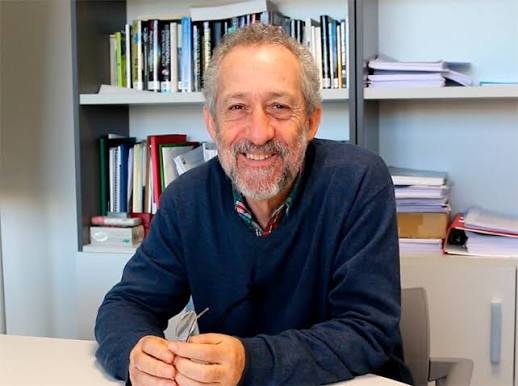
Alberto Ruiz Jimeno, a distinguished researcher affiliated with the Universidad de Cantabria in Spain, holds the top position in our 2026 ranking. His prominence stems from his exceptional influence and high citation impact within the global scientific community, securing him the number one rank in the 2026 World's Top 2% Scientists list. This prestigious recognition underscores his significant contributions across a wide array of scientific disciplines, placing him firmly at the leading edge of contemporary research.
Jimeno's work is characterized by its breadth and depth, demonstrating a rare capacity to impact multiple fields simultaneously. While specific details of his individual projects are extensive, his consistent appearance in top-tier scientific publications and the widespread citation of his research indicate a foundational role in shaping current scientific discourse. Researchers globally frequently reference his findings, which speaks to the enduring relevance and rigorous nature of his investigations. This sustained high-level output from the Universidad de Cantabria reflects a career dedicated to advancing knowledge and setting new standards for scientific inquiry.
His recognition in the World's Top 2% Scientists list is not merely an acknowledgment of past achievements but a testament to ongoing innovation. This ranking, based on comprehensive bibliometric data, reflects the sustained quality and high impact of his publications over many years. It confirms his status as a thought leader whose insights continue to drive progress and inspire new avenues of exploration for his peers worldwide. Jimeno's work exemplifies the profound influence a single individual can exert on the collective pursuit of scientific understanding.
2. James C. Schnable
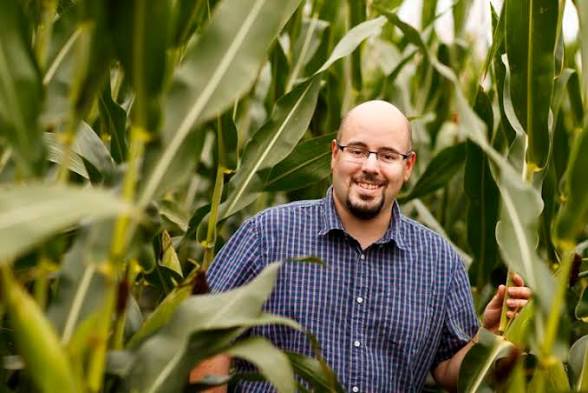
James C. Schnable, from the University of Nebraska-Lincoln, is recognized for his groundbreaking work in plant genomics and quantitative genetics. His research has led to significant breakthroughs that are actively reshaping modern agriculture, contributing to advancements in crop improvement and food security globally. In 2026, he was awarded the prestigious NAS Prize in Food and Agriculture Sciences, accompanied by a substantial $100,000 prize.
Schnable's contributions extend to developing innovative computational and genomic tools that accelerate the identification of genes responsible for desirable traits in crops. His laboratory's efforts have provided critical insights into how plants adapt to various environmental stresses, such as drought and nutrient deficiency. This understanding is essential for breeding more resilient and productive crops, which is a key challenge for feeding a growing global population in the face of climate change. The practical applications of his research directly address pressing societal needs, making a tangible difference in agricultural sustainability.
The NAS Prize in Food and Agriculture Sciences specifically honors individuals for original and significant work that has advanced the understanding of agricultural systems or improved the quality and quantity of food. Schnable's receipt of this award highlights the profound importance of his scientific contributions in ensuring a stable and abundant food supply for the future. His leadership in plant science from the University of Nebraska-Lincoln continues to influence both academic research and practical farming strategies, solidifying his standing as a leading figure in agricultural innovation.
3. Mike Stratton
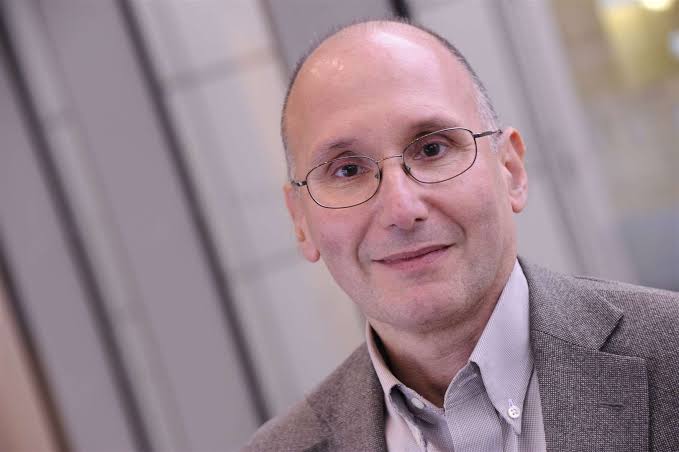
Mike Stratton of the Wellcome Sanger Institute has been honored with the 2026 Jessie Stevenson Kovalenko Medal for his transformative work in cancer genomics. His pioneering research has provided fundamental insights into the genetic basis of cancer, significantly advancing the understanding and treatment strategies for the disease. This esteemed award includes a $25,000 prize and an additional $50,000 designated for further research, underscoring the ongoing potential and critical importance of his scientific endeavors.
Stratton's laboratory has been at the forefront of identifying somatic mutations in human cancers, meticulously cataloging the genetic alterations that drive tumor development. His team's work on the Cancer Genome Project was instrumental in mapping the genetic landscape of various cancers, revealing common patterns of mutation and identifying new cancer genes. This comprehensive genomic profiling has fundamentally changed how researchers and clinicians approach cancer, moving towards more personalized and targeted therapies. His findings have provided a blueprint for understanding cancer's complexity at the molecular level.
The Jessie Stevenson Kovalenko Medal, awarded by the National Academy of Sciences, recognizes significant contributions to the medical sciences. Stratton's receipt of this medal highlights not only his past breakthroughs but also the anticipated future impact of his work on human health. The additional research funding component emphasizes the belief in his continued ability to deliver high-impact discoveries that could lead to new diagnostics and treatments for cancer patients worldwide. His leadership at the Wellcome Sanger Institute reinforces its position as a global hub for genomic research.
4. Roland Bürgmann

Roland Bürgmann, affiliated with the University of California, Berkeley, is recognized with the 2026 Arthur L. Day Prize and Lectureship for his landmark contributions to earthquake science. His research has significantly advanced the understanding of seismic activity, crustal deformation, and the underlying mechanics of earthquakes. This prestigious award, accompanied by a $50,000 prize, acknowledges his profound impact on the field and supports a series of lectures intended to disseminate his expertise widely.
Bürgmann's work often involves integrating satellite-based measurements, such as GPS and InSAR, with seismological data to precisely track ground deformation before, during, and after earthquakes. His studies have illuminated the processes of fault creep, interseismic strain accumulation, and the dynamics of slow slip events, which are crucial for assessing seismic hazards. By providing a more detailed picture of how stress builds and releases along tectonic plate boundaries, his research offers vital information for earthquake prediction models and hazard mitigation strategies in seismically active regions.
The Arthur L. Day Prize and Lectureship is awarded by the National Academy of Sciences to honor outstanding contributions to the physics of the Earth. Bürgmann's selection underscores the transformative nature of his research in geophysics. The lecture series component of the award is particularly significant, as it enables him to share his deep knowledge and foster further advancements in earthquake science among a global audience of researchers and policymakers. His work from UC Berkeley continues to be a cornerstone for understanding the dynamic processes shaping our planet.
5. Joseph Henrich
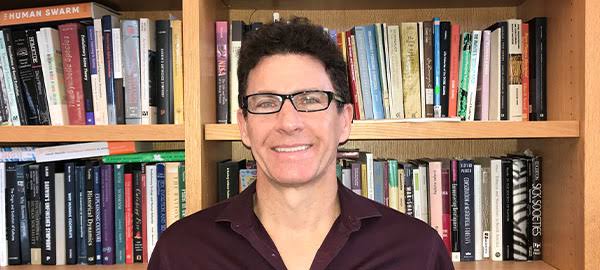
Joseph Henrich from Harvard University is awarded the 2026 John J. Carty Award for the Advancement of Science for his fundamental contributions to anthropology, cognitive science, and psychology. His interdisciplinary work has provided critical insights into human behavior, cultural evolution, and the intricate interplay between biology and culture. The award, presented with a $25,000 prize, specifically recognizes his achievements in the social sciences and their broader implications.
Henrich's research challenges traditional assumptions about human nature by demonstrating how culture profoundly shapes cognition, preferences, and social behavior. He is well-known for his work on "WEIRD" (Western, Educated, Industrialized, Rich, and Democratic) populations, highlighting that much of psychological research has historically focused on a narrow segment of humanity. His comparative studies across diverse cultures have revealed significant variability in human psychological traits, emphasizing the importance of cultural learning and social norms in human development. This perspective has reshaped how scientists view human universality and diversity.
The John J. Carty Award, a distinguished honor from the National Academy of Sciences, recognizes outstanding accomplishments in scientific fields. Henrich's receipt of this award signifies the profound influence of his theoretical frameworks and empirical findings on multiple disciplines. His ability to bridge anthropology with cognitive science and psychology has opened new avenues for understanding the evolution of human societies and the mechanisms through which cultural practices are transmitted and maintained. His work at Harvard continues to redefine the boundaries of social science research.
6. Philip J. Kranzusch
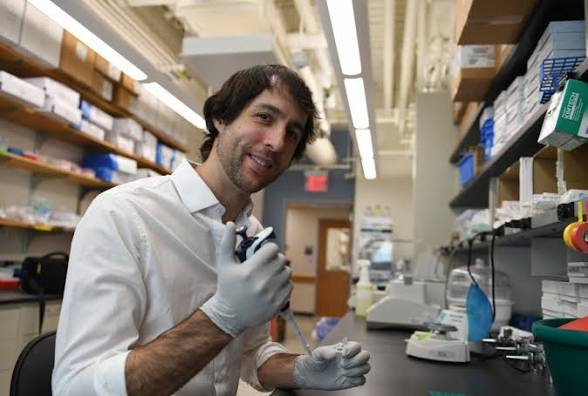
Philip J. Kranzusch, associated with Dana-Farber Cancer Institute and Harvard Medical School, is honored with the 2026 NAS Award in Molecular Biology. His groundbreaking work has significantly advanced the understanding of innate immunity, revealing crucial mechanisms by which the body defends against pathogens. This prestigious award, accompanied by a $25,000 prize, recognizes his pivotal discoveries in this vital biological field.
Kranzusch's research primarily focuses on cyclic GMP-AMP synthase (cGAS) and its downstream signaling pathways, which are central to the innate immune response to DNA viruses and bacteria. He has elucidated how the cGAS-STING pathway detects microbial or self-DNA in the cytoplasm, triggering immune responses that are essential for host defense. His laboratory has also explored the roles of these pathways in autoimmune diseases and cancer, where dysregulation can lead to chronic inflammation or immune evasion by tumors. Understanding these molecular switches is critical for developing new therapeutic strategies.
The NAS Award in Molecular Biology is presented annually to a young scientist who has made outstanding contributions to molecular biology. Kranzusch's selection highlights the originality and impact of his work, which has provided fundamental insights into how the immune system distinguishes between self and non-self. His discoveries have broad implications for infectious disease research, immunology, and oncology, offering new targets for drug development. His contributions from Dana-Farber Cancer Institute are accelerating the pace of discovery in a rapidly evolving field.
7. Roman Bezrukavnikov
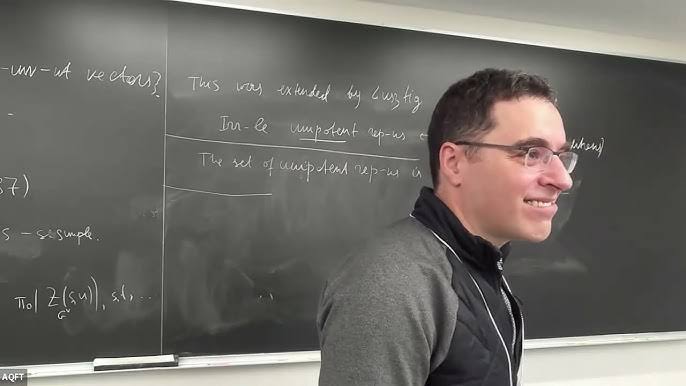
Roman Bezrukavnikov of the Massachusetts Institute of Technology is awarded the 2026 Maryam Mirzakhani Prize in Mathematics for his seminal contributions to geometric representation theory. His work has pushed the boundaries of abstract algebra and geometry, providing new tools and perspectives in complex mathematical fields. The $20,000 prize acknowledges the profound theoretical impact and intellectual rigor of his research.
Bezrukavnikov's research explores deep connections between representation theory, algebraic geometry, and mathematical physics. He is particularly known for his work on categorification, the geometric Satake correspondence, and the Langlands program, which seeks to unify various branches of mathematics. His insights have clarified intricate relationships between algebraic structures and geometric spaces, leading to significant advances in understanding symmetries and their representations. These highly abstract concepts have far-reaching implications, influencing areas from quantum field theory to number theory.
The Maryam Mirzakhani Prize in Mathematics, established by the National Academy of Sciences, celebrates exceptional contributions in mathematics. Bezrukavnikov's recognition underscores the originality and depth of his theoretical work, which has opened new frontiers in pure mathematics. His ability to connect seemingly disparate areas of mathematics has provided powerful new methods for approaching long-standing problems. His continued research at MIT solidifies his reputation as a leading figure whose abstract ideas are foundational to the future development of mathematics.
8. Benjamin F. Cravatt
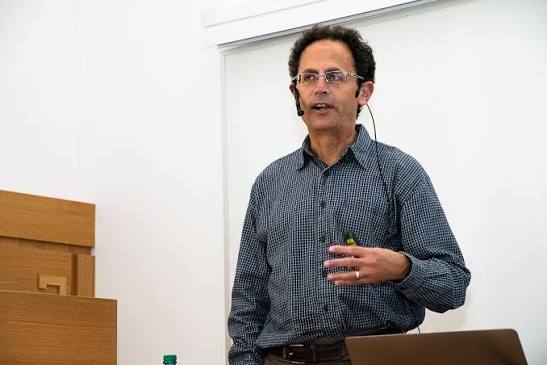
Benjamin F. Cravatt from Scripps Research Institute is recognized with the 2026 NAS Award in Chemical Sciences. He is lauded for providing foundational insights into enzyme function and dysregulation in disease, which has significant implications for drug discovery and therapeutic development. The award, presented with a medal and a $15,000 prize, highlights his innovative contributions at the interface of chemistry and biology.
Cravatt is a pioneer in the field of activity-based protein profiling (ABPP), a chemical proteomic technology that allows for the global and unbiased monitoring of enzyme activities directly in complex biological systems. This approach has enabled him to identify novel enzyme targets for various diseases, including cancer, neurological disorders, and inflammatory conditions. His work has illuminated the roles of specific enzymes, particularly those involved in lipid metabolism and neurotransmission, in disease progression and therapeutic response. These discoveries provide crucial targets for developing new pharmaceuticals.
The NAS Award in Chemical Sciences celebrates outstanding contributions to chemistry, and Cravatt's work exemplifies the power of chemical biology in addressing complex biomedical questions. His innovative methods have transformed how scientists identify and validate drug targets, accelerating the process of rational drug design. The recognition from the National Academy of Sciences underscores the practical utility and scientific elegance of his research. His continued leadership at Scripps Research Institute is instrumental in advancing the intersection of chemistry, biology, and medicine for developing next-generation therapeutics.
9. Lara-Jacobo

Lara-Jacobo is recognized by the American Association for the Advancement of Science (AAAS) with a 2026 award for her significant contributions to science and society, particularly in environmental health. Her focus on border communities vulnerable to environmental hazard exposures has been a cornerstone of her impactful career. This dedication led her to co-found the U.S.-Mexico Binational Border Research Laboratory, a testament to her commitment to addressing public health disparities.
Her research delves into the complex interplay between environmental pollutants and health outcomes in marginalized populations. By conducting rigorous studies in communities often overlooked, Lara-Jacobo has provided critical data and insights that inform policy and public health interventions. Her work highlights the disproportionate impact of environmental degradation on vulnerable groups, advocating for equitable solutions and preventative measures. The U.S.-Mexico Binational Border Research Laboratory stands as a key example of her practical approach to cross-border environmental health challenges.
Beyond her direct research, Lara-Jacobo has expanded her global impact through initiatives focused on leadership and science diplomacy. Her participation in programs such as the Homeward Bound Antarctic expedition for women in STEMM leadership and the TWAS-AAAS Science Diplomacy training program demonstrates her dedication to fostering international collaboration and empowering future generations of scientists. Her multifaceted contributions, recognized by the AAAS, showcase her role not only as a leading researcher but also as a global advocate for environmental justice and scientific leadership.
10. Gordon Guyatt

Gordon Guyatt, affiliated with McMaster University in Canada, is recognized as one of the world's top scientists, ranking #10 in the 2026 AD Scientific Index. He is widely regarded as a pioneer in evidence-based medicine (EBM), a field that fundamentally emphasizes the use of the best available research evidence in clinical decision-making. His extensive contributions have profoundly influenced medical practice and research methodology globally.
Guyatt's work has been instrumental in developing and promoting systematic approaches to evaluating medical literature, translating research findings into practical clinical guidelines, and teaching healthcare professionals how to critically appraise evidence. He coined the term "evidence-based medicine" in the early 1990s and has since been a leading voice in establishing its principles and methodologies. His efforts have led to a paradigm shift in healthcare, moving away from anecdote and tradition towards a more rigorous, data-driven practice. This has improved patient outcomes and standardized care across many medical specialties.
The AD Scientific Index, which ranks scientists based on their publication and citation metrics, recognizes Guyatt's sustained and significant academic output. His high ranking reflects not only the volume of his influential publications but also their widespread adoption and impact on clinical research and education. From McMaster University, his work continues to shape the standards for medical evidence, ensuring that healthcare decisions are informed by the most reliable scientific data available. Guyatt's legacy is deeply embedded in the modern practice of medicine, making him a true architect of contemporary healthcare methodology.
The greatest scientists in the world 2026 represent the pinnacle of human intellectual achievement, pushing the boundaries of knowledge across diverse fields. From Alberto Ruiz Jimeno's broad impact across scientific disciplines to Gordon Guyatt's pioneering work in evidence-based medicine, these individuals exemplify dedication, innovation, and a profound commitment to discovery. Their contributions, recognized through prestigious awards and high-ranking scientific indices, not only advance specific fields but also inspire new generations of researchers to pursue groundbreaking questions.
Related Posts

Top 10 Richest Chefs in USA 2026: How They Built Culinary Empires
In recent years, the world of celebrity chefs has developed into a multi-billion dollar industry that combines culinary expertise with media savvy, entrepreneurialism, and the development of distinctive brands. In the year 2026, a number of the wealthiest chefs in the United States have not only established themselves as influential figures in the kitchen, but […] More

Top 10 Best Skaters in the World 2026: The Ultimate Showdown Awaits
As we move through 2026, a few skaters stand out for their extraordinary skills, creativity, and contributions to the sport. Here’s a look at the top 10 skaters in the world right now, each pushing the boundaries of skateboarding in their own unique way. Skateboarding has evolved into a highly dynamic sport, showcasing remarkable talent […] More

Top 10 Highest Paid Female Footballers In The World 2026: Salaries That Shocked the Industry
Top 10 Highest Paid Female Footballers In The World 2026 1. Sam Kerr One of the most notable players in women’s football is Sam Kerr, who hails from Australia and operates as a striker. Kerr has emerged as a significant personality in the sport as a result of her remarkable speed, her extraordinary ability to […] More

The Largest Oil Refineries In The World 2026: Essential Insights for Energy Stakeholders
As of the year 2026, the following is a list of the top ten largest refineries in the world, which are known for their enormous processing capacities and strategic significance. Refineries play an important part in the global energy sector because they convert crude oil into valuable products such as gasoline, diesel, and other petrochemicals. […] More
1 Comment
Join the discussion and share your thoughts