Top 10 Biggest Gaming Companies In The World 2026: What the Data Shows

Table of Contents
The gaming industry in 2026 continues to be a powerhouse of entertainment and technology, shaping global culture and driving billions in revenue. As we explore the top 10 biggest gaming companies in the world 2026, it's clear that innovation, strategic acquisitions, and diverse platforms have fueled unprecedented growth. From mobile gaming dominance to pioneering cloud services and virtual reality, these companies are redefining how players engage with digital worlds. Our comprehensive analysis highlights the giants leading this dynamic sector, based on their reported and estimated gaming revenue for the year.
The landscape of gaming has evolved dramatically over the past decade, with mobile devices becoming primary gaming platforms for millions, while consoles and PCs maintain their stronghold among dedicated gamers. Emerging technologies like augmented reality (AR) and virtual reality (VR) are creating immersive experiences, and cloud gaming is making high-end titles accessible without expensive hardware. Esports, meanwhile, has turned gaming into a spectator sport, drawing massive audiences and sponsorships. In this article, we break down the key players shaping these trends, their financial performance, and their strategies for maintaining market dominance through 2026 and beyond.
Our Methodology for Ranking the Biggest Gaming Companies
To compile this list of the top 10 biggest gaming companies in the world for 2026, we relied on revenue data as the primary metric. Gaming revenue includes income from hardware sales, software, subscriptions, in-game purchases, and related services, as reported by credible industry sources such as Polaris Market Research, AllTopEverything, and Fortune Business Insights. Where exact figures for 2026 were unavailable, estimates were derived based on historical growth trends and market analysis from sources like Wikipedia's list of largest video game companies by revenue.
We prioritized verifiable data from 2026 or the closest available year, cross-referencing multiple reports to ensure accuracy. Rankings reflect only the gaming segment of each company's operations, excluding unrelated business units. Our approach also considered market influence, platform diversity, and strategic initiatives, though revenue remained the deciding factor. This methodology offers a clear snapshot of financial standing while acknowledging the broader impact these companies have on the industry.
Ranking the Top 10 Gaming Giants of 2026
Below, we present the definitive list of the largest gaming companies for 2026, ordered by their gaming revenue. Each entry provides insight into their flagship products, market strategies, and key achievements. Accompanying each profile are the latest available images to visually represent these industry leaders.
The List Of Top 10 Biggest Gaming Companies In The World 2026:
1. Sony
Sony Interactive Entertainment tops our list of the biggest gaming companies in 2026, boasting an impressive gaming revenue of $28.6 billion. Headquartered in Tokyo, Japan, Sony's dominance is driven by its PlayStation brand, which continues to set industry standards with the PlayStation 5 console and an expanding library of exclusive titles. Games like God of War Ragnarok and Horizon Forbidden West have not only broken sales records but also redefined storytelling in gaming, according to data from Polaris Market Research.
The company's focus extends beyond hardware, with significant investments in the PlayStation Network, a digital platform that generated millions in subscription and microtransaction revenue in 2026. Sony is also pushing boundaries in virtual reality with PlayStation VR2, capturing a growing segment of immersive gaming enthusiasts. Their strategy for the year, as noted by AllTopEverything, includes bolstering cloud gaming capabilities to compete with rivals like Microsoft, ensuring accessibility across devices.
Additionally, Sony's expansion into broader media through adaptations of its intellectual properties - think Uncharted on the big screen - strengthens its cultural footprint. With a reported 45% market share in console gaming as of mid-2026, per ZegoCloud, Sony's position at the top is well-earned. We see their commitment to quality and innovation as a benchmark for the industry.
2. Tencent
Coming in at number two, Tencent, based in Shenzhen, China, reports a staggering gaming revenue of $27.1 billion for 2026. As the largest gaming company in China, Tencent's influence spans mobile, PC, and esports sectors, with titles like Honor of Kings and PUBG Mobile commanding billions of active users worldwide. According to Analytics Insight, their mobile gaming segment alone accounted for over 60% of their revenue in 2026, showcasing their mastery of this accessible platform.
Tencent's strategic investments in Western studios, including stakes in Epic Games and Riot Games, amplify their global reach. Their Tencent Cloud Gaming branch is also making waves, aiming to deliver high-quality gaming experiences without the need for powerful hardware, as highlighted by AllTopEverything. This positions them as a leader in the future of game streaming.
Esports is another area where Tencent shines, hosting tournaments that draw viewership numbers rivaling traditional sports. Their adaptability to regulatory challenges in China, coupled with aggressive international expansion, ensures they remain a formidable force. Our analysis suggests Tencent's focus on scalable, online-first gaming will keep them near the top for years to come.
3. Microsoft
Microsoft Gaming secures the third spot with a gaming revenue of $23.5 billion in 2026, as reported by Fortune Business Insights. Based in Redmond, Washington, Microsoft has built a comprehensive ecosystem around its Xbox brand, bolstered by iconic franchises such as Halo, Forza, and Minecraft. Their 2022 acquisition of Activision Blizzard for $68.7 billion remains a defining moment, integrating blockbuster titles like Call of Duty into their portfolio.
The company's Game Pass subscription service, often dubbed the "Netflix of gaming," reached over 30 million subscribers by Q2 2026, according to Polaris Market Research. This service, paired with advancements in cloud gaming via Xbox Cloud Gaming, allows Microsoft to reach players on any device, from consoles to smartphones. Their strategy, as outlined by AllTopEverything, includes acquiring more studios to enrich content offerings.
Microsoft's revenue also benefits from consistent Xbox console sales, holding a significant share of the hardware market. We note their push for accessibility - making gaming available across platforms - as a key driver of their success. For readers interested in subscription models, our upcoming piece on Game Pass innovations offers deeper insights.
4. NetEase

NetEase, headquartered in Hangzhou, China, ranks fourth with a gaming revenue of $11.5 billion in 2026. Known for mobile and online gaming, NetEase has captured a massive audience with titles like Fantasy Westward Journey and Identity V. Their 2025 release, Where Winds Meet, emerged as a top seller, contributing significantly to their financial performance, per Polaris Market Research data.
A substantial portion of NetEase's income stems from in-game purchases, a model they've perfected through engaging live-service games. Their 2026 strategy focuses on global expansion, targeting markets outside China with localized content, as noted by AllTopEverything. Additionally, their investment in cloud gaming technologies aims to reduce barriers for international players.
NetEase's ability to blend traditional MMORPG elements with modern mobile mechanics sets them apart. We anticipate their international growth will be a topic to watch, especially as they compete with Tencent for dominance in Asia. Their success underscores the power of mobile-first strategies in today's gaming market.
5. Nintendo
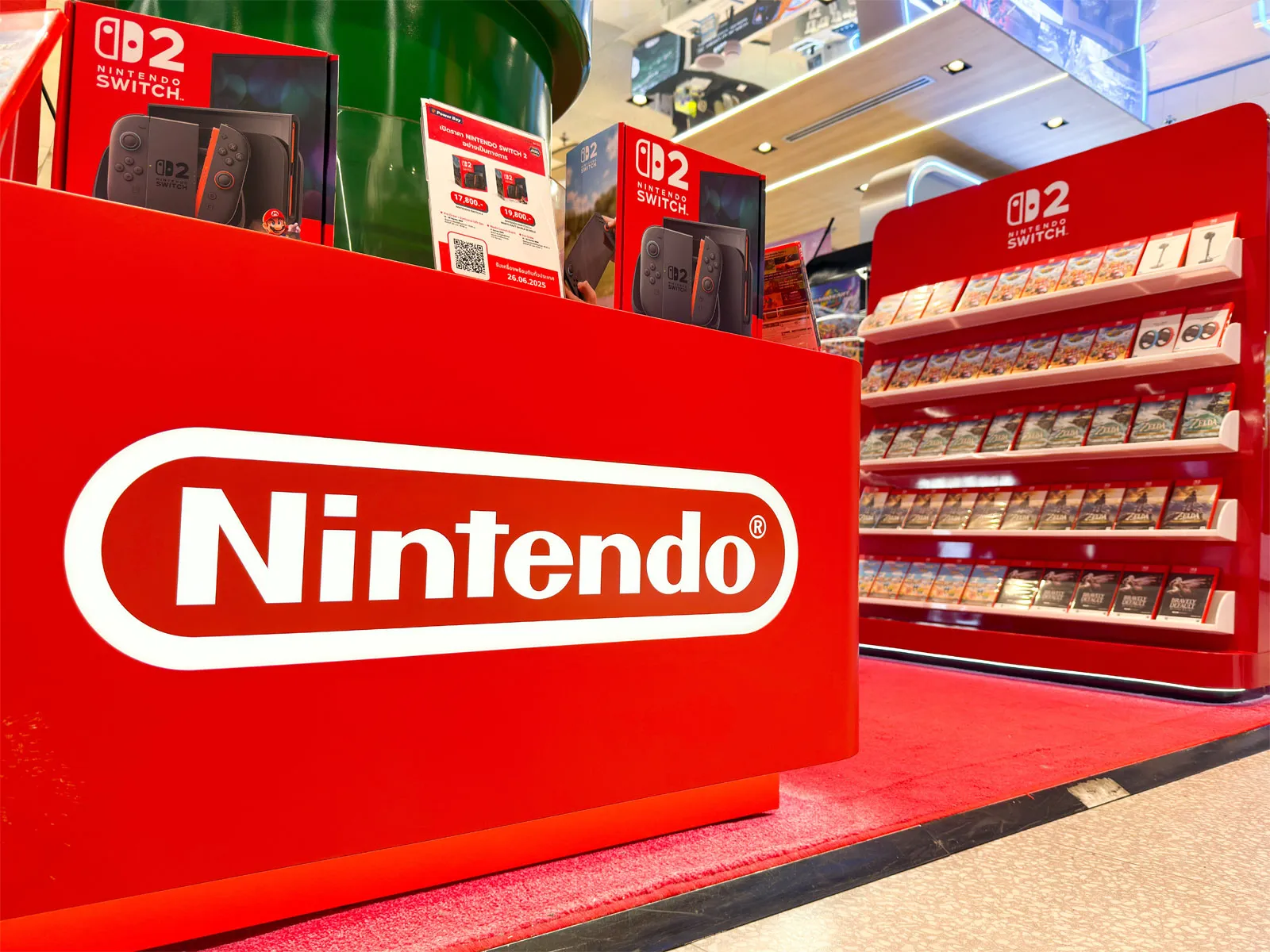
Nintendo, based in Kyoto, Japan, lands at fifth place with a gaming revenue of $7.6 billion for 2026. A household name since 1889, Nintendo's legacy is built on beloved franchises like Super Mario, The Legend of Zelda, and Pokémon. The Nintendo Switch, a hybrid console, remains a phenomenal success, ranking as the third best-selling gaming platform ever with over 130 million units sold by 2026, according to Finbold.
Remarkably, 91% of Nintendo's revenue comes from Switch hardware and software, per Analytics Insight, highlighting their profitability despite a slower transition to mobile gaming. Their 2026 priorities include innovating gameplay mechanics and developing new hybrid consoles to maintain player engagement. Their family-friendly approach continues to attract diverse demographics.
We admire Nintendo's focus on creativity over sheer technical power, a strategy that keeps them relevant across generations. Their unique position in the market offers lessons in balancing tradition with progress, a theme we'll explore in future articles on gaming hardware trends.
6. Electronic Arts (EA)
Electronic Arts (EA), based in Redwood City, California, ranks sixth with a gaming revenue of $7.5 billion in 2026. A veteran in the industry, EA is synonymous with sports and simulation gaming through franchises like EA SPORTS FC, Madden NFL, and The Sims. Their shooter title Apex Legends also continues to draw millions, contributing to a robust live-service revenue stream, as reported by ZegoCloud.
EA pioneered early computer games and has adeptly shifted to a game-as-a-service model, where ongoing updates and microtransactions fuel growth. While primarily focused on console and PC markets, their cross-platform innovations keep them competitive. Data from Analytics Insight shows live services accounted for over 50% of their 2026 earnings.
Our analysis points to EA's strength in maintaining long-running franchises while adapting to player demands for continuous content. Their influence in sports gaming is unmatched, and we expect their upcoming titles to further solidify this niche.
7. Epic Games

Epic Games, headquartered in Cary, North Carolina, takes the seventh spot with a gaming revenue of $6.0 billion in 2026. Best known for the cultural phenomenon Fortnite, which remained their top seller in 2025, Epic has reshaped online multiplayer gaming. Beyond their own titles, their Unreal Engine powers countless games industry-wide, making them a dual force in development and technology, per AllTopEverything.
The Epic Games Store, a digital storefront, challenges traditional PC distribution platforms, drawing developers with favorable revenue splits. Fortnite's in-game events and collaborations continue to generate significant income, with player spending on cosmetics reaching new heights in 2026. Their influence on interactive entertainment extends to virtual concerts and social experiences within games.
We see Epic's blend of community engagement and technological prowess as a model for modern gaming companies. Their role in driving digital distribution trends is a topic worth exploring in our related content on gaming marketplaces.
8. Take-Two Interactive
Take-Two Interactive, based in New York City, ranks eighth with a gaming revenue of $5.6 billion in 2026. Operating through labels like Rockstar Games and 2K, Take-Two is celebrated for immersive, story-driven titles such as Grand Theft Auto and Red Dead Redemption. Their sports simulation NBA 2K26 was a standout performer in 2025, per BuiltIn data.
Take-Two's games emphasize detailed worlds and open-ended gameplay, fostering deep player investment. Their revenue reflects strong sales across consoles and PCs, with digital downloads and in-game purchases playing a growing role. According to Vocal Media, their focus on quality over quantity keeps their franchises critically acclaimed.
Our perspective is that Take-Two's ability to craft expansive experiences sets a high bar for narrative gaming. Their upcoming releases are eagerly anticipated, and we'll cover more on their impact in our feature on open-world game design.
9. Roblox
Roblox Corporation, based in San Mateo, California, claims ninth place with a gaming revenue of $4.9 billion in 2026. More than a game, Roblox is a platform blending social networking, creation tools, and a digital marketplace. It empowers users to design their own worlds and experiences, fostering a creator-driven ecosystem, as detailed by Devoted Studios.
The platform's scale is staggering, with millions of daily active users building and sharing content. Revenue comes from in-platform purchases and subscriptions, with user-generated content driving engagement. Wikipedia's revenue list highlights Roblox's unique position as a space where players become developers overnight.
We find Roblox's model of community-driven content inspiring, redefining what a gaming company can be. Its impact on younger demographics is profound, a subject we'll revisit in our exploration of user-generated gaming platforms.
10. MiHoYo

Rounding out our list at tenth is MiHoYo, a Shanghai-based developer with an estimated gaming revenue of $4.2 billion in 2026. Their breakout title, Genshin Impact, has captivated a global audience since its 2020 launch, blending stunning visuals with deep storytelling. According to Wikipedia's revenue data, this free-to-play action RPG drives most of their financial success through microtransactions.
MiHoYo's commitment to regular content updates and cross-platform availability ensures sustained player interest. Their focus on high-quality production values sets them apart in the crowded mobile gaming space. They've also expanded into other titles, aiming to replicate Genshin's success with new genres.
Our take is that MiHoYo represents the potential of smaller studios to disrupt the industry with a single hit. Their growth trajectory is one to monitor, especially as they target international markets with upcoming projects.
As we reflect on the biggest gaming companies in the world 2026, it's evident that the industry thrives on diversity and innovation. From Sony's console leadership with $28.6 billion in revenue to MiHoYo's mobile mastery at $4.2 billion, these companies showcase varied paths to success. Whether through hardware like Nintendo's Switch, platforms like Roblox, or services like Microsoft's Game Pass, each giant contributes uniquely to gaming's evolution. The trends shaping 2026 - cloud gaming, VR, and user-generated content - suggest a future where accessibility and creativity dominate. Tencent and NetEase highlight mobile gaming's global reach, while Epic Games and Take-Two push interactive storytelling. We believe the next few years will see even tighter competition as these companies vie for emerging markets and technologies.
Related Posts

Top 10 Best Hospitality Schools In The World (2026 Update): Where Tomorrow's Leaders Train
The world’s top hospitality schools continue to be essential in the context of a global economy because of their emphasis on offering exceptional guest experiences and high-quality service. People who want to work in hotels and other hospitality-related fields are actively looking for educational opportunities that will equip them with the skills and knowledge they […] <a class="g1-link g1-link-more" href="https://nubiapage.com/top-10-best-hospitality-schools-in-the-world-2024-up

Top 10 Greatest Packer Players in the World 2026: Surprising Picks & Legends
The Green Bay Packers, which are considered to be one of the most illustrious franchises in the history of the National Football League, have, throughout its existence, boasted a roster of remarkable talent. The history of the Packers is filled with players that have stood out for some reason, whether it be their iconic Super […] More

Top 10 Biggest Concert Stadiums In The World 2026
In 2026, the world of concert venues includes some of the biggest and most famous stadiums, known for hosting huge crowds and providing live music experiences that are unmatched. The following is a list of the ten largest concert stadiums in the world: List Of Top 10 Biggest Concert Stadiums In The World 2026 1. […] More

Top 10 Richest Chefs in USA 2026: How They Built Culinary Empires
In recent years, the world of celebrity chefs has developed into a multi-billion dollar industry that combines culinary expertise with media savvy, entrepreneurialism, and the development of distinctive brands. In the year 2026, a number of the wealthiest chefs in the United States have not only established themselves as influential figures in the kitchen, but […] More
8 Comments
Join the discussion and share your thoughts