Top 10 Best Train Ticket Aggregator Services In Europe 2026

Table of Contents
Booking a train across Europe used to mean juggling a dozen national rail websites, each with its own fare rules and payment quirks. The best train ticket aggregator services in Europe have changed that. They pull inventory from dozens of carriers into one search, letting travelers compare prices, book cross-border routes in a single transaction, and carry e-tickets on a phone instead of a paper wallet.
To build this ranking, we weighed operator coverage, cross-border booking capability, rail pass inventory, app quality, real-time disruption data, and how each platform handles multi-carrier itineraries where a single trip can cross three national networks. We also factored in user base and booking volume, since scale tends to correlate with better fare access and more reliable customer support. Platforms that only resell one operator's tickets scored lower than true aggregators that sell multiple carriers side by side. Where a national operator's booking engine effectively functions as an aggregator for partner railways, we included it, because travelers increasingly use those apps to plan trips well beyond one country.
The result is a mix of independent retailers, national carriers, and one private operator that punches above its weight in Central Europe. All data below reflects 2025 and 2026 figures.
These Are The Top 10 Best Train Ticket Aggregator Services In Europe 2026:
1. Trainline
Trainline is the largest independent rail ticket retailer in Europe, and the numbers back it up. The London-based company, founded in 1997, connects more than 270 train and coach operators across 45 European countries and reports over 27 million monthly active users as of 2025. That combination of breadth and scale is why it tops this list.
What separates Trainline from national operator apps is that it sells tickets for multiple carriers in a single transaction rather than acting as a reseller for one network. A traveler can book a Deutsche Bahn leg, an SNCF connection, and a Eurostar crossing without leaving the platform. Split-ticketing, which breaks a journey into cheaper segments that the operator would otherwise sell as one through-fare, is built into the search. Live journey tracking and a mobile e-ticket wallet round out the feature set.
The trade-off is fees. Trainline adds a booking fee on many transactions, which pure operator sites typically don't charge. For frequent travelers on a single national network, booking direct is often cheaper. For anyone stitching together a multi-country itinerary, the convenience usually outweighs the surcharge.
2. Rail Europe
Rail Europe traces its roots to the French National Railways' international booking arm, making it the longest-established aggregator on this list. It holds official distribution agreements with more than 50 European rail operators, including SNCF, Deutsche Bahn, SBB, ÖBB, and NS, and lists over 15,000 bookable routes as of 2026.
That official status matters. Because Rail Europe distributes on behalf of the operators themselves rather than scraping or reselling, its inventory tends to be more reliable for complex itineraries and its rail pass selection is the most complete of any platform. Eurail and Interrail passes, in particular, are sold here with the full range of options that other retailers often truncate.
Rail Europe is frequently named as a must-have resource for planning multi-country train trips, and for good reason. If a route exists on a European railway, it's likely bookable here. The platform's interface is less polished than Trainline's, and pricing sometimes lags behind operator-direct fares on simple domestic routes, but for pass holders and multi-leg planners, it remains the reference point.
3. Omio
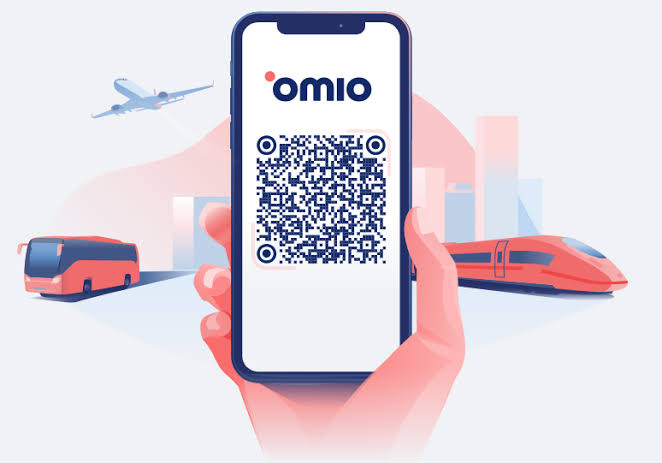
Berlin-based Omio, formerly GoEuro, takes a different approach. Instead of focusing purely on rail, it aggregates trains, buses, and flights in one search interface, making it the strongest multi-modal option for European travel. The company supports 1,000+ travel partners across 40+ countries and has processed more than €1 billion in cumulative bookings as of 2025.
The comparison engine is the draw. A traveler heading from Berlin to Prague can weigh high-speed rail against a budget coach and a short-haul flight on price and duration side by side, then book whichever wins. Omio supports 21 languages and multiple currencies, which matters for travelers booking from outside Europe.
Omio is particularly useful on secondary routes, where budget bus operators and regional rail lines compete directly with high-speed services. On flagship corridors like Paris to Amsterdam, the national operator apps often have better fares. On the long tail of European routes, Omio's breadth is hard to beat.
4. Deutsche Bahn (bahn.de / DB Navigator)
Deutsche Bahn is primarily a national operator, carrying roughly 2 billion passengers annually on its own services. But its booking platform functions as a de facto aggregator for cross-border travel, selling tickets for SNCF, ÖBB, SBB, Trenitalia, and other partner railways alongside its own inventory.
The Sparpreis saver fare engine is the platform's strongest asset. These advance-purchase tickets are widely regarded as offering the best value in Central Europe, with fares from €17.90 on many long-distance routes when booked early. The DB Navigator app, rated 4.6 out of 5 on major app stores in 2025, provides real-time platform and delay data across the German network and into adjacent countries, which makes tight connections far less stressful.
For anyone traveling through Germany or connecting onward to Austria, Switzerland, or the Netherlands, the DB platform is often the cheapest and most informative option, even for routes that don't touch German soil.
5. SNCF Connect
SNCF Connect is the official booking platform for France's national rail operator and the primary gateway to the TGV, Ouigo, Intercités, and TER networks. It sells more than 100 million tickets annually, and the app has been downloaded over 30 million times as of 2025.
Any itinerary touching France runs through this platform, whether the traveler uses it directly or not. SNCF Connect also sells tickets for Eurostar, Lyria, and several partner operators, which extends its reach well beyond French borders. The Ouigo low-cost TGV brand has expanded into Spain, giving budget-conscious travelers a cheap high-speed option between Madrid, Barcelona, and French cities.
The platform's inventory of TGV and Ouigo fares is the deepest available anywhere. Third-party aggregators sometimes show the same routes, but seat reservations and regional fare classes are most reliably booked here.
6. Trenitalia (trenitalia.com)
Trenitalia is Italy's state-owned rail operator and the dominant booking platform for the Italian peninsula, carrying roughly 500 million passengers annually. Its Frecciarossa high-speed fleet covers more than 100 city pairs, with Frecciargento and Frecciabianca services filling out the rest of the network.
The platform connects to international routes into France, Switzerland, Austria, and Slovenia, and it sells Italo competitor tickets through some channels, which makes it a partial aggregator rather than a pure operator site. For any Italy-centric itinerary, it remains the most reliable source of seat reservations and regional fare classes.
Travelers should note that Trenitalia's regional fares are often cheaper when bought directly rather than through third parties, and the Super Economy advance fares on high-speed routes can undercut anything an aggregator shows.
7. ÖBB (oebb.at / ÖBB Scotty)
Austrian Federal Railways operates the largest night-train network in Europe under the Nightjet brand, and its booking platform aggregates sleeper, couchette, and seated overnight services across Austria, Germany, Italy, Switzerland, the Netherlands, Belgium, and Hungary. The network spans more than 25 European cities, and ÖBB carries around 450 million passengers annually.
Nightjet has become the flagship product for Europe's resurgent overnight rail market, and ÖBB's platform is the only place to book the full range of sleeper options. The Scotty app is widely praised for real-time connection planning across multiple operators, which makes it a favorite among Interrail pass holders and night-train travelers who need to link daytime and overnight legs.
For anyone planning a sleeper journey between Vienna, Venice, Berlin, or Amsterdam, booking early through ÖBB directly is essential. Popular Nightjet routes sell out weeks in advance.
8. SBB (sbb.ch / SBB Mobile)

Swiss Federal Railways runs one of the most punctual and integrated rail networks in the world, moving about 1.3 million passengers daily. Its booking platform sells domestic Swiss services alongside cross-border routes into Germany, France, Italy, and Austria.
The SBB Mobile app is the standout feature, holding a 4.7 out of 5 average rating in 2025 and frequently ranking among the best transport apps globally. It combines real-time timetables, platform data, disruption alerts, and integrated ticket purchasing for connecting bus, tram, and boat services. In a country where the train, the tram, and the lake steamer all run on the same timetable, that integration is genuinely useful rather than a marketing claim.
For travelers using a Swiss Travel Pass or planning Alpine routes, SBB's platform is the most accurate source of connection data, even when the booking itself happens elsewhere.
9. Italo - Nuovo Trasporto Viaggiatori
Italo is Italy's private high-speed rail operator and the main competitor to Trenitalia on the Milan-Rome-Naples-Salerno corridor, carrying around 25 million passengers annually with a 4.5 out of 5 average customer rating in 2025.
Its booking platform aggregates Italo's own fares and uses dynamic pricing that frequently undercuts Trenitalia on advance bookings. The Italo Più loyalty program and flexible change policies add value for frequent travelers, and the onboard product, with its cinema car and quieter cabins, has built a loyal following.
For travelers comparing prices on Italy's busiest high-speed routes, checking both Italo and Trenitalia before booking is standard practice. The gap between the two can be substantial, particularly for early bookings on the Rome-Milan run.
10. RegioJet
RegioJet is a Czech private operator and booking platform that aggregates its own train and bus services across the Czech Republic, Slovakia, Austria, Hungary, and Croatia, plus selected German and Polish routes. It carries around 10 million passengers annually across five or more countries.
The appeal is straightforward: low fares, free coffee, onboard entertainment, and a simple unified booking system for both rail and coach. On routes like Prague to Vienna or Prague to Bratislava, RegioJet often undercuts the national operators by a wide margin while offering comparable comfort.
RegioJet fills a gap that major Western aggregators have largely ignored. Inventory for Central and Eastern European budget rail and cross-border coach-rail combinations is thinner on platforms like Trainline and Omio, which makes RegioJet's own booking system the most practical option for travelers moving through the region on a budget.
Related Posts




1 Comment
Join the discussion and share your thoughts