Top 10 Best Space Agencies in The World 2026: Ranking the Trailblazers of Space Exploration

Table of Contents
The pursuit of understanding the cosmos represents a pinnacle of human ingenuity and technological advancement. In this endeavor, space agencies around the globe stand as critical drivers, pushing the boundaries of scientific discovery, engineering innovation, and humanity's reach beyond Earth. Our publication has undertaken an analysis of the leading organizations shaping the future of space. We present our ranking of the Top 10 Best Space Agencies in The World for 2026, examining their accomplishments, technological proficiencies, and contributions to space science and exploration.
Methodology for Ranking Space Agencies
Our assessment of the world's premier space agencies for 2026 is based on a structured evaluation framework. We consider several key criteria to ensure a balanced and thorough analysis of each organization's impact and capabilities. These include annual budget allocations, the volume and complexity of active missions, the depth of technological innovation, the extent of international partnerships, direct involvement in human spaceflight, and significant contributions to scientific research.
This comprehensive approach allows us to gauge not only the current operational strength of an agency but also its strategic influence and future trajectory in the global space sector. Data for this analysis was drawn from reputable sources such as World Population Review 2026, The Times of India, economictimes.com, nasa.gov, aerosociety.com, ABI Research 2026, godigit.com, solar-mems.com, rankred.com, TheTopTens, and spacenexus.us. We prioritized recent data and verifiable facts to ensure the accuracy and relevance of our ranking for the 2026 timeframe.
The Top 10 Best Space Agencies in The World 2026:
1. National Aeronautics and Space Administration (NASA)
NASA, the flagship space agency of the United States government, maintains its position as the most prolific and active space agency globally. Historically, the agency is celebrated for its pioneering Apollo program, which successfully landed humans on the Moon, a feat that fundamentally reshaped our understanding of lunar exploration. Today, NASA continues to lead deep space exploration efforts, notably through its Artemis program, which aims for a sustainable human presence on the Moon by the end of the decade and sets the stage for direct human missions to Mars. The agency's budget is nearly twice that of the next highest agency in 2026, reflecting its extensive operational capacity and ambitious goals.
Beyond human spaceflight, NASA is at the forefront of robotic exploration. It operates iconic missions such as the Mars rovers Curiosity and Perseverance, which continue to deliver unprecedented scientific data from the Martian surface. The agency is also a foundational contributor to the International Space Station (ISS), facilitating critical research in microgravity. Ongoing projects like the James Webb Space Telescope, a collaboration with ESA and CSA, are expanding our understanding of the universe's origins and composition, providing images and data that redefine astronomical observation. Furthermore, NASA is actively developing advanced propulsion technologies, including nuclear propulsion, which promise to shorten transit times for future deep space missions.
The agency's broad portfolio extends to Earth science, aeronautics research, and technology development, all contributing to its Operational Level 7 status-the highest possible. Its commitment to open science and international collaboration fosters a global environment of discovery. NASA's strategic initiatives for 2026 and beyond emphasize sustained exploration, scientific breakthroughs, and the development of commercial space capabilities, solidifying its leadership in the space domain.
2. China National Space Administration (CNSA)
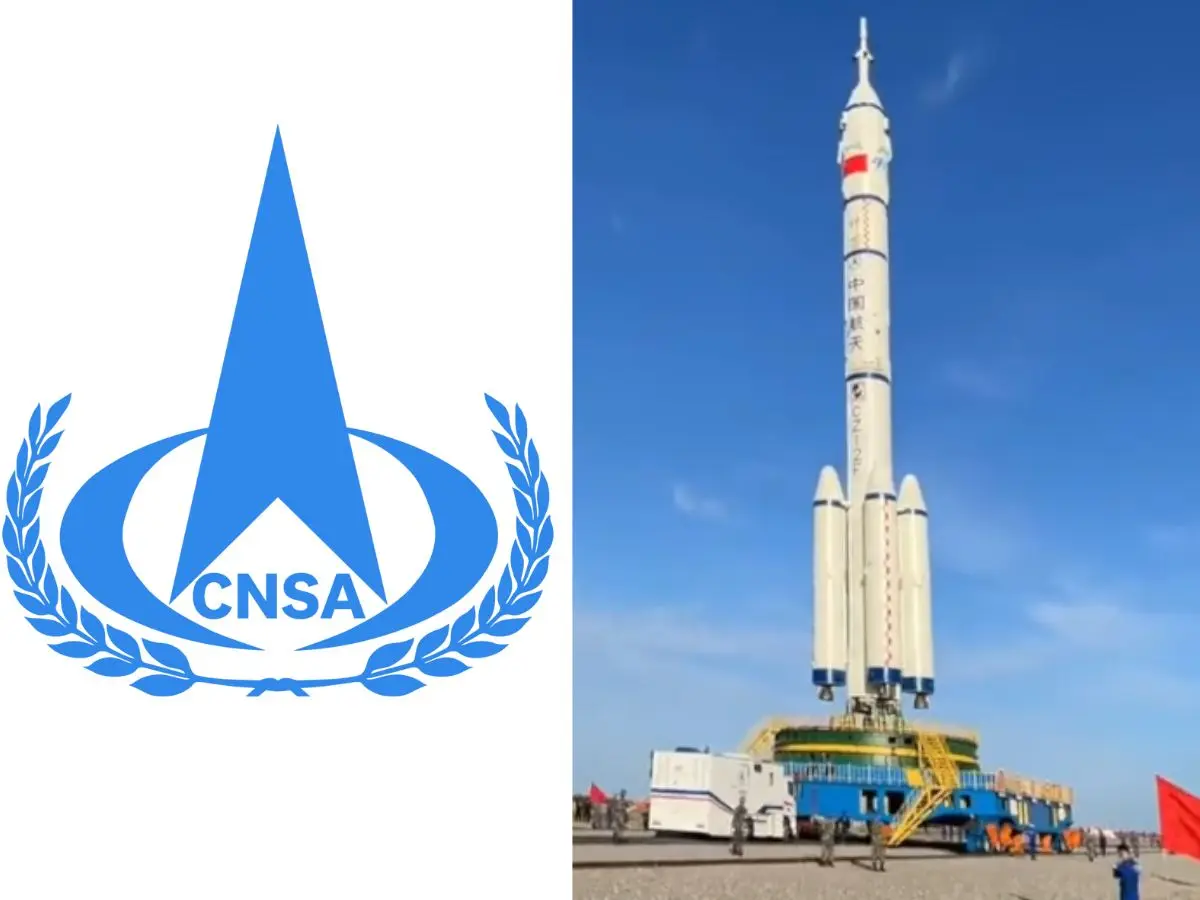
The China National Space Administration is rapidly ascending as a global space power, demonstrating significant growth and ambitious plans. The agency has significantly expanded its operational capacity, evidenced by its launch rate in 2025, which surpassed Russia's by almost six to one. This rapid expansion reflects China's strategic commitment to becoming a leading force in space exploration and utilization. CNSA's planned Chang'e 7 robotic exploration mission to the Moon's south pole in 2026 highlights its focus on lunar science and resource assessment, building on previous successful lunar landings.
Beyond lunar exploration, CNSA is orchestrating massive satellite constellation projects that will reshape global communications and earth observation. Projects like Spaceai are planning to deploy 15,000 satellites, while the China Satellite Network aims for an additional 12,992 satellites. These initiatives underscore China's intent to establish independent, comprehensive space infrastructure for various applications. The agency operates at an Operational Level 6, a reflection of its sophisticated launch capabilities, advanced satellite technology, and growing deep space mission portfolio. CNSA's advancements are not only transforming its domestic capabilities but are also increasingly influencing the broader international space landscape.
The agency's trajectory indicates a sustained investment in all facets of space technology, from launch vehicles and human spaceflight to robotic planetary missions and space-based platforms. China's space program has achieved notable milestones in recent years, including the construction of its own modular space station, Tiangong, and successful Mars exploration with the Tianwen-1 mission. These achievements position CNSA as a formidable and increasingly influential player in the global space arena, driving innovation and expanding the frontiers of space knowledge.
3. European Space Agency (ESA)
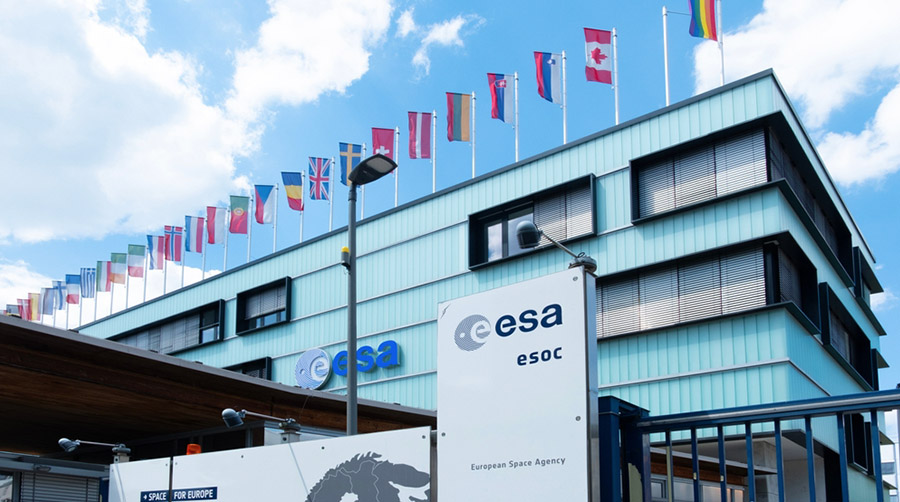
The European Space Agency stands as a major collaborative force in space exploration, uniting 22 European member states to achieve ambitious scientific and technological goals. Established in 1975, ESA exemplifies successful international cooperation, pooling resources and expertise to undertake projects that would be beyond the scope of individual nations. This intergovernmental structure allows ESA to pursue a wide range of missions, from Earth observation and telecommunications to planetary exploration and human spaceflight.
ESA plays a critical role in several international projects, notably as one of the five agencies collaborating to operate the International Space Station (ISS). Its contributions to the ISS include modules like Columbus and the Automated Transfer Vehicle (ATV), which supplied the station with cargo and propelled it to higher orbits. The agency has been involved in significant scientific missions such as Mars Express, which has been orbiting Mars since 2003, providing detailed images and data on the planet's surface and atmosphere. Additionally, ESA is a key partner in the Galileo Project, Europe's own global navigation satellite system, providing precise positioning and timing information worldwide.
The agency's collective strength is further demonstrated through its development of advanced launch vehicles, such as the Ariane family of rockets, which have been instrumental in launching numerous satellites for both European and international clients. ESA's scientific programs also include missions like Rosetta, which successfully landed a probe on a comet, and the Gaia mission, which is mapping the Milky Way with unprecedented precision. These endeavors showcase ESA's commitment to expanding scientific knowledge and developing technologies that benefit all people, reinforcing its position as a leading entity in global space activities.
4. Roscosmos (Russian State Corporation for Space Activities)
Roscosmos, the Russian State Corporation for Space Activities, carries the profound legacy of the Soviet space program, a historical titan known for pioneering achievements in space exploration. The agency's predecessors were responsible for iconic "firsts," including the first artificial satellite, Sputnik 1, and the first human in space, Yuri Gagarin. The Mir space station, established in 1986, was a groundbreaking long-duration orbital outpost that demonstrated sustained human presence in space for over a decade. The Soyuz program, with its reliable spacecraft and rockets, has been crucial for transporting astronauts to the International Space Station for many years, serving as the sole crew transport system for a period.
While still a key collaborator on the ISS, providing critical transport and operational support, Roscosmos faces evolving challenges by 2026. The agency has been developing new generations of rockets and spacecraft, such as the Angara family of launch vehicles, to modernize its capabilities. However, its launch rates have significantly reduced compared to emerging space powers like China, as noted in 2025 data. New space station projects, such as the proposed Russian Orbital Service Station (ROSS), are currently viewed as "aspirational" due to various factors, including financial constraints and shifting geopolitical priorities.
Despite these challenges, Roscosmos remains an important player on the world stage. Its deep institutional knowledge, extensive infrastructure, and continued contributions to human spaceflight maintain its Operational Level 6 status. The agency's focus includes maintaining its orbital constellations, developing new satellite technologies, and engaging in scientific research. The historical achievements of the Russian space program provide a strong foundation, even as the agency navigates a changing global space business landscape and adapts its strategic direction for future endeavors.
5. Indian Space Research Organisation (ISRO)

The Indian Space Research Organisation is renowned for its cost-effective and highly successful space missions, which have positioned India as a prominent player in the global space community. A testament to its engineering prowess, ISRO made India the first Asian nation to successfully reach Mars with its Mars Orbiter Mission, affectionately known as Mangalyaan, launched in 2013. This mission achieved orbit on its very first attempt, demonstrating significant technical capability on a modest budget.
ISRO also holds a world record for launching over 100 satellites in a single day, an accomplishment achieved in 2017 with the PSLV-C37 mission, deploying satellites for multiple countries. This capability highlights ISRO's expertise in multi-satellite launch services and its growing commercial viability. The agency operates at an Operational Level 4, indicating its robust capabilities in satellite development, launch services, and interplanetary exploration.
By early 2026, ISRO is preparing for a significant milestone with the uncrewed test launch of Gaganyaan-1. This mission is a crucial step towards India's first home-grown human spaceflight program, marking a new chapter in the nation's space ambitions. The Gaganyaan program aims to send a three-member crew to a low Earth orbit for a mission lasting five to seven days. ISRO's strategic focus combines scientific exploration with applications that directly benefit society, such as remote sensing, disaster management, and satellite communication, solidifying its role as a key contributor to both national development and international space science.
6. Japan Aerospace Exploration Agency (JAXA)

The Japan Aerospace Exploration Agency serves as Japan's national aerospace agency, distinguished by its advanced technological capabilities and significant contributions to global space endeavors. JAXA conducts a wide range of activities, encompassing satellite launches, planetary exploration, and aeronautical research, reflecting a comprehensive approach to space and aviation. The agency is a key collaborator on the International Space Station (ISS), demonstrating its commitment to human spaceflight and orbital research as one of the five principal agencies involved in its operation.
JAXA's contributions to the ISS include the Kibo module, Japan's largest single contribution to the station, which provides a unique environment for scientific experiments. The agency also developed the H-II Transfer Vehicle (HTV), known as Kounotori, for resupplying the ISS. In planetary exploration, JAXA has achieved remarkable success with missions like Hayabusa and Hayabusa2, which collected samples from asteroids Ryugu and Itokawa and returned them to Earth, providing invaluable insights into the early solar system. These missions showcase Japan's precision engineering and robotic capabilities.
Operating at an Operational Level 4, JAXA continues to push the boundaries of space technology. Its research in aeronautics aims to develop next-generation aircraft and improve air transport safety and efficiency. Future plans include further lunar exploration, with potential collaborations on NASA's Artemis program, and continued development of advanced satellite systems for Earth observation and communication. JAXA's blend of scientific inquiry, technological innovation, and international partnership cements its position as a highly respected and impactful space agency.
7. Centre National d'Études Spatiales (CNES)
The Centre National d'Études Spatiales, or French National Centre for Space Studies, is France's national space agency, holding a significant position within European and global space initiatives. Founded in 1961, CNES has played a crucial role in shaping France's space policy and driving advancements in satellite technology, space exploration, and international space cooperation. In 2019, the agency commanded a substantial budget of $2.7 billion, enabling it to undertake diverse projects and maintain a strong presence in the space sector.
Based in Paris, CNES often collaborates closely with the European Space Agency (ESA), contributing significantly to major European projects and initiatives. This partnership leverages France's strong aerospace industry and research capabilities for the benefit of broader European space goals. CNES activities span a wide array of domains, including scientific research in astrophysics and Earth observation, the development of advanced satellite systems, and participation in launch vehicle technology programs, particularly through its involvement with Arianespace and the development of the Ariane rockets.
The agency's expertise extends to space applications that benefit daily life, such as meteorology, telecommunications, and environmental monitoring. CNES has been involved in several notable missions, including the development of scientific instruments for planetary probes and Earth observation satellites like the SPOT series. Its consistent investment in research and development, coupled with a robust framework for international collaboration, ensures that CNES remains a key participant in the advancement of space science and technology, both within Europe and on a global scale.
8. German Aerospace Center (DLR)
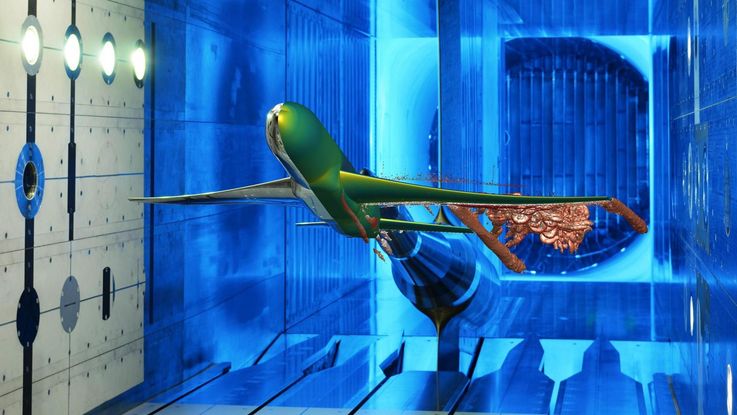
The German Aerospace Center, known as Deutsches Zentrum für Luft- und Raumfahrt (DLR), serves as Germany's national research center for aeronautics and space. Headquartered in Cologne, with multiple subsidiaries across Germany, DLR is a multifaceted organization that conducts extensive research and development in various fields. With a considerable budget of $1.2 billion and a workforce of 8,200 employees in 2017, DLR is a significant contributor to scientific and technological cooperation on a global scale.
DLR has been a key collaborator on major international projects, particularly within the European Space Agency framework. Its contributions include significant involvement in the Mars Express mission, where DLR developed instruments and provided operational support, and the Galileo Project, Europe's satellite navigation system. The agency's research portfolio is broad, encompassing areas such as Earth observation, where it develops and operates satellites for environmental monitoring, and planetary research, with a focus on understanding the solar system's formation and evolution.
Beyond space exploration, DLR is a leader in aeronautical research, working on future aircraft technologies, air traffic management, and sustainable aviation. Its expertise in space transportation systems, including re-entry technologies and launcher development, further enhances Germany and Europe's standing in worldwide aerospace activities. DLR's integrated approach to research across aeronautics, space, energy, and transportation underscores its commitment to addressing complex societal challenges through advanced scientific and engineering solutions.
9. Italian Space Agency (ASI)
The Agenzia Spaziale Italiana (ASI), or Italian Space Agency, based in Rome, plays an important role at the European level and within the international space community. Established in 1988, ASI has rapidly grown into a prominent player, directing and promoting Italy's space activities. The agency is particularly notable for its significant financial contributions to the European Space Agency (ESA), where it stands as the third-largest financial supporter, underscoring Italy's commitment to collaborative European space endeavors.
ASI has been a vital partner in some very important missions, including the construction and ongoing operation of the International Space Station. Italy's aerospace industry has provided key components and modules for the ISS, such as the Multi-Purpose Logistics Modules (MPLMs) and the Node modules, showcasing its high-precision engineering and manufacturing capabilities. These contributions are a direct reflection of Italy's long and illustrious history in aerospace and engineering, which dates back to pioneers like Enrico Forlanini and continues through its robust industrial base.
The agency's activities extend to Earth observation, with missions like COSMO-SkyMed providing crucial data for environmental monitoring and security applications. ASI is also involved in deep space missions, developing scientific instruments for planetary probes and contributing to international astronomical observatories. With a budget of $1 billion in 2019, ASI continues to foster scientific research, technological innovation, and space exploration, demonstrating Italy's unwavering dedication to exploring the frontiers of space and leveraging space technology for societal benefit.
10. Canadian Space Agency (CSA)
The Canadian Space Agency (CSA) is a dedicated national body that plays a crucial role in international space collaboration, particularly recognized for its specialized technological capabilities in critical space infrastructure. As one of the five agencies that jointly operate the International Space Station (ISS), the CSA demonstrates its commitment to human spaceflight and orbital research. Canada's contributions to the ISS are highly regarded, especially in the field of robotics.
The CSA is particularly known for its expertise in space robotics, having contributed the iconic Canadarm to the Space Shuttle program. This robotic arm became a symbol of Canadian innovation in space and performed numerous critical tasks in orbit, including satellite deployment and retrieval. Building on this heritage, Canada further contributed the Canadarm2 and Dextre to the ISS, which are essential for station maintenance, module assembly, and external payload handling. These robotic systems highlight the CSA's unique technological specialization and its indispensable role in supporting complex orbital operations.
Beyond its robotic heritage, the CSA conducts a range of activities including space science, Earth observation, and satellite communications. The agency supports Canadian researchers in various fields, contributing to scientific discoveries and the development of new space technologies. Future plans involve continued participation in international lunar missions, potentially through contributions to the Lunar Gateway, and the advancement of quantum encryption for secure satellite communications. The CSA's focused approach on niche yet critical areas of space technology secures its position as a valuable and respected partner in global space exploration.
The landscape of space exploration for 2026 is dynamic, marked by both established leaders and rapidly ascending powers. Our analysis of the Best Space Agencies in The World 2026 reveals a sector driven by ambitious scientific goals, technological innovation, and increasingly complex international collaborations. Agencies like NASA continue to push the frontiers of human and robotic exploration, while CNSA demonstrates rapid growth and strategic investment in comprehensive space infrastructure. ESA and Roscosmos maintain their vital roles through collaborative projects and historical expertise, even as new challenges and opportunities emerge.
Related Posts

Top 10 Richest Chefs in USA 2026: How They Built Culinary Empires
In recent years, the world of celebrity chefs has developed into a multi-billion dollar industry that combines culinary expertise with media savvy, entrepreneurialism, and the development of distinctive brands. In the year 2026, a number of the wealthiest chefs in the United States have not only established themselves as influential figures in the kitchen, but […] More

Top 10 Best Skaters in the World 2026: The Ultimate Showdown Awaits
As we move through 2026, a few skaters stand out for their extraordinary skills, creativity, and contributions to the sport. Here’s a look at the top 10 skaters in the world right now, each pushing the boundaries of skateboarding in their own unique way. Skateboarding has evolved into a highly dynamic sport, showcasing remarkable talent […] More

Top 10 Highest Paid Female Footballers In The World 2026: Salaries That Shocked the Industry
Top 10 Highest Paid Female Footballers In The World 2026 1. Sam Kerr One of the most notable players in women’s football is Sam Kerr, who hails from Australia and operates as a striker. Kerr has emerged as a significant personality in the sport as a result of her remarkable speed, her extraordinary ability to […] More

The Largest Oil Refineries In The World 2026: Essential Insights for Energy Stakeholders
As of the year 2026, the following is a list of the top ten largest refineries in the world, which are known for their enormous processing capacities and strategic significance. Refineries play an important part in the global energy sector because they convert crude oil into valuable products such as gasoline, diesel, and other petrochemicals. […] More
2 Comments
Join the discussion and share your thoughts