Top 10 Best Renewable Energy Companies In Denmark 2026


Table of Contents
Denmark built its first commercial wind turbine in 1891 and has spent the decades since turning that early curiosity into an industrial base that now supplies clean power machinery to most of the planet. Our ranking of the top 10 best renewable energy companies in Denmark for 2026 covers the full spread of that industry, from the offshore wind developer that reshaped global utilities to the Aalborg crane maker that lets turbines grow taller than ever before.
The list weighs global market position, installed capacity, project pipelines, and innovation records. Some names here are household fixtures in Danish energy. Others are specialist firms most Danes have never heard of, yet their equipment sits inside wind farms on four continents.
How We Ranked These
We assessed each company on installed or operational renewable capacity, the scale of its development pipeline, global market share in its niche, and its record of commercializing new technology. Customer base and ownership structure mattered for the utility groups. We also weighed independent recognition, including corporate sustainability rankings and third-party customer surveys, where those exist. Companies were judged on their renewable activity specifically, not on total group revenue. The result is a mix of global giants and specialist enablers that together show the depth of Denmark's clean energy sector.
TheTop 10 Best Renewable Energy Companies In Denmark 2026:
1. Ørsted A/S
No other Danish company has done more to define the modern offshore wind industry. Ørsted was founded in 2006 as DONG Energy and rebranded in 2017 after selling off its oil and gas business to become a pure renewable play. The Danish state remains the majority owner.
Installed renewable capacity stood at roughly 7.6 GW in 2024, spread across Europe, the UK, the United States, and Asia-Pacific. Management has set a target of about 35 GW by 2030, which would require more than quadrupling the current base within six years. The company holds a leading share of the global offshore wind market and has been ranked the world's 7th most sustainable corporation, placing it inside the top 10 of the Corporate Knights Global 100 index.
Beyond offshore wind, Ørsted operates onshore wind and solar assets and is building green hydrogen projects in Denmark under the Power-to-X banner. The company's scale gives it unusual influence over turbine pricing and supply chain terms, a position that has drawn both praise and scrutiny as the offshore sector works through cost inflation.
2. Vestas Wind Systems A/S
Founded in 1945 and headquartered in Aarhus, Vestas is the world's largest wind turbine manufacturer by installed capacity. More than 170 GW of Vestas turbines are installed across 88 countries, and the company held over 15% of the global turbine market in 2024.
The manufacturing and research footprint stretches through Denmark, the rest of Europe, India, China, and the Americas. Vestas also runs one of the industry's largest service operations, with maintenance contracts covering tens of gigawatts of turbines worldwide. That service book has become increasingly important as a revenue stabilizer while turbine order margins stay thin.
On the numbers alone, Vestas is arguably the most influential Danish renewable company in the world by revenue and geographic reach. Its turbines generate a meaningful share of global electricity, and the company's technology decisions ripple through supply chains from blade factories in Lemvig to nacelle plants in Colorado.
3. Vattenfall A/S (Denmark operations)
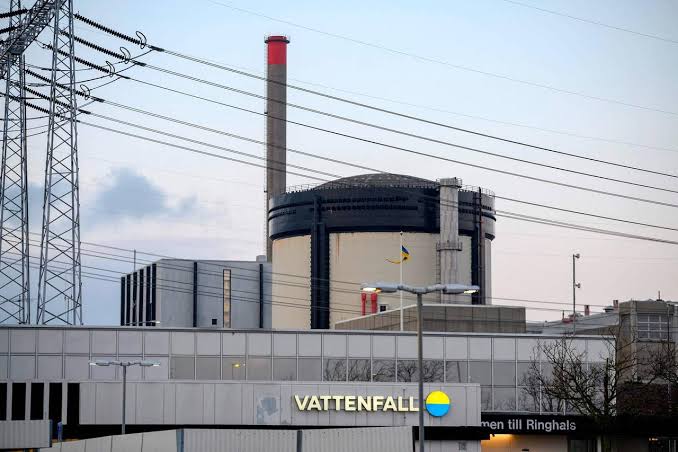
Vattenfall is Swedish state-owned, but its Danish arm is one of the country's largest energy suppliers and a heavyweight investor in domestic renewable infrastructure. The operation spans electricity and heat supply, district heating, and offshore wind, including the Horns Rev and Kriegers Flak projects in Danish waters.
Hundreds of thousands of Danish customers buy power and heat through the subsidiary. The parent group has committed to fossil-free generation within a generation, and the Danish portfolio is central to that pledge given the country's mature offshore wind market and extensive district heating networks.
For anyone tracking who actually owns the renewable assets behind Danish sockets, Vattenfall belongs near the top of the list. Its combination of retail supply and large-scale generation gives it a stability that pure developers lack.
4. Better Energy A/S
Founded in 2012 and based in Copenhagen, Better Energy has become Denmark's leading pure-play solar developer. The company develops, builds, and operates utility-scale solar parks across Denmark, Poland, and Sweden, with a pipeline measured in gigawatts.
Better Energy was among the first to build subsidy-free solar parks in Denmark, selling output to corporate buyers through long-term power purchase agreements. That model has since become standard across Northern Europe. The company has expanded into battery storage and hybrid projects that pair solar with other generation.
Solar's share of the Danish electricity mix remains smaller than wind's, but the trajectory is steep. Better Energy's pipeline position makes it the company most likely to shift that balance over the next decade.
5. European Energy A/S
Headquartered in Søborg, European Energy develops and operates solar, wind, and Power-to-X projects across Europe, the Americas, and Australia. Operational renewable capacity passed 1 GW in 2024, with a development pipeline above 20 GW.
The company's standout achievement is the Kassø Power-to-X facility in Denmark, one of the world's first large-scale e-methanol plants. The site produces green e-methanol for shipping and industrial customers, turning renewable electricity into a transportable fuel. Like Better Energy, European Energy builds largely without subsidies and sells power through long-term contracts.
E-fuels remain expensive relative to fossil alternatives, and the sector's economics depend heavily on regulatory support and offtake commitments. European Energy's early lead in the technology gives it a credible claim as a global frontrunner in Power-to-X.
6. Andel
Andel is a cooperative energy group based in Sorø and one of Denmark's largest, with more than a million energy customers through Andel Energi. The group owns significant renewable generation and grid assets and invests heavily in offshore wind, solar, and electric vehicle charging.
Customer satisfaction data has been kind to the brand. YouGov surveys have consistently placed Andel Energi among Denmark's best energy companies for value for money, a metric that matters in a market where switching suppliers is easy and consumers are price-sensitive.
The cooperative structure means profits cycle back to member-customers rather than distant shareholders. That ownership model has made Andel a durable investor in Danish renewable infrastructure through periods when listed developers pulled back.
7. Norlys
Norlys was formed from the merger of SE and Eniig and is owned by a cooperative of member-customers. It operates electricity and fiber networks, supplies energy to a large share of Danish households, and invests in solar and wind generation plus EV charging infrastructure.
With more than 800,000 electricity customers, Norlys is Denmark's largest integrated energy and telecom group. YouGov ranked it the best-performing Danish energy company for value for money in 2024, edging out rivals on the same measure.
The fiber network gives Norlys something most energy suppliers lack: a second revenue stream that funds continued investment in generation and grid upgrades. That diversification has proven useful as energy retail margins compress.
8. Arcon-Sunmark A/S
Based in Skørping, Arcon-Sunmark is the world's leading supplier of large-scale solar thermal plants, with more than 100 large installations across Denmark, Europe, and Asia. Some of the biggest solar heating systems on earth carry the company's collectors.
Solar thermal rarely makes headlines next to offshore wind, but it plays a quiet, important role in Denmark's district heating decarbonization. Arcon-Sunmark exports Danish district heating expertise worldwide, pairing collector fields with seasonal storage to deliver heat through winter months.
The company's decades of experience give it a niche moat. Few firms anywhere can match its track record on integrating solar heat into municipal networks at scale.
9. Stiesdal
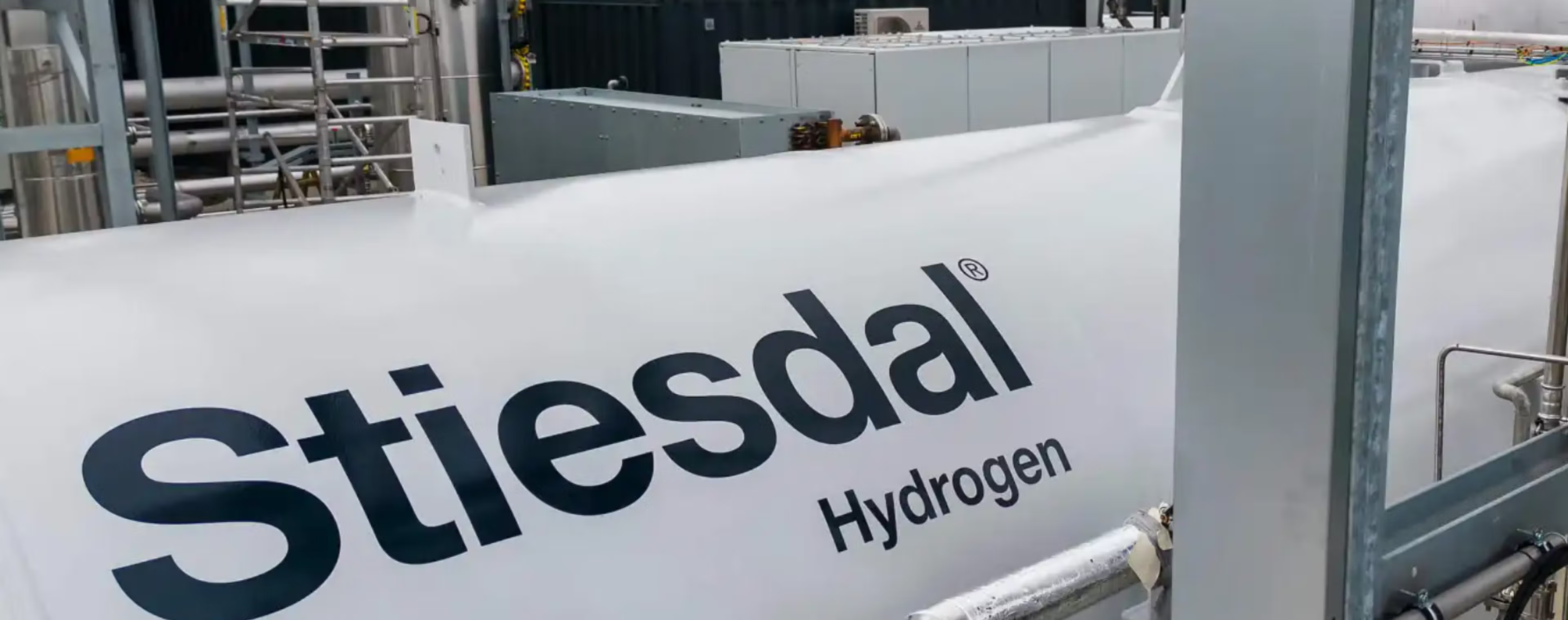
Founded in 2014 by Henrik Stiesdal, the engineer behind some of the first modern wind turbines, Stiesdal develops next-generation renewable technology from its base in Odense. The company's portfolio includes the TetraSpar floating offshore wind foundation, the SkyClean pyrolysis plant for carbon-negative bioenergy, and next-generation electrolysis systems.
The TetraSpar design is being deployed in pilot projects in Norway and beyond, and the company has attracted significant investment and partnerships with major energy firms. SkyClean converts agricultural waste into biochar and gas while locking carbon into the soil, a process that produces negative emissions rather than merely zero ones.
Stiesdal is a technology house rather than a project developer, which makes it harder to measure by capacity. Its influence shows up instead in the designs other companies adopt.
10. Liftra
Based in Aalborg, Liftra designs and manufactures specialized cranes and lifting equipment for onshore and offshore wind turbine installation and maintenance. Its LT1500 crane and related systems let developers install taller turbines and handle offshore components more efficiently.
The company serves major turbine manufacturers and project developers globally, and StartupBlink has ranked it among Denmark's top clean-energy startups. As turbines grow past 15 MW and blades stretch beyond 115 meters, the logistics of lifting components into place have become a genuine engineering bottleneck. Liftra sells into that bottleneck.
Installation technology rarely gets the attention that turbines do, but without it the next generation of offshore machines cannot be built. Liftra's order book tracks directly with the pace of offshore construction worldwide.
Denmark's renewable sector is not one industry but several layered on top of each other. Offshore wind developers, turbine manufacturers, utilities, solar specialists, solar thermal suppliers, and lifting equipment makers all draw on the same engineering culture and the same small domestic market that forced them to export from day one.
The companies above employ tens of thousands of people in Denmark and many more abroad. Vestas alone operates factories on three continents. Ørsted's project pipeline stretches from the North Sea to Taiwan. Even the smallest firms on this list, Arcon-Sunmark and Liftra, sell into markets their home country could never absorb on its own.
For 2026, the watch items are Power-to-X economics at European Energy and Ørsted, the offshore cost cycle confronting Vestas, and whether floating wind designs from Stiesdal reach commercial scale. Each of those storylines will shape how this ranking looks a year from now.
Related Posts
0 Comments
Join the discussion and share your thoughts
No Comments Yet
Be the first to share your thoughts on this article!