Top 10 Best International Mobile Banking Apps In Italy 2026

Table of Contents
Italy's banking sector has shifted decisively toward mobile. Statista's tracking of Italian app store downloads shows steady quarterly growth in mobile banking usage from 2015 through early 2025, and the apps competing for those downloads now come from Berlin, Amsterdam, London, Paris, Madrid, and Milan alike. For expats in Rome, students in Bologna, freelancers invoicing foreign clients from Turin, and Italians who simply want to hold euros and dollars in the same account, the question is no longer whether to bank on a phone, but which app deserves the home screen slot.
To build this ranking, we weighed several factors. Regulatory standing mattered: apps authorized under frameworks like the UK's Electronic Money Regulations 2011 carry meaningful consumer protections. We looked at multi-currency capability and the real cost of cross-border transfers, since Italy's large expat and remote-worker population depends on moving money across borders regularly. Customer scale and institutional stability played a role, as did user experience, account-opening speed, and how well each app serves people actually living in Italy rather than just visiting. We drew on Consultancy.eu's ranking of Europe's top 10 mobile banking apps, Expatica's guide to mobile banking in Italy, ConnectPay's 2026 review of online banking apps, and Statista's Italian adoption data. Where an app is excellent but thinly available in Italy, that counted against it. Where an app is built specifically for the Italian market, that counted in its favor.
These Are The Top 10 Best International Mobile Banking Apps In Italy 2026:
1. Revolut
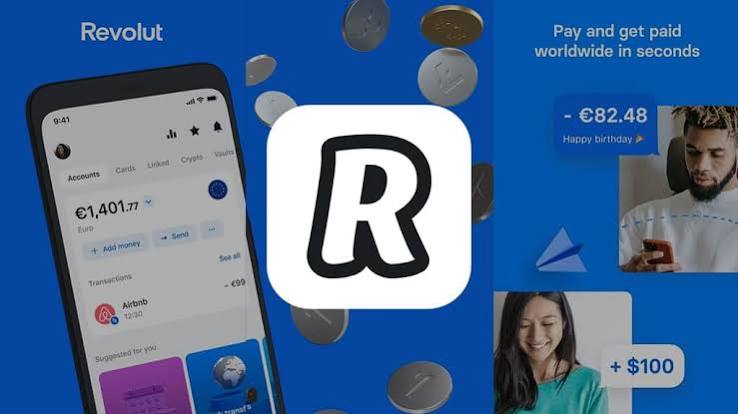
No other app on this list combines breadth of function with international spending power the way Revolut does. Users can hold and exchange more than 30 currencies at the interbank rate, which is the same rate banks use to trade with each other, not the marked-up retail rate most consumers get stuck with. For anyone splitting time between Milan and London, or getting paid in dollars while paying rent in euros, that single feature eliminates a recurring monthly cost.
ConnectPay's 2026 review calls Revolut "the top consumer choice for digital-first travel and multi-currency spending," citing its user experience and international capability as best-in-class. The platform goes well beyond a standard current account, offering personal and business accounts, budgeting tools, and international transfers under one roof. Frequent travelers and expats with cross-border financial commitments make up its core Italian user base.
It takes the top spot because nothing else here matches the combination of currency flexibility, transfer capability, and everyday functionality for people living in or transacting with Italy. The trade-off is that Revolut is a financial platform first and a traditional bank second, so customers who want a brick-and-mortar branch network will need to look elsewhere.
2. Wise
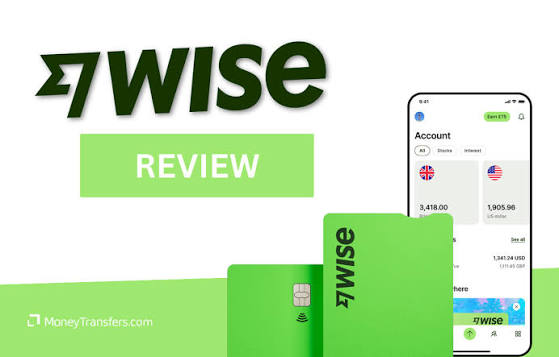
Wise built its reputation on one thing: telling customers exactly what a transfer costs. The company, formerly known as TransferWise, is authorized by the Financial Conduct Authority under the Electronic Money Regulations 2011 (Firm Reference 900507) for issuing electronic money, and its pricing model uses a clear percentage fee rather than burying margins in the exchange rate. Transfers convert at or near the mid-market rate, the midpoint between buy and sell prices on global currency markets.
Expatica explicitly names Wise among the mobile banks operating in Italy, and it has become a default tool for expats and internationals sending money home or paying foreign invoices. Bank-to-bank transfers are its strength. Cash pickup is not offered, which matters to a small subset of users but rarely to the salaried professionals and freelancers who form its Italian base.
Second place reflects industry-leading transparency rather than any lack of ambition. Wise does fewer things than Revolut, but the thing it does, cross-border money movement at honest rates, it does better than almost anyone.
3. N26
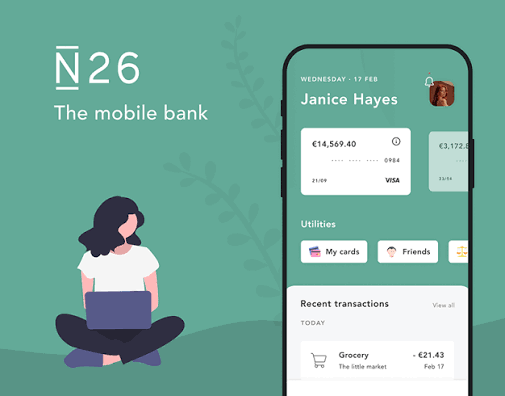
Founded in Berlin in 2013, N26 has grown past 5 million customers worldwide and carries the tagline of being the first mobile bank "the world loves to use." Expatica lists it alongside Hype and Wise as one of the mobile banks operating in Italy, and its European banking license means Italian residents can open an account without the paperwork marathon a traditional bank branch demands.
ConnectPay describes N26 as offering "the cleanest mobile experience for basic European personal banking," and that reputation is earned. The interface is minimalist, account opening takes under ten minutes in most cases, and the app avoids the feature bloat that clutters some competitors. For someone who wants a straightforward euro account with a card, spending notifications, and sub-accounts for savings, N26 covers the essentials without friction.
It ranks third because it is one of the most established and accessible mobile-first banks for Italian residents. What it lacks relative to Revolut and Wise is depth in multi-currency handling, so heavy foreign-exchange users may keep a second app alongside it.
4. Hype

Hype is one of the few genuinely Italy-native options on this list, and that local grounding is exactly why it ranks here. Expatica identifies it as one of the primary mobile banks operating in Italy, alongside N26 and Wise, and it is designed around the habits and needs of domestic Italian users rather than adapted from a foreign template.
The service centers on app-based account management with an Italian-language experience and local payment conventions built in from the start. For residents who want a mobile-first account that behaves like an Italian bank, Hype removes the friction of dealing with a foreign provider's support hours and unfamiliar processes.
Its international footprint is smaller than Revolut's or N26's, which caps its ceiling in a ranking focused on international apps. But for the Italian user who values local relevance over global reach, Hype's position at number four reflects a real and defensible advantage.
5. Illimity
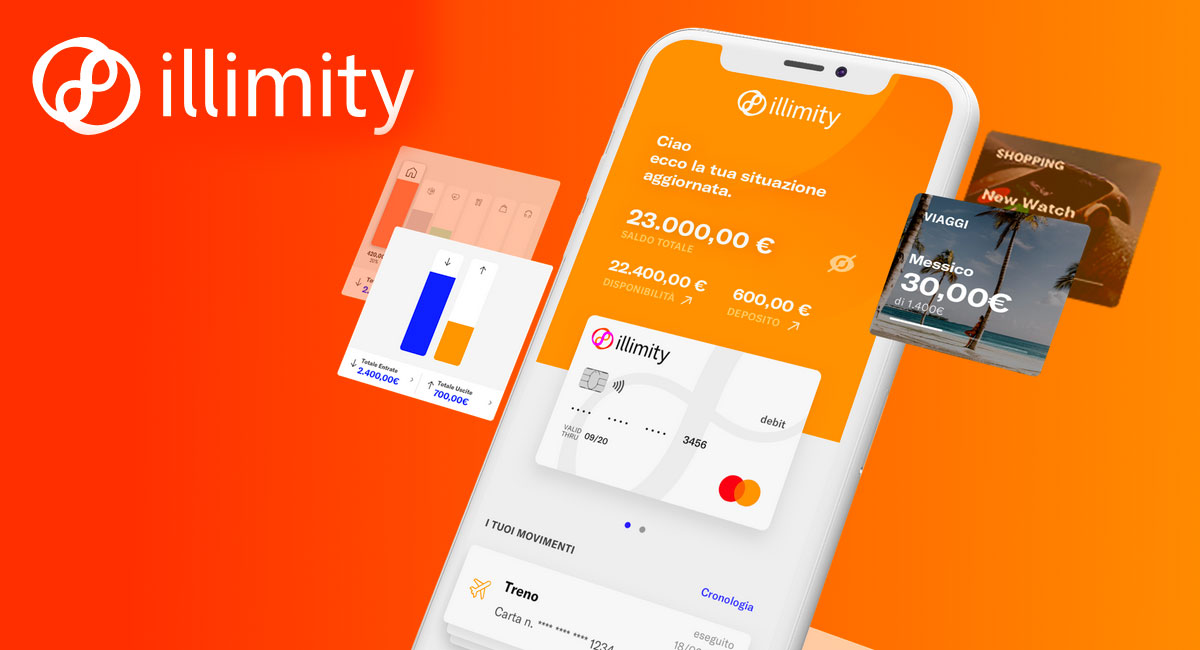
Illimity is a different kind of institution. Founded in 2018 and structured as what it calls a "new paradigm bank," it operates across corporate credit, the purchase and servicing of non-performing loan portfolios, and direct banking. That mix gives it a sturdier balance sheet than a pure consumer fintech, and its app-first model serves retail customers with modern digital tools.
The bank has more than 30,000 customers and was ranked ninth in Consultancy.eu's list of Europe's top 10 mobile banking apps. Those numbers explain both its inclusion and its placement. Thirty thousand customers is small next to BBVA's tens of millions, but Illimity is a young Italian digital bank competing credibly against pan-European giants on its home turf.
It ranks fifth because it pairs genuine Italian roots with a modern app-first approach. Users who want a domestic bank with digital-native design, rather than a foreign app with an Italian translation, will find Illimity worth a serious look.
6. Bunq
Bunq, founded in the Netherlands in 2012, brands itself the "Bank of The Free" and launched its banking app in 2015. The pitch is maximum user control: account features, savings goals, and spending rules are configured by the customer rather than dictated by the bank. It is a philosophy as much as a product, and it has attracted a loyal following among users who dislike being funneled into preset account tiers.
Consultancy.eu ranked Bunq sixth among Europe's top 10 mobile banking apps, and it specializes in fintech innovations that improve day-to-day banking rather than chasing headline features. Availability to internationally minded users in Italy makes it a practical option for expats who want a European IBAN and a highly configurable app.
Sixth place reflects strong innovation credentials and a genuinely differentiated product. The main caveat is that Bunq's feature depth rewards users willing to spend time configuring it, which is not everyone's idea of a good banking experience.
7. BBVA
BBVA brings scale that no fintech on this list can match. Founded in 1857, the Spanish bank serves nearly 80 million customers worldwide and has spent the past several years repositioning itself around what it calls "21st century banking." That transformation is not marketing talk: BBVA has invested heavily in digital infrastructure, and Consultancy.eu ranked it seventh among Europe's top 10 mobile banking apps.
For Italians, BBVA's appeal is stability first. A 160-year-old institution with a massive balance sheet offers a level of institutional security that younger challenger banks simply cannot replicate, and its app covers transactions, reporting, and account management with the polish you would expect from a bank of its size.
It ranks seventh rather than higher because its app is less specialized for Italy-specific needs than native Italian options. BBVA is a global bank with a strong app, not an app built with Italian users in mind, and that distinction matters in a market where local payment habits run deep.
8. Boursorama

Boursorama, established in 1998, launched its online banking service in 2006 and has built a customer base of more than 700,000. Its defining feature is pricing: over 15 online services are offered free of charge, a value proposition that stands out even in a market crowded with no-fee accounts. Consultancy.eu ranked it fifth among Europe's top 10 mobile banking apps, notably higher than its placement here.
The gap between those two rankings comes down to orientation. Boursorama is a leading French bank, and its product design, customer support, and marketing all point toward the French market. Italian users can access it, but they are not the priority audience, and that shows in everything from language support to local payment integrations.
It ranks eighth for the strength of its free-service model, which is genuinely competitive. Users comfortable operating in a French-oriented banking environment will get excellent value; those who want an app tuned to Italian daily life should weigh that carefully.
9. Barclays
Barclays dates to 1690 and serves nearly 50 million customers globally, making it one of the oldest and most diversified "universal" banks in the world. Its dedicated digital banking platform handles transactions, reporting, and secure communications, backed by security infrastructure that only a handful of institutions can fund at the same level. Consultancy.eu ranked it tenth among Europe's top 10 mobile banking apps.
For internationally mobile users in Italy, Barclays offers something the challenger apps cannot: the weight of a centuries-old institution and the peace of mind that comes with it. Customers who already hold Barclays accounts in the UK or elsewhere will find the app familiar and well-integrated.
It ranks ninth because its app is less tailored to the Italian market than domestic alternatives. There is no Italian-language localization effort of note, and the product assumes a primarily UK-centric customer. Scale and security earn it a place here; local fit keeps it out of the top half.
10. Monzo
Monzo earns its spot on the strength of one category where it has no real equal. ConnectPay calls it "the absolute best consumer app for budgeting and saving pots in the UK," and the description holds up. Savings pots let users partition money into named goals, instant notifications flag every transaction the moment it happens, and the whole system is built to make spending visible rather than invisible.
For internationally mobile users who struggle to track money across currencies and countries, those budgeting tools are genuinely useful, which is why Monzo keeps appearing in 2026 comparative rankings of the best online banking apps despite its UK focus.
It ranks tenth because its availability and relevance to Italy-based users are more limited than every other app on this list. Monzo is primarily a UK product, and Italian residents will hit friction that users in London never see. The budgeting features remain best-in-class, and that is enough to secure the final place, but readers in Italy should treat Monzo as a specialist tool rather than a primary account.
The right pick depends on what you actually do with money. If you hold multiple currencies or spend across borders regularly, Revolut's interbank-rate exchange and 30-plus currency support make it the obvious first account. If your priority is sending money home at honest rates, Wise's transparent percentage fee and FCA authorization under the Electronic Money Regulations 2011 offer the clearest pricing in the category.
Italian residents who want a domestic bank with a modern app should look at Hype and Illimity first. Hype is built for Italian users from the ground up, while Illimity pairs a 2018 founding with a "new paradigm" model and more than 30,000 customers. N26 sits in the middle ground, offering the cleanest basic European banking experience with account opening in under ten minutes.
Scale-seekers have BBVA, Barclays, and Boursorama, all ranked in Consultancy.eu's European top 10 and all carrying decades or centuries of institutional history. Bunq suits users who want to configure everything themselves. Monzo remains the budgeting specialist, even if Italy-based users will find its reach limited.
One practical note: many Italians and expats run two apps rather than one, pairing a multi-currency platform like Revolut or Wise with a local account for domestic direct debits and salary deposits. Given how differently these apps are built, that combination often beats trying to force a single app to do everything.
Related Posts


1 Comment
Join the discussion and share your thoughts