Top 10 Best Free Online Learning Platforms In India 2026

Table of Contents
The demand for free online learning platforms in India has never been higher. With competitive exams like JEE and NEET drawing millions of aspirants each year, and the job market increasingly demanding digital skills, learners across the country are turning to free platforms to bridge the gap between ambition and access. According to the Ministry of Education, SWAYAM alone has crossed 40 million enrollments since its launch, while YouTube reports more than 500 million Indian users, a substantial share of whom consume educational content regularly.
To build this ranking, we weighed several factors: the breadth and quality of free content, the credibility of instructors and institutions behind each platform, accessibility in Indian languages, the presence of certification or credit pathways, and overall reach among Indian learners. We prioritized platforms that are genuinely free at their core, not just offering a trial. We also considered how well each platform serves students in tier-2 and tier-3 cities, where internet connectivity and affordability remain real constraints. Government-backed initiatives received particular attention for their scale and alignment with India's National Education Policy. The result is a list of ten platforms that collectively cover K-12 academics, engineering, competitive exams, coding, and professional skills, all without requiring a subscription.
The Top 10 Best Free Online Learning Platforms In India 2026:
1. Khan Academy
Khan Academy remains the gold standard for completely free, high-quality education. Founded in 2008 by Salman Khan, the non-profit platform has grown to over 150 million registered users globally and hosts more than 50,000 practice problems across mathematics, science, economics, and computer programming. What sets it apart in the Indian context is its localized content strategy. Khan Academy has partnered with Indian organizations to deliver material in Hindi and other regional languages, making it genuinely usable for students who don't study in English.
The platform's mastery-based learning system is its strongest feature. Rather than pushing students through a fixed curriculum, it uses adaptive technology to identify gaps and personalize the learning path. For JEE and NEET aspirants, the competitive exam preparation modules offer structured practice that complements school syllabi. Parents and teachers can track progress through built-in dashboards, which has made it a popular supplementary tool in Indian schools.
Khan Academy doesn't issue certificates or degrees, and that's a deliberate choice. It positions itself as a learning tool, not a credentialing body. For students who need proof of completion, platforms further down this list may be more suitable. But for pure learning, nothing on this list matches its combination of depth, quality, and zero cost.
2. NPTEL (National Programme on Technology Enhanced Learning)
NPTEL is what happens when India's best engineering minds decide to teach for free. A joint initiative by the IITs and IISc Bangalore, funded by the Ministry of Education, NPTEL has been building India's largest online repository of technical education content since 2003. The platform offers over 2,500 free courses spanning engineering, sciences, humanities, and management, all taught by faculty from IITs and IISc.
The course catalog covers undergraduate and postgraduate levels across disciplines like computer science, civil engineering, biotechnology, and electrical engineering. Video lectures are supplemented with downloadable study materials, assignments, and reference texts. For learners who want formal recognition, NPTEL offers optional proctored certification exams for a nominal fee, typically around Rs 1,000 per exam. These certificates carry weight in Indian academia and industry because of the IIT brand behind them.
NPTEL's YouTube channel has crossed 1.5 million subscribers, and its content is frequently recommended in engineering college syllabi. Several universities accept NPTEL certifications for credit transfer, which makes it one of the few free platforms where learning can directly translate into academic progress.
3. SWAYAM
What makes SWAYAM different from most free platforms is its credit transfer framework. Students enrolled in Indian universities can earn academic credits through SWAYAM courses, provided the institution participates in the scheme. This integration with formal education is rare and valuable. Courses are available in multiple regional languages, and the platform connects with SWAYAM Prabha, a network of 34 DTH television channels, to reach students in areas where internet access is unreliable.
The user experience isn't as polished as Coursera or Udemy, and course quality varies by contributor. But for students who need government-recognized credits without paying tuition, SWAYAM fills a gap that no private platform can.
4. Coursera
Coursera was founded in 2012 by Stanford professors Andrew Ng and Daphne Koller, and it has since grown into one of the world's largest education platforms with over 7,000 courses and 100 million learners. The free audit option gives Indian students access to courses from Stanford, Yale, IIT Delhi, and more than 200 other university partners. You won't get a certificate on the audit track, but you get full access to lecture videos, readings, and most assignments.
For Indian learners, Coursera's financial aid program is the real draw. Students can apply for full access to paid courses, including certificates, by submitting an application that demonstrates financial need. Approval rates are reasonably high for Indian applicants, and the process takes about 15 days. Coursera has also partnered with Indian institutions like IIT Roorkee and the Indian School of Business to offer localized content.
The platform's strength lies in professional credentials. Google, IBM, and Meta all offer professional certificates through Coursera that are recognized by employers. For someone looking to transition into data science or UX design, these certificates carry more weight than most alternatives.
5. Physics Wallah (PW)
Physics Wallah started as a YouTube channel run by Alakh Pandey in 2016 and grew into one of India's most trusted names in competitive exam preparation. The platform's app has crossed 50 million downloads, and its YouTube channel has over 10 million subscribers. For JEE, NEET, and board exam preparation, PW offers free video lectures, live classes, and study materials covering Physics, Chemistry, Mathematics, and Biology for Classes 9 through 12.
The bilingual Hindi-English format is a big part of PW's appeal. Students from tier-2 and tier-3 cities, where English-medium coaching is either unavailable or unaffordable, can access the same quality of instruction that expensive Kota coaching centers provide. While PW does sell premium courses, the vast majority of foundational content remains free on YouTube and the app.
PW's rise has disrupted the coaching industry in ways that are still playing out. Established players have had to lower prices and expand online offerings to compete. For students, that competition has been a net positive.
6. Google Digital Garage / Grow with Google
Google Digital Garage, now folded into the Grow with Google initiative, offers over 100 free courses in digital marketing, coding, data analytics, and career development. More than 1 million Indians have earned certifications through the platform, and Google has committed to training 10 million Indians in digital skills by 2026. Courses are available in Hindi, English, and several other Indian languages.
The flagship course, "Fundamentals of Digital Marketing," has been completed by over 200,000 Indians. It covers SEO, social media marketing, email marketing, and analytics, and comes with a certificate that employers in the digital marketing space recognize. The Android Development course is another popular option for aspiring mobile developers.
Google's certificates don't carry the academic weight of an IIT credential, but in the digital marketing and entry-level tech job market, they're often treated as a valid signal of competence. For anyone looking to build practical skills quickly and for free, this is one of the most efficient options available.
7. edX
edX was founded by Harvard and MIT in 2012 and now hosts over 4,000 courses from more than 160 university partners, including Harvard, MIT, Berkeley, and IIT Bombay. The free audit track gives Indian learners access to course materials without paying for a verified certificate. India is among edX's top five user bases globally, which reflects both the platform's reach and the appetite for international-quality education among Indian students.
The MicroMasters programs are edX's most interesting offering for Indian learners. These are graduate-level course sequences that can count toward a master's degree at partner universities. For students who can't afford to study abroad, a MicroMasters credential offers a pathway to advanced qualifications at a fraction of the cost. The courses are rigorous, and completion rates are lower than on most platforms, but the payoff is correspondingly higher.
edX's interface is clean and the course quality is consistently high, though the free audit option sometimes limits access to graded assignments. For learners who want to explore a subject before committing money, it's an excellent starting point.
8. freeCodeCamp
freeCodeCamp is a completely free, non-profit platform that offers thousands of hours of coding education. The curriculum covers web development, data science, machine learning, and cybersecurity, with certifications in Responsive Web Design, JavaScript Algorithms and Data Structures, and Data Visualization. Over 40,000 graduates have been hired into tech jobs after completing the curriculum, according to the organization.
Indian learners form one of the largest user communities on the platform, with active study groups in Bangalore, Mumbai, and Delhi. The learning model is entirely project-based. Instead of watching lectures, you write code, get immediate feedback, and build a portfolio as you progress. The curriculum is self-paced, which suits working professionals and students who can't commit to fixed schedules.
What freeCodeCamp lacks is instructor interaction. There's no live teaching, no mentorship, and no formal credential recognized by Indian employers. But for self-motivated learners who want to build real coding skills without spending a rupee, it's hard to beat.
9. Udemy
Udemy operates a marketplace model with over 200,000 courses and 70 million learners globally. Most premium courses are paid, but thousands are available for free at any given time, and the platform's "Udemy Free Resource Center" provides complimentary access during specific promotional periods. Indian instructors are among the top course creators on the platform, producing content in Hindi, Tamil, and other regional languages.
The quality on Udemy varies widely because anyone can publish a course. That's both the platform's strength and its weakness. You'll find excellent courses on Python, digital marketing, and graphic design sitting alongside poorly produced content. The review and rating system helps, but it requires some diligence from the learner.
Udemy's mobile app supports offline viewing, which is a practical advantage for learners with limited internet access. For professionals looking to pick up a specific skill without committing to a full semester, Udemy's free offerings are worth monitoring regularly.
10. YouTube Learning (Educational Channels)
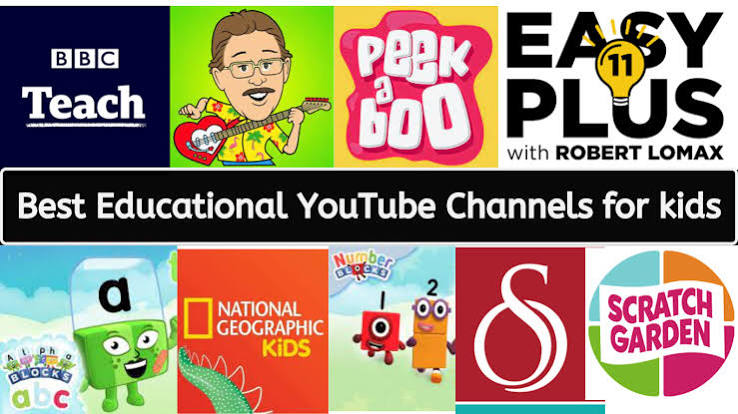
YouTube is India's largest informal learning platform, with over 500 million Indian users and more than 100,000 educational channels. The range of content is staggering: academic subjects, competitive exam preparation, coding tutorials, professional skills, and everything in between. Channels like Khan Academy India, Vedantu, Unacademy (free content), and CodeWithHarry have built massive followings by offering high-quality instruction at no cost.
Educational content on YouTube is available in Hindi, English, Tamil, Telugu, and other regional languages, which gives it broader linguistic reach than any dedicated learning platform. The "Learning" feature and curated playlists help organize content, and live streaming enables real-time doubt-solving sessions that mimic classroom interaction.
The obvious drawback is the lack of structure. YouTube is a video platform, not a learning management system, so there's no progress tracking, no assessments, and no certification. Distractions are always one click away. But for learners who can impose their own discipline, YouTube offers more free educational content than any other platform in India, and it's accessible on even the most basic smartphones.
Related Posts

2 Comments
Join the discussion and share your thoughts