Top 10 Largest Data Centers In The World 2026

Table of Contents
Alright, let's talk about the digital backbone of our world. You know, the massive buildings stuffed to the gills with blinking lights and whirring fans that make everything from your Netflix binge to the latest AI chatbot actually work. These aren't just big server rooms anymore. We're talking about sprawling digital cities, and by the middle of 2026, they're getting absolutely ridiculous in scale.
The whole game has changed. Forget what you thought you knew about data centers. The AI explosion, cloud computing pushing boundaries, big data, and the internet of everything-you-own-that-talks-to-the-internet? It's all cranking up the demand. These facilities, the physical homes for our digital lives, are expanding like crazy. And Nubia Magazine has been keeping a close eye on the biggest players, the ones pushing the limits of what a data center can be.
We're not just seeing growth; we're seeing a complete redefinition of "massive." The AI boom has reshaped how we even measure these things. It's not just about how many square feet a building covers anymore. That's old news. Now, it's about raw power, how much electricity you can shove into those racks, how you cool it all down, and how fast you can push data through it. This super-sizing of data centers isn't just a trend; it's a fundamental shift in how global technology infrastructure operates. We're talking about an industry that snagged over a fifth of all global greenfield investment in 2025, roughly $270 billion. This sector is eating capital like it's going out of style, and it's become one of the most strategically important industries on the planet.
How We Figure Out Who's Boss: Our Methodology
Okay, so how do you even begin to rank the "largest" data centers in a world where everything is growing so fast? It's not as simple as pulling out a tape measure. Historically, data centers were all about square footage. Who had the biggest building? That was the question. We talked about millions of square feet, and that was impressive for a while, say, up until the mid-2010s.
But then AI showed up, flexing its computational muscles, and everything changed. Suddenly, square footage didn't tell the whole story. You could have a huge building that wasn't actually doing much heavy lifting. What truly matters now, what truly tells you how much computing muscle a data center has, is its power capacity. We're talking megawatts and even gigawatts. That's the real measure of scale these days. It tells you how much raw processing power can actually be packed in, how many GPUs can be fed, and how much data can be crunched.
So, for this ranking focused on power. We've pulled data from some of the most respected sources out there: Epoch AI, which uses satellite imagery and disclosed capacity numbers, plus insights from SemiAnalysis and industry reports from Data Center Knowledge and Synergy Research Group. We prioritize facilities that are either fully operational or projected to hit significant capacity by mid-2026. This means we're looking at campuses-multi-building clusters-not just single structures. We're talking about critical IT load, generally facilities exceeding 500 megawatts, because that's where the hyperscale action truly is. We also factor in announced expansions by the big players like AWS, Microsoft, and Google, cross-referencing against satellite views and public statements.
Let's be clear: this isn't an exact science. Data centers are often secretive, and projections can shift. But by focusing on power capacity, validated against multiple sources and industry trends-especially the AI workload demands that make power the ultimate limiter-we get the clearest picture of who's truly leading the charge into the digital future. A facility that might have been number one by square footage a few years ago could be way down the list when you look at actual computational power. That's the evolution we're tracking.
The New Rules of Scale: Why Power Matters More Than Ever
Remember when we used to brag about how many football fields a data center could cover? Yeah, those days are pretty much over. The shift from square footage to power capacity as the primary metric for data center scale isn't just a technical detail; it's a direct consequence of the AI revolution. Modern AI workloads, especially training massive language models, demand an insane amount of computational horsepower. And that horsepower needs electricity-lots of it.
The List Of Top 10 Largest Data Centers In The World 2026:
1. AWS Project Rainier
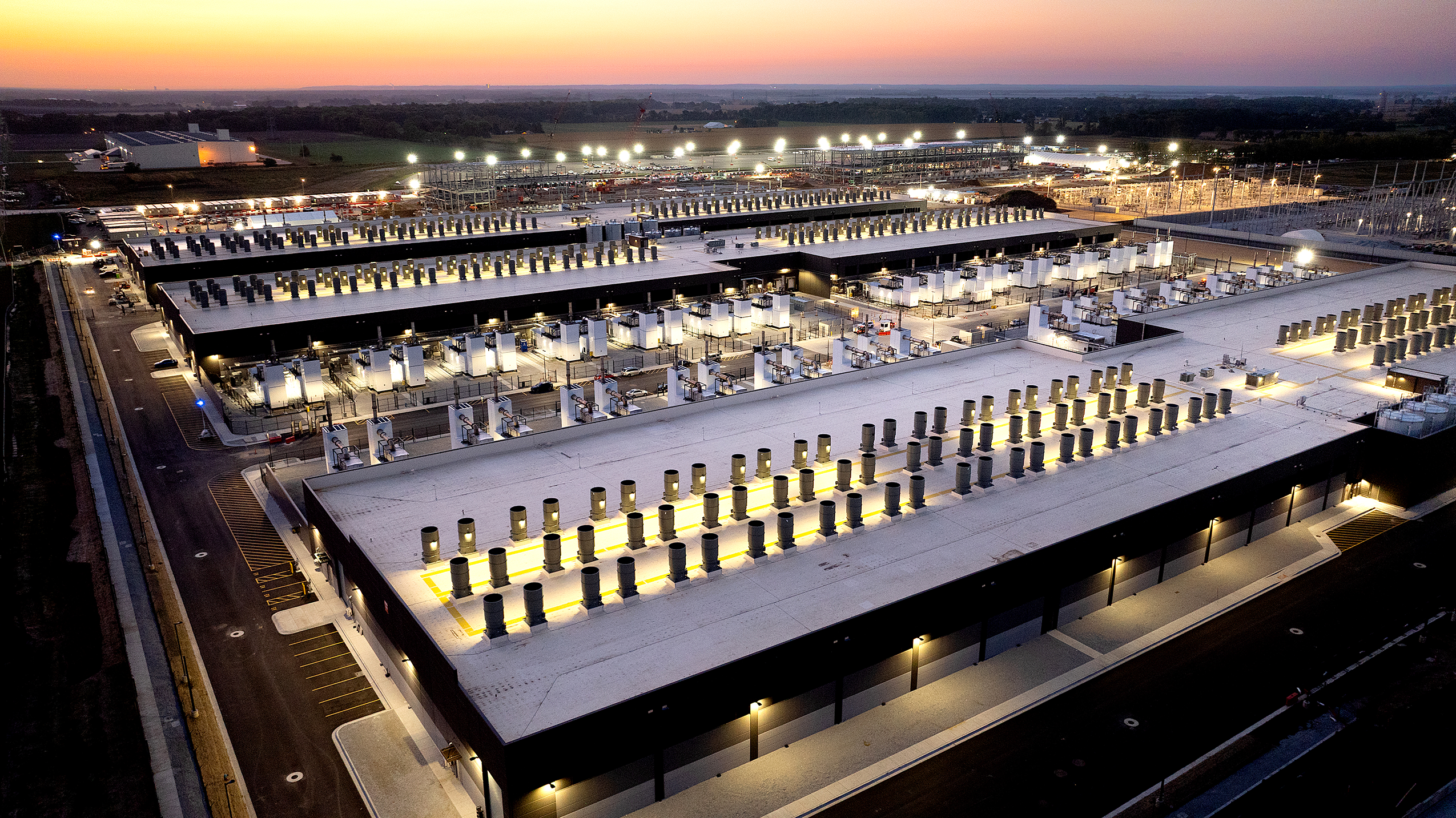
When Amazon Web Services sets its sights on something, they don't mess around. Their Project Rainier in New Carlisle, Indiana, is an absolute beast, and it's the first data center campus to actually hit the 1 gigawatt mark. Think about that for a second: a gigawatt. That's enough power for roughly 750,000 homes. This place isn't just big; it's a statement. It's built specifically for Anthropic's demanding AI workloads, which means it's packed with liquid-cooled racks designed for high-density GPUs. The campus spans over 1,000 acres, and it's been rolling out in phases through 2026, requiring massive grid upgrades just to keep the lights on and the servers humming. It's the poster child for the "super-scaling" phenomenon we're seeing in the AI world.
The sheer scale here is almost hard to comprehend. Imagine the amount of fiber-optic cable, the cooling infrastructure, and the power redundancy required to keep this monster running. AWS isn't just building data centers; they're building self-contained digital ecosystems. The power consumption alone is staggering, pushing the limits of local energy infrastructure. It's a testament to how seriously AWS takes its AI ambitions, and it sets a new benchmark for what a data center can be.
2. Microsoft Azure East US
Microsoft isn't letting AWS have all the fun. Their Azure East US campus in Boydton, Virginia, is projected to hit nearly 1 gigawatt itself by mid-2026, thanks to their massive "Stargate" initiative. This is where a lot of OpenAI's heavy lifting happens, so you know it's designed for serious AI workloads, complete with advanced direct-to-chip cooling. We're talking over 2 million square feet across more than 10 buildings, sucking down power from 500kV transmission lines. This isn't just a data center; it's a critical piece of the global AI puzzle, underpinning some of the most advanced language models out there.
The expansion here is relentless. Microsoft is pouring billions into securing enough computational capacity to keep up with the insatiable demands of AI development. It's a strategic move, ensuring they have the infrastructure to support their partnerships and maintain their competitive edge against Google and Amazon. The Stargate project itself is a half-trillion-dollar commitment to building out this kind of custom, AI-optimized infrastructure across the US, with Virginia being a prime location due to its favorable power costs and established tech ecosystem.
3. Google Cloud Hammett (The AI Powerhouse in the Prairie)
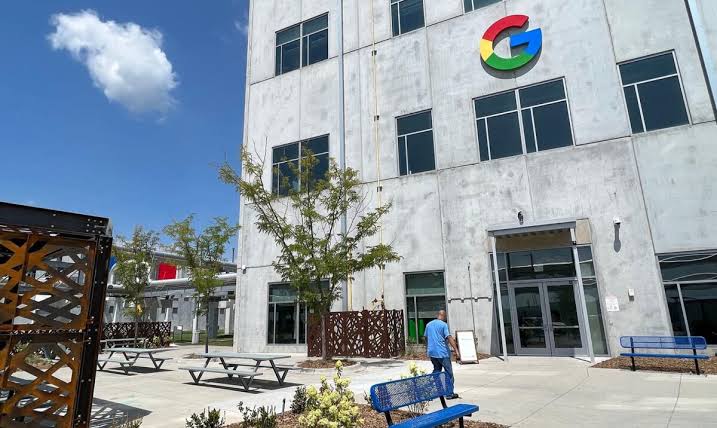
Google has been in the data center game for a long time, and their Council Bluffs, Iowa, campus-often referred to as Hammett-is a testament to that experience. It's projected to hit an impressive 850 megawatts by 2026, largely driven by the demand for TPU v5p clusters for their Gemini AI models. This sprawling 1.5 million square foot campus has been a key part of Google's $61 billion AI infrastructure push, and it's famous for its commitment to sustainability, using a hybrid of wind and solar power to achieve a PUE under 1.1. They've been a leader in efficient data center design for years, and Hammett continues that tradition.
What makes Google's approach interesting is their deep integration of hardware and software. They design their own TPUs (Tensor Processing Units) specifically for AI, and then they build data centers optimized to run them. This gives them a significant edge in computational efficiency. Council Bluffs, often called the "Silicon Prairie," has been a strategic location for Google since 2007, leveraging the region's favorable climate and access to renewable energy. It's a critical hub for everything from Google Search and Maps to Google Cloud and the ever-growing demands of AI.
4. Switch SuperNAP Core Campus
Switch's SuperNAP Core Campus in Las Vegas, Nevada, isn't just a data center; it's a legend. Rob Roy, the founder, basically invented the hyperscale data center as we know it, and this campus, which was considered the largest by square footage back in 2015, has evolved into a 750-megawatt AI-optimized powerhouse. It spans 7 million square feet across 48 buildings, all built with seismic-resistant design and powered by on-site solar. This place handles some of the biggest names in tech, providing services to hyperscale tenants that demand nothing but the best in reliability and security.
What makes Switch unique is their fanatical devotion to uptime and security. They've got their own patented cooling systems and a reputation for being virtually impenetrable. When you hear about a data center being a "digital fortress," they're probably talking about a Switch facility. They've been setting benchmarks for advanced data center design, reliability, and sustainability for years, pushing the boundaries of what's possible. It's a critical hub in the global digital infrastructure, a place where mission-critical data finds a secure home.
5. Meta Lake Tahoe

Meta, formerly Facebook, is making huge investments in its infrastructure to support its massive AI ambitions, particularly for training its Llama models. Their Lake Tahoe campus in Prineville, Oregon, is slated for a massive expansion, projected to hit 720 megawatts by 2026. This isn't just about social media anymore; it's about pushing the boundaries of AI research. The campus itself is huge, around 2.8 million square feet, and they've been experimenting with immersion cooling trials to handle the extreme power densities required by their AI workloads. Oregon is a smart choice for Meta, as it benefits from the clean, abundant hydropower from the Bonneville Power Administration, helping them target carbon neutrality by 2030.
Meta's commitment to AI means they're not just building data centers; they're building research facilities disguised as server farms. The computational demands of training models like Llama are immense, requiring highly specialized hardware and infrastructure. Prineville has become one of Meta's most important global infrastructure hubs, and its expansion reflects the company's long-term vision for AI. They're trying to stay competitive in the AI race, and that means building out their own custom infrastructure at an incredible pace.
6. IREN Childress Campus
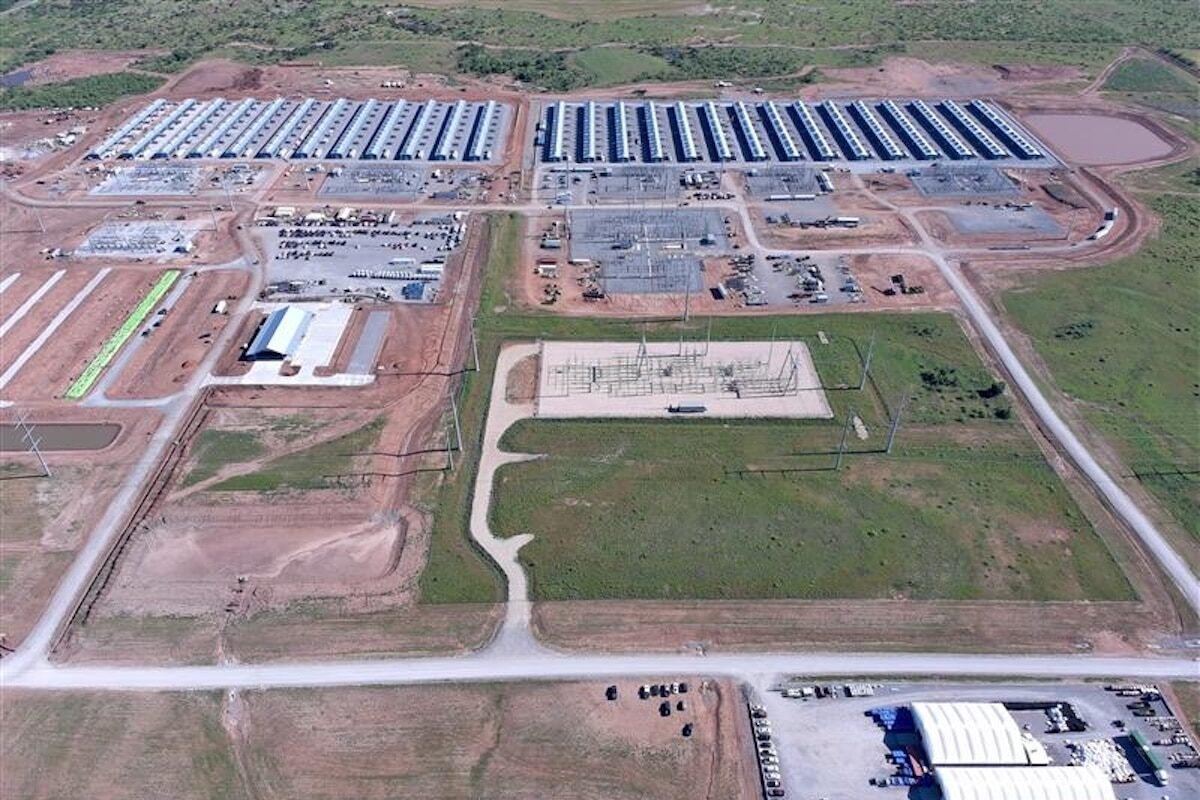
The IREN Childress Campus in Childress, Texas, is a fascinating entry on this list because it represents a slightly different breed of hyperscale facility. While it has a total capacity of 750 megawatts, its liquid-cooled IT load, specifically designed for GPU-heavy NVIDIA deployments, is projected to hit 200 megawatts in phases through 2026. This isn't just a general-purpose data center; it's a power-intensive site purpose-built for AI training, often for hyperscale leasing. What makes it stand out is its access to zero-carbon energy, which makes it incredibly cost-efficient for running those power-hungry GPUs.
Texas has become a hot spot for data centers due to its deregulated energy market and access to renewable energy sources, particularly wind power. IREN is playing into this by creating a sustainable, high-density computing environment. This kind of facility is crucial for companies that need massive amounts of GPU power but don't want to build their own gigawatt campus. It's a smart model, offering specialized infrastructure that's both powerful and environmentally conscious. It's a clear signal that the future of AI computing is tied to clean, affordable energy.
7. Oracle-Stargate Abilene
Oracle is making a serious play in the AI infrastructure space, and their Oracle-Stargate Abilene campus in Abilene, Texas, is a prime example. As part of Microsoft's broader $500 billion Stargate buildout, this facility is projected to reach 650 megawatts, featuring custom cooling solutions specifically for AI workloads and deeply integrated with Oracle Cloud services. Oracle might not have been the first name you thought of for hyperscale AI, but they're clearly pouring resources into becoming a major player. Abilene's remote location, combined with evolving fiber infrastructure, allows for low-latency operations, which is critical for AI training and inference.
This is a strategic move for Oracle, aiming to provide a compelling alternative to AWS, Azure, and Google Cloud for enterprise AI. By building out their own custom-designed, AI-optimized data centers, they're ensuring their cloud platform can handle the most demanding computational tasks. The integration with Oracle Cloud means customers can leverage this massive power directly within their existing Oracle environments. It's a testament to how every major tech player is realizing that AI leadership requires owning the physical infrastructure.
8. Equinix SV5

Equinix SV5 in Silicon Valley, California, is a different kind of giant. While not a single-tenant hyperscale like some others on this list, it's the world's largest colocation hub, part of Equinix's network of over 270 global sites. It's projected to hit an incredible 600 megawatts through 2026 power upgrades, making it an essential nexus for AI at the edge and for connecting major cloud providers like AWS and Google. Equinix is the king of interconnection, providing carrier-neutral facilities where hundreds of networks, cloud providers, and enterprises meet to exchange data. It's the digital crossroads of Silicon Valley.
What SV5 offers is not just raw power, but unparalleled connectivity. For businesses that need to be close to the action, with low latency to major cloud providers and financial markets, Equinix is the go-to. They've been aggressively upgrading their facilities for AI, installing liquid-cooling manifolds and 400G interconnect fabrics to support high-density GPU deployments. It's where the digital world comes together, enabling everything from AI inference at the edge to high-frequency trading. They're the silent enablers of much of the digital economy.
9. Digital Realty 350 East Cermak

Digital Realty's 350 East Cermak in Chicago, Illinois, is a true legend in the data center world. This historic facility, a colossal 1.1 million square feet, was once considered the largest individual data center building by square footage. Now, it's been retrofitted and expanded for the AI era, projected to reach 550 megawatts through its 2026 upgrades. It's no longer just a carrier hotel; it's a central US hub for low-latency trading and, increasingly, for AI inference. Its strategic location in the middle of the country makes it ideal for reaching vast parts of North America with minimal latency.
What's cool about 350 East Cermak is its adaptability. It's an old building, originally built for other purposes, but Digital Realty has transformed it into a modern, high-power facility capable of handling today's demanding workloads. It's a testament to engineering ingenuity, taking existing infrastructure and giving it a new life for the digital age. It connects hundreds of networks and offers incredible redundancy, making it a cornerstone of the Midwest's digital economy. It's a survivor, constantly evolving to meet new demands.
10. TeraWulf Nautilus
TeraWulf's Nautilus campus, located in New York (near Lake Mariner), is an intriguing story of pivot and sustainability. Originally known for its large-scale Bitcoin mining operations, TeraWulf has been aggressively pivoting to become a major player in sustainable digital infrastructure, with a projected capacity of over 500 megawatts. What makes Nautilus stand out is its commitment to zero-carbon energy, drawing power from hydro and nuclear sources. This makes it incredibly attractive for companies looking for ESG-compliant, large-scale computing power, whether for crypto or, increasingly, for hyperscale AI workloads.
This facility showcases a growing trend: repurposing existing, energy-intensive infrastructure for AI. The power infrastructure needed for large-scale crypto mining is surprisingly similar to what AI demands, especially with high-density GPU racks. TeraWulf is leveraging its existing assets and green energy access to offer a scalable solution for hyperscale leasing. It's a smart move in a world where energy costs and environmental impact are under increasing scrutiny. They're proving that you can have massive computational power without a massive carbon footprint.
Related Posts

Top 10 Best Hospitality Schools In The World (2026 Update): Where Tomorrow's Leaders Train
The world’s top hospitality schools continue to be essential in the context of a global economy because of their emphasis on offering exceptional guest experiences and high-quality service. People who want to work in hotels and other hospitality-related fields are actively looking for educational opportunities that will equip them with the skills and knowledge they […] <a class="g1-link g1-link-more" href="https://nubiapage.com/top-10-best-hospitality-schools-in-the-world-2024-up

Top 10 Greatest Packer Players in the World 2026: Surprising Picks & Legends
The Green Bay Packers, which are considered to be one of the most illustrious franchises in the history of the National Football League, have, throughout its existence, boasted a roster of remarkable talent. The history of the Packers is filled with players that have stood out for some reason, whether it be their iconic Super […] More
Top 10 Biggest Concert Stadiums In The World 2026
In 2026, the world of concert venues includes some of the biggest and most famous stadiums, known for hosting huge crowds and providing live music experiences that are unmatched. The following is a list of the ten largest concert stadiums in the world: List Of Top 10 Biggest Concert Stadiums In The World 2026 1. […] More

Top 10 Richest Chefs in USA 2026: How They Built Culinary Empires
In recent years, the world of celebrity chefs has developed into a multi-billion dollar industry that combines culinary expertise with media savvy, entrepreneurialism, and the development of distinctive brands. In the year 2026, a number of the wealthiest chefs in the United States have not only established themselves as influential figures in the kitchen, but […] More
3 Comments
Join the discussion and share your thoughts